Wild places

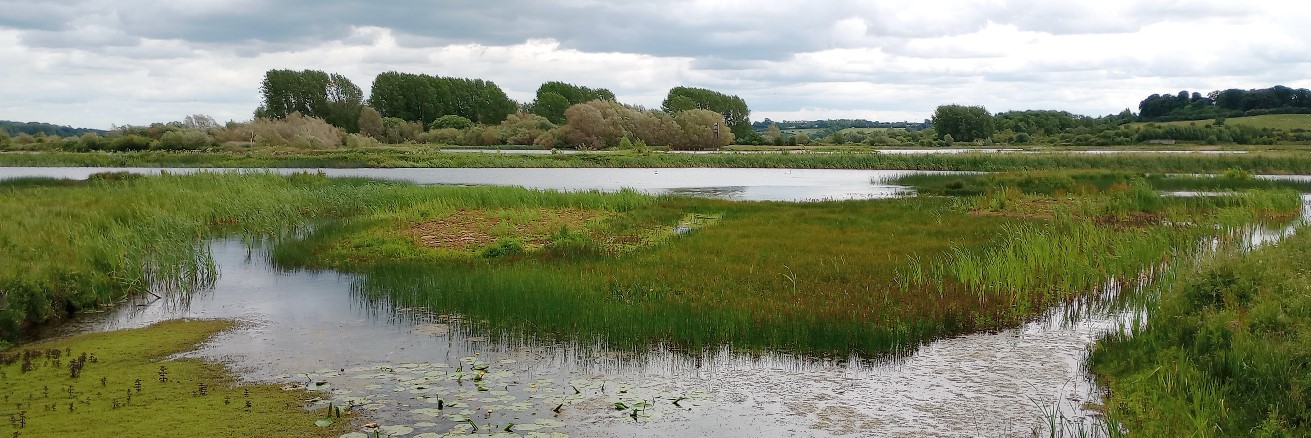
NatureSpot features over 500 sites across Leicestershire and Rutland as Wild Places. These showcase many of the best places to see wildlife in our area. Each Wild Place page displays the records and images submitted for that location - which update automatically as additional records are received. A full species list for each site is also available.

Private Wild Places

By arrangement, we can set up Wild Place feature pages for private gardens, grounds, farms, estates and other areas without public access. These work just as any other Wild Place page except they are not included in the menus and maps and are only viewable using the private URL provided. We ask for a donation for setting up a private Wild Place - the amount is up to you! Get in touch if you are interested by emailing info@naturespot.org

New Wild Places?

If you know of a site with wildlife interest that could be featured as a Wild Place page then let us know. Wild Places should meet the following criteria:

  • must either be entirely in public access (such as a Country Park), or have a public right of way (PROW) through them or adjacent to them from which the site can be viewed OR the landowner has given consent for the land to become a Wild Place. (A PROW as defined by the Highways Authority: in Leicestershire; in Rutland). 
  • must consist largely of existing habitats of significance to wildlife - e.g. woodland, wetland, watercourse, heathland, open mosaic habitats, unimproved/semi-improved or species-rich grassland, parkland, orchard, scrubland.  Sites which consist mainly of arable and cultivated land or just improved grassland are not suitable as Wild Places. (See Leicestershire's Biodiversity Action Plan and the Leicestershire and Rutland Local Nature Recovery Strategy).

Please note that NatureSpot's designation of a site as a Wild Place does not confer any legal or protected status to the land, and has no weight within the planning system. Neither does it confer any additional public rights of use or access to the land.

Explore Wild Places

To explore the Wild Places of Leicestershire and Rutland:

  • zoom into the map and click on any site to show its details below
  • use the filters below to find sites in your district or parish
  • type any part of the site name to search for a particular site

Just click on APPLY when you have entered your selection. Alternatively you can browse the full list below.

Key: Wild Places (outlined in orange); Public Rights of Way (green); county boundaries (blue), parish boundaries (lilac)

This area contains two very different sites, Albert Village Lake which includes a large expanse of open water excellent for a wide range of notable birds and Pick Triangle, an attractive 30 hectare young woodland. Both sites have been created on land reclaimed after coal and clay extraction.

This nature area was created as part of a housing development off Cropston Road. It features trees, wildflower meadow, and a pond area, with a network of paths running through it. It has mature hedgerow running around three sides.

A small area of mature woodland.

The wood is situated along the northern shoreline of the Hambleton peninsular. This is ancient woodland but much reduced in size due to construction of Rutland Water and now only covering around 6 ha. In the Middle Ages it was part of Barnsdale deer park. The wood is of the Ash-Hazel type and lies on on Upper Lias clay.

This verge is between 1 and 2 metres wide and backed by a hedge including Ash, Hawthorn and Snowberry. A large Horse Chestnut tree also partially shades the central section.

The verge being managed to improve biodiversity as part of the County Council/Parish Council verges biodiversity project. It has been surveyed by NatureSpot but we would welcome additional wildlife records (plants, animals or fungi) from the community.

This verge is around 3 metres wide and backed by a wet ditch and a hedge, mainly comprising Ash and Hawthorn. Two Ash trees overhang the central section.

The verge being managed to improve biodiversity as part of the County Council/Parish Council verges biodiversity project. It has been surveyed by NatureSpot but we would welcome additional wildlife records (plants, animals or fungi) from the community.

This is an old industrial site, comprised of a sandy soil which is the result of the historic dumping of waste materials from the nearby steel works. It is a mosaic of wildflower-rich grassland and scrub.

The canal was opened in 1804 with the purpose of servicing the Leicestershire coalfield, but by the 1830s its industrial use was in decline. Originally extending as far north as Moira, the canal suffered mining subsidence resulting in the draining, in 1944 and again in 1957 and 1966, of successive lengths of the northernmost 10 km (6 miles). Much of this stretch was subsequently filled with pulverized fuel ash.

This section runs through an agricultural landscape south-west of Congerstone.

The Ashby Canal is 31 miles long and connects the former mining area of Moira to the Coventry Canal. It opened in 1804 and serviced the collieries but over many years the section north of Snarestone was affected by mining subsidence and was eventually closed to navigation. A restoration programme has recently led to a part reopening but work continues. As some of the original canal had been filled in and built over a new section is being constructed around Measham.

This section of the Ashby Canal skirts around the eastern edge of Congerstone.

The Ashby Canal is 31 miles long and connects the former mining area of Moira to the Coventry Canal. It opened in 1804 and serviced the collieries but over many years the section north of Snarestone was affected by mining subsidence and was eventually closed to navigation. A restoration programme has recently led to a part reopening but work continues. As some of the original canal had been filled in and built over a new section is being constructed around Measham.

This section of the Ashby Canal runs south from Sutton Wharf towards Dadlington.

The Ashby Canal is 31 miles long and connects the former mining area of Moira to the Coventry Canal. It opened in 1804 and serviced the collieries but over many years the section north of Snarestone was affected by mining subsidence and was eventually closed to navigation. A restoration programme has recently led to a part reopening but work continues. As some of the original canal had been filled in and built over a new section is being constructed around Measham.

This section runs through Hinckley to the county boundary.

The Ashby Canal is 31 miles long and connects the former mining area of Moira to the Coventry Canal. It opened in 1804 and serviced the collieries but over many years the section north of Snarestone was affected by mining subsidence and was eventually closed to navigation. A restoration programme has recently led to a part reopening but work continues. As some of the original canal had been filled in and built over a new section is being constructed around Measham.

This section runs from near Higham to the edge of Hinckley.

The Ashby Canal is 31 miles long and connects the former mining area of Moira to the Coventry Canal. It opened in 1804 and serviced the collieries but over many years the section north of Snarestone was affected by mining subsidence and was eventually closed to navigation. A restoration programme has recently led to a part reopening but work continues. As some of the original canal had been filled in and built over a new section is being constructed around Measham.

This section of the Ashby Canal skirts around the western edge of Market Bosworth.

The Ashby Canal is 31 miles long and connects the former mining area of Moira to the Coventry Canal. It opened in 1804 and serviced the collieries but over many years the section north of Snarestone was affected by mining subsidence and was eventually closed to navigation. A restoration programme has recently led to a part reopening but work continues. As some of the original canal had been filled in and built over a new section is being constructed around Measham.

This section runs through the village of Shackerstone.

The Ashby Canal is 31 miles long and connects the former mining area of Moira to the Coventry Canal. It opened in 1804 and serviced the collieries but over many years the section north of Snarestone was affected by mining subsidence and was eventually closed to navigation. A restoration programme has recently led to a part reopening but work continues. As some of the original canal had been filled in and built over a new section is being constructed around Measham.

This section runs from Shackerstone to Snarestone.

The Ashby Canal is 31 miles long and connects the former mining area of Moira to the Coventry Canal. It opened in 1804 and serviced the collieries but over many years the section north of Snarestone was affected by mining subsidence and was eventually closed to navigation. A restoration programme has recently led to a part reopening but work continues. As some of the original canal had been filled in and built over a new section is being constructed around Measham.

The canal was opened in 1804 with the purpose of servicing the Leicestershire coalfield, but by the 1830s its industrial use was in decline. Originally extending as far north as Moira, the canal suffered mining subsidence resulting in the draining, in 1944 and again in 1957 and 1966, of successive lengths of the northernmost 10 km (6 miles). Much of this stretch was subsequently filled with pulverized fuel ash.

This section runs from the end of the Snarestone tunnel to the current end of the canal.

The Ashby Canal is 31 miles long and connects the former mining area of Moira to the Coventry Canal. It opened in 1804 and serviced the collieries but over many years the section north of Snarestone was affected by mining subsidence and was eventually closed to navigation. A restoration programme has recently led to a part reopening but work continues. As some of the original canal had been filled in and built over a new section is being constructed around Measham.

This section of the Ashby Canal skirts around the western edge of Stoke Golding.

The Ashby Canal is 31 miles long and connects the former mining area of Moira to the Coventry Canal. It opened in 1804 and serviced the collieries but over many years the section north of Snarestone was affected by mining subsidence and was eventually closed to navigation. A restoration programme has recently led to a part reopening but work continues. As some of the original canal had been filled in and built over a new section is being constructed around Measham.

This verge is being managed to improve biodiversity as part of the County Council/Parish Council verges biodiversity trial. It was surveyed in 2021 by NatureSpot volunteers but we would welcome additional wildlife records from the community, whether plants, animals or fungi.