 A previously rare insect, the Box Bug, has been found in Leicestershire for the first time by NatureSpot member, Mike Higgott. It is believed to be the most northerly record for this species. Historically very rare (and a Red Data Book species) it was known only from Box Hill in Surrey, where it only fed on Box trees, but it has since widened its diet and has been spreading northwards.


 If you missed Adrian Russell's recent presentation summarising the finds and status of moths in Leicestershire and Rutland based on the 2015 records - you can view the slides on the
  The January edition of the Leicestershire Entomological Society newsletter is available for viewing or download - see the
  An otter was recently found dead inside a crayfish trap near to Leicester, unfortunately not a unique incident. All crayfish traps have to approved by the Environment Agency. If you find a trap without an EA tag, please call the free hotline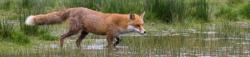
 A new mapping tool has been installed on NatureSpot that lets you explore and map all NatureSpot records. By using the filters you can map and list all records for a selected area, just your own records, or select a particular wildlife group. Visit the
  All records submitted to NatureSpot are checked to confirm the identification and details are correct - called verification. In conjunction with the Biological Records Centre, we are using a new system with five choices. You will see the icons for these in the verification column of your My Records page. See the
  A checklist of all the species of dragonflies and damselflies in Leicestershire and Rutland has just been published. This excellent document includes species distribution maps and notes of where best to see them locally. See
  Around 2,000 beetles species have been found in Leicestershire and Rutland, around half of the UK list. This impressive document lists all of these with details of the number of records and when last seen.
 The latest publication from the Leicestershire Entomological Society describes the most notable beetles found in Leicestershire and Rutland, written by Graham Finch, the County Recorder. Visit the
 The latest LES newsletter is now available. Read about recent insect discoveries in Leicestershire plus how to find the European Chinchbug (see image) in winter. Read or download from the
 Amazingly there are 236 tetrads (2km squares) in Leicestershire and Rutland without any NatureSpot records. We are therefore asking our members to ‘adopt’ an unrecorded tetrad during 2015 and to record as many species as possible from their chosen area – even common species such as Daisy and Hawthorn. In this way we can begin to map the distribution of species across the two counties.
  2014 was another record year for wildlife recording on NatureSpot. A total of 14,624 records were submitted covering 2,471 different species! Thank you to all of you who contributed records during the year. Visit our
  A superb new guide to British and Irish slugs has just been published, full of images and drawings, with a key, species accounts and distribution maps. Highly recommended!
 A new introductory guide to the amphibians and reptiles of Leicestershire and Rutland has just been produced, including a list of all the species found in the two counties. Available on our