

Hazel - Corylus avellana
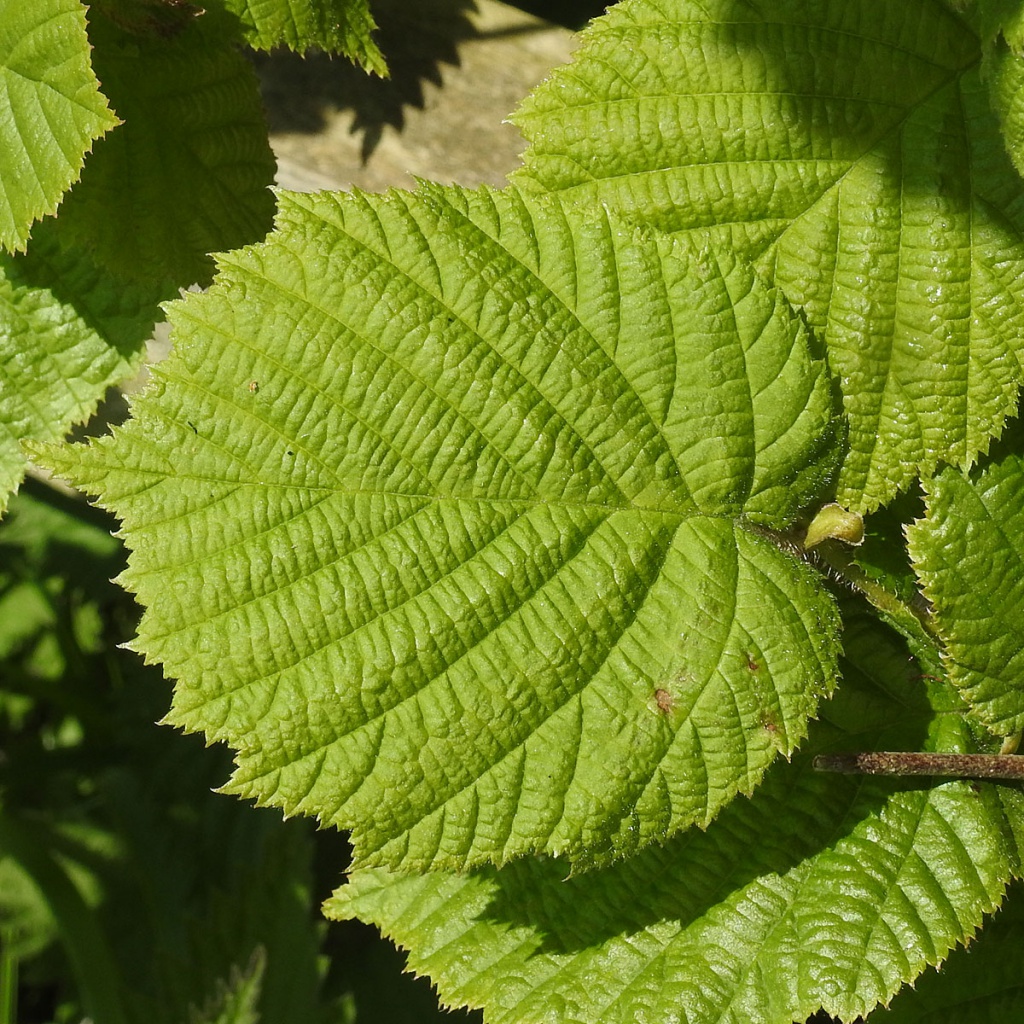
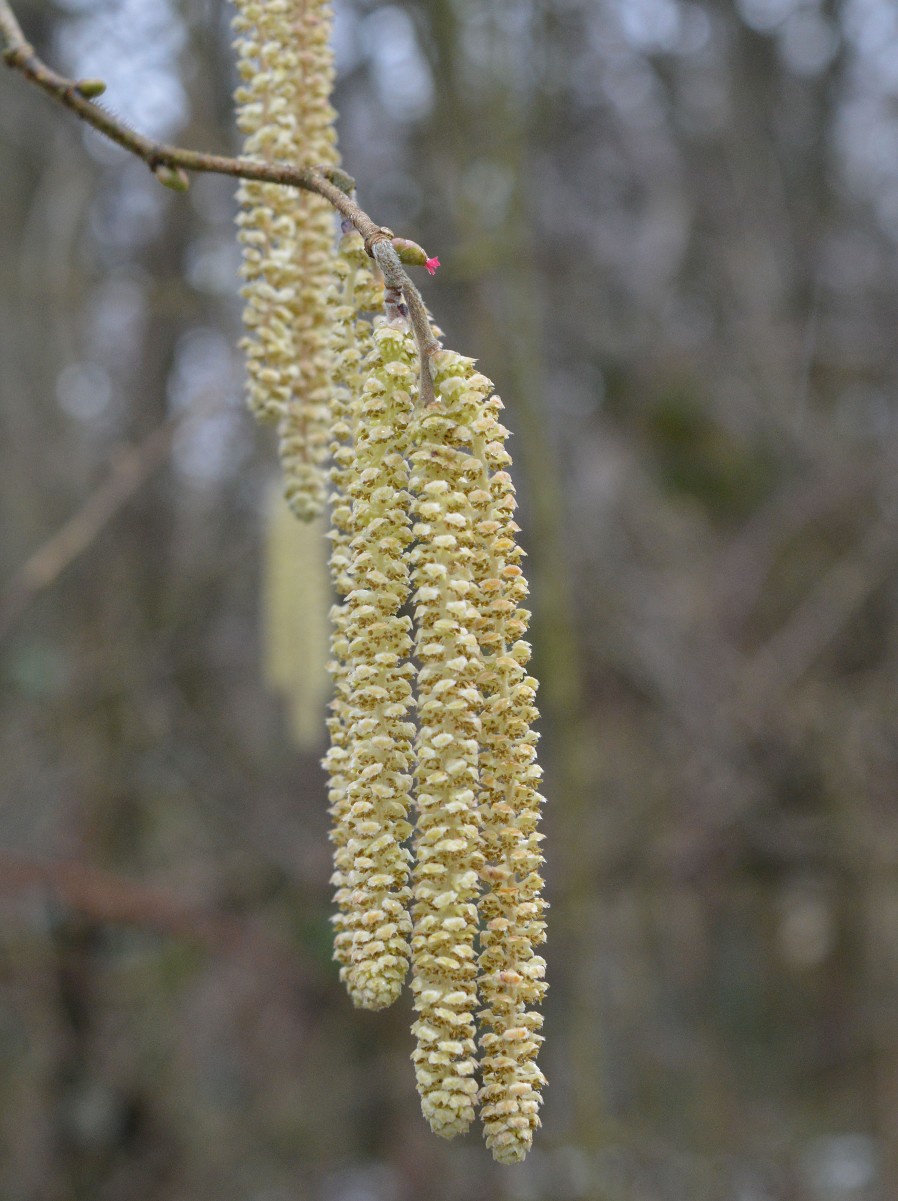
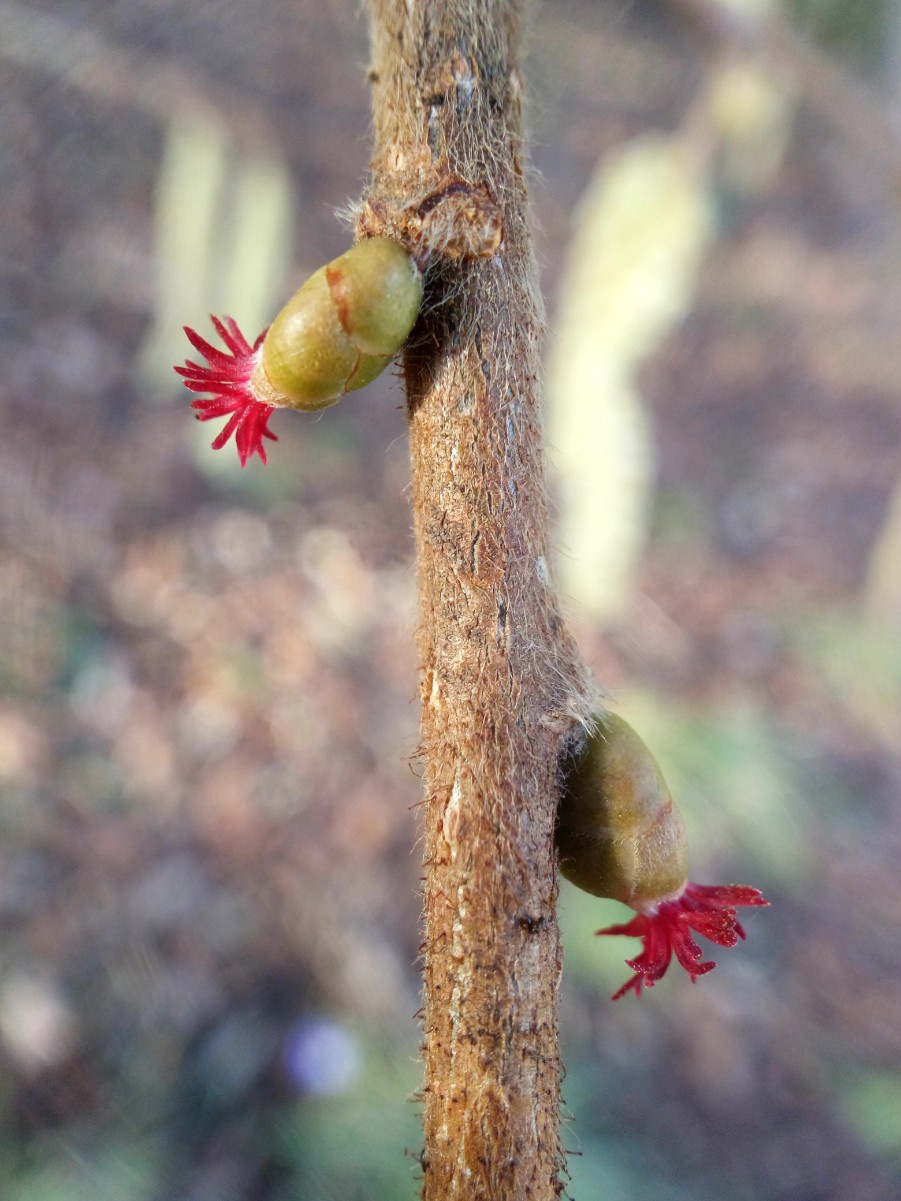
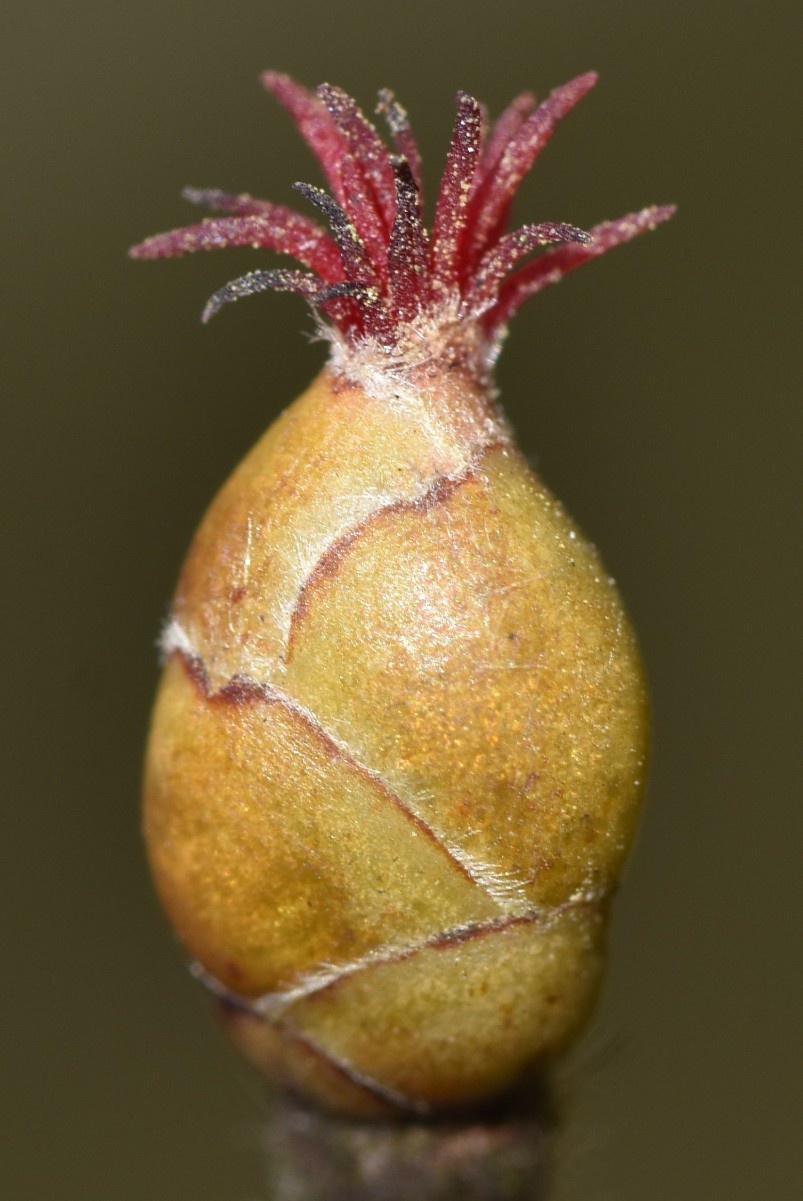
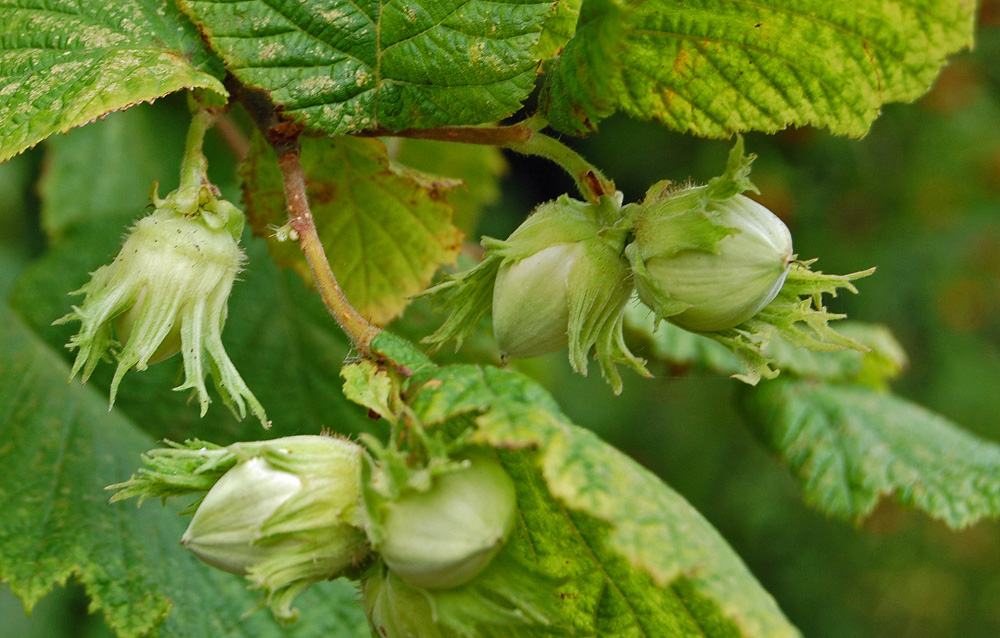
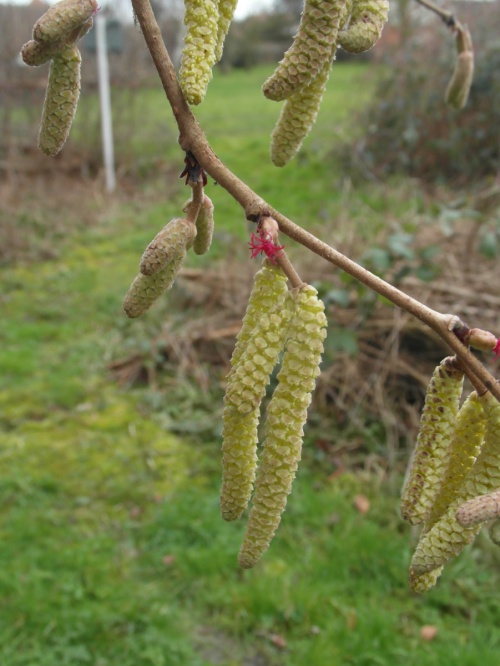
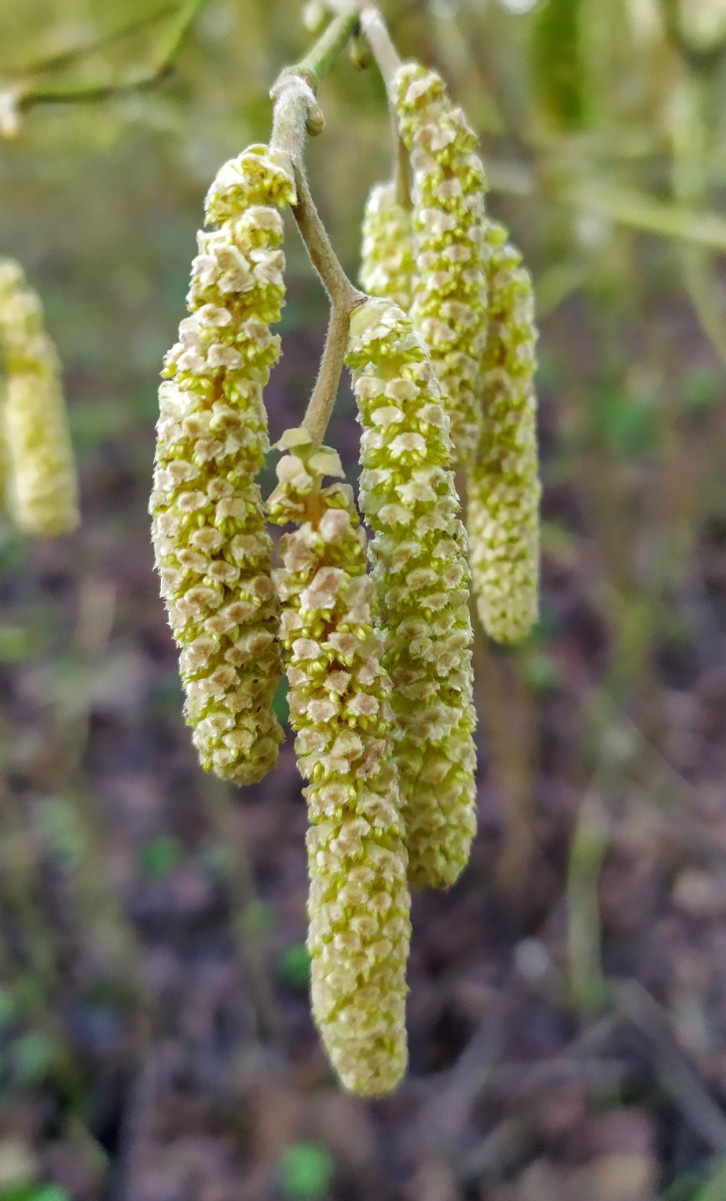
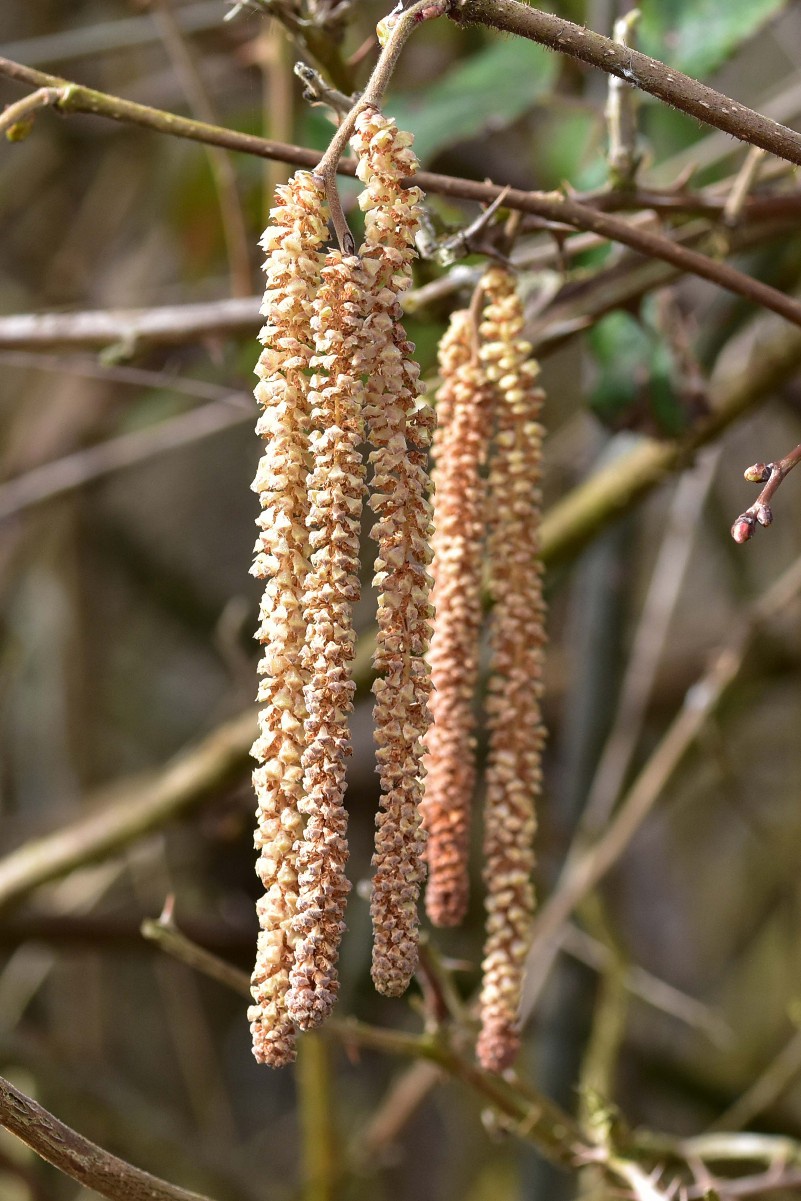
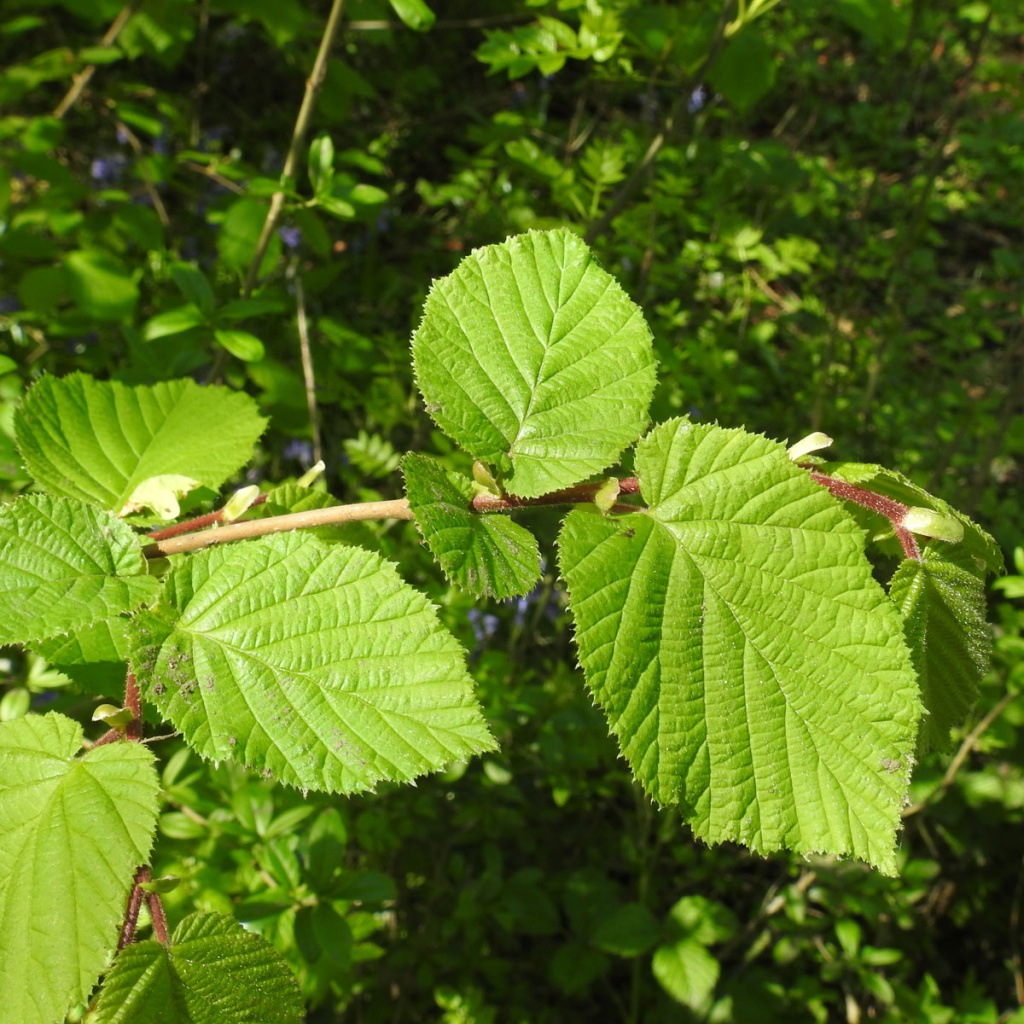
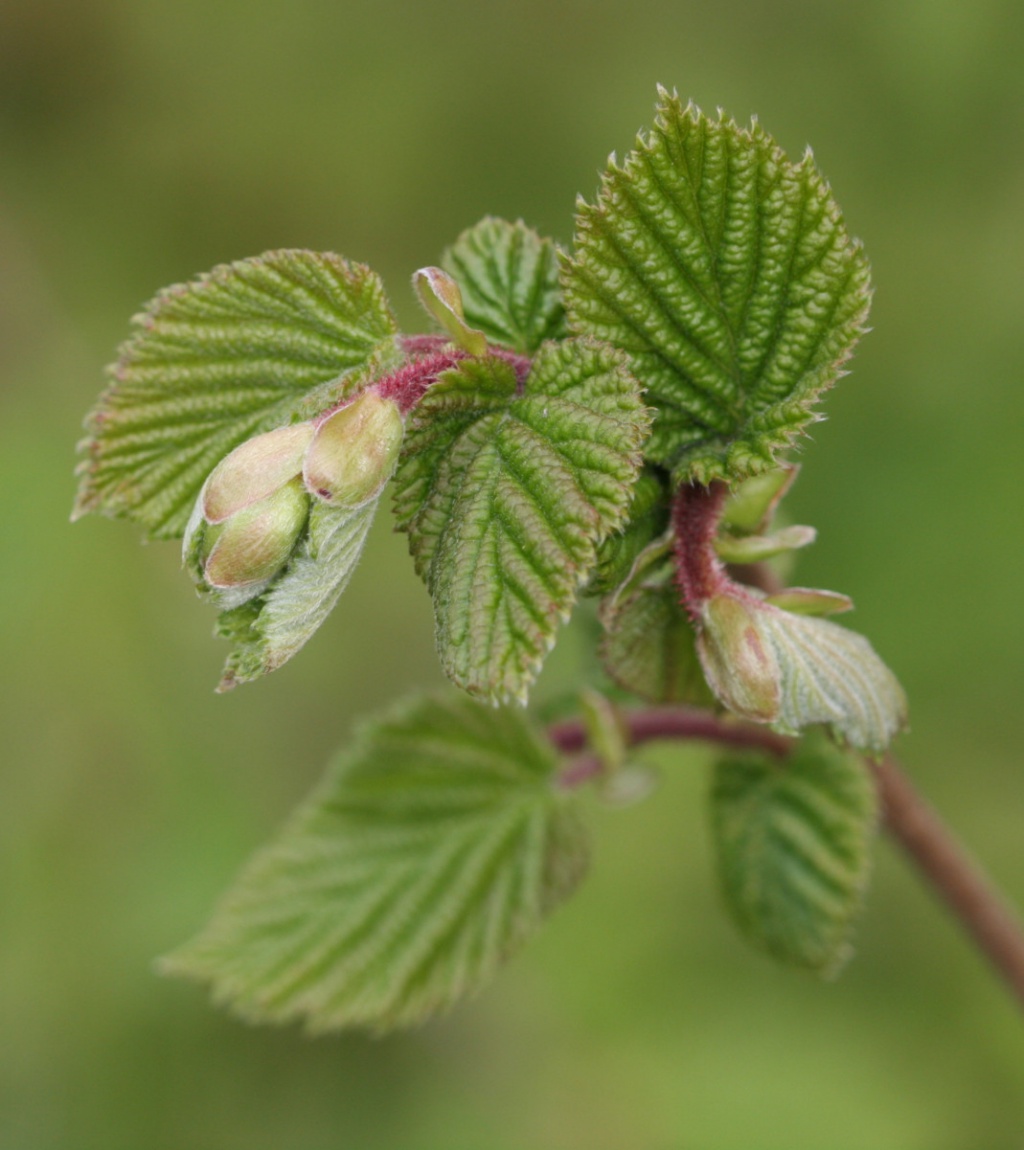
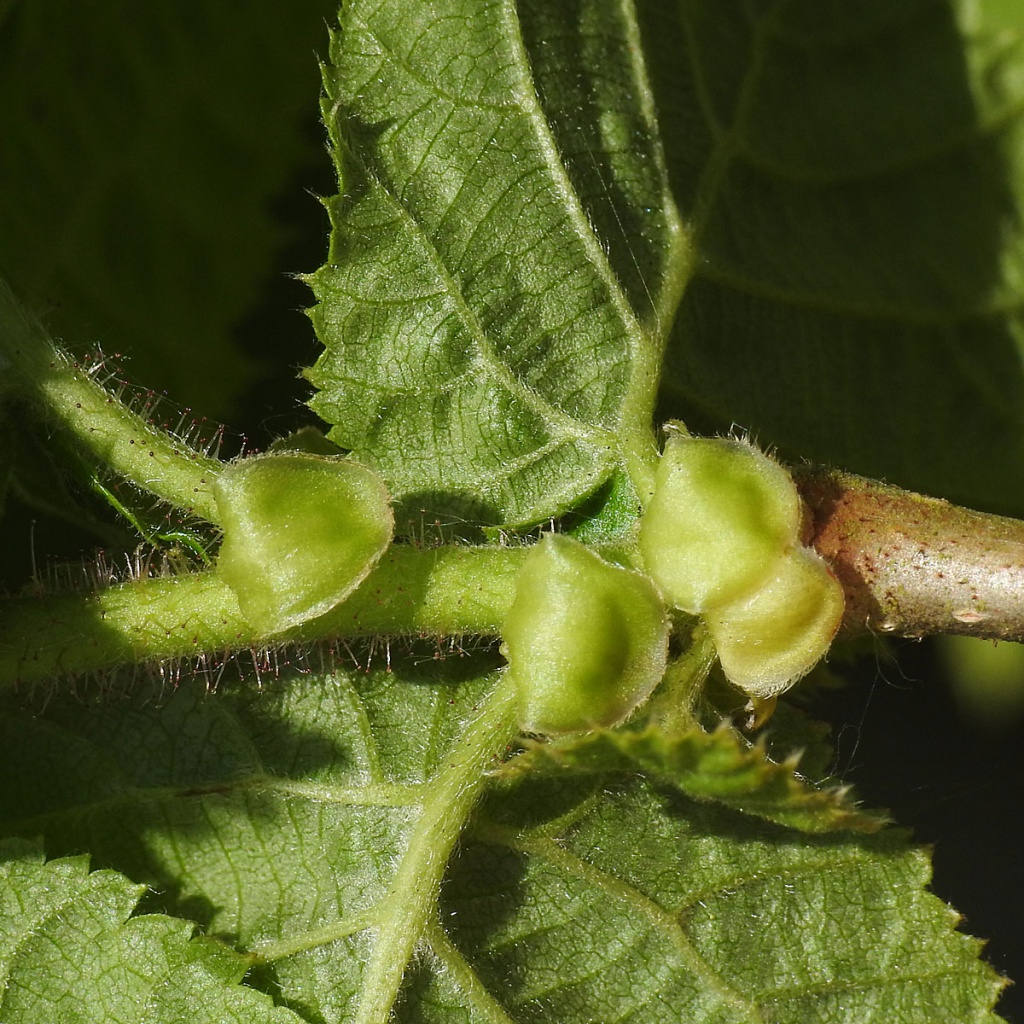
Shrub to 6 metres, rather upright with smooth brown bark. Leaves rounded, sharp pointed, toothed, downy. Flowers appearing before the leaves. Male catkins yellow, pendent, female flowers tiny and bud like with red styles. Fruit a nut, solitary or several together, each enclosed in a leafy husk and is edible. Fresh twigs usually with red-tipped glandular hairs.

Woods and hedgerows.
January to March.
Deciduous.
Common throughout Britain.
Common in Leicestershire and Rutland. In the 1979 Flora survey of Leicestershire it was found in 421 of the 617 tetrads.
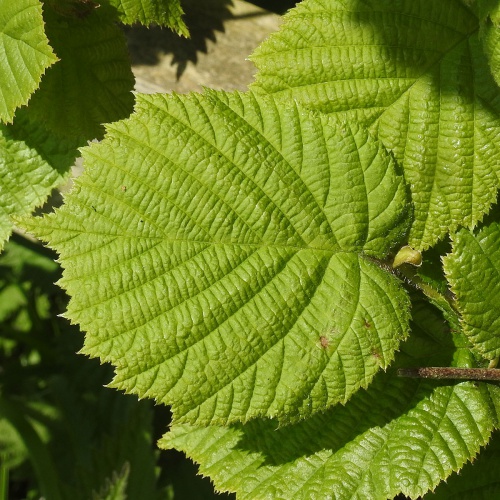 David Gould
The Spearwort Fields
07 May 2017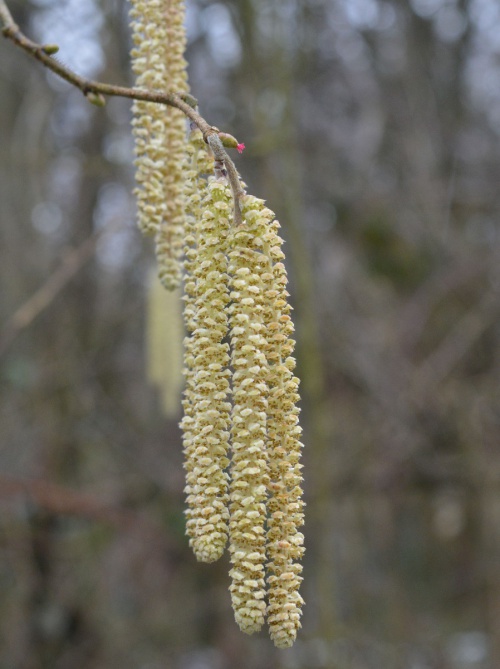 Barbara Cooper
Ulverscroft NR
08 February 2018
male catkins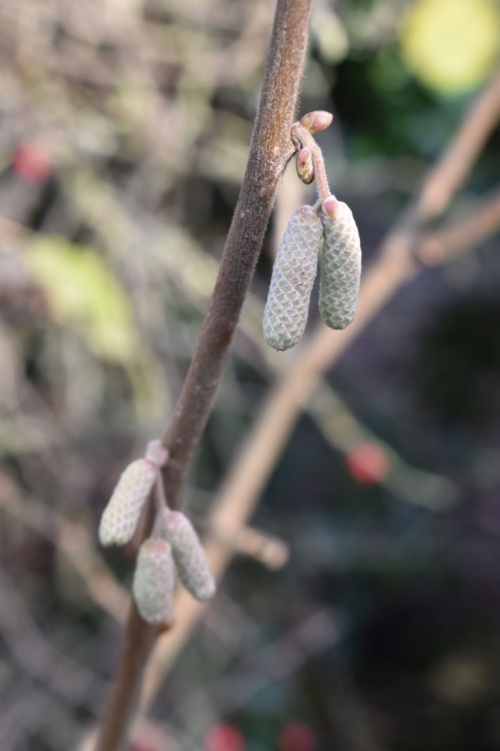 stepgray4
Bridleway near Wymeswold
15 November 2020
Young male catkins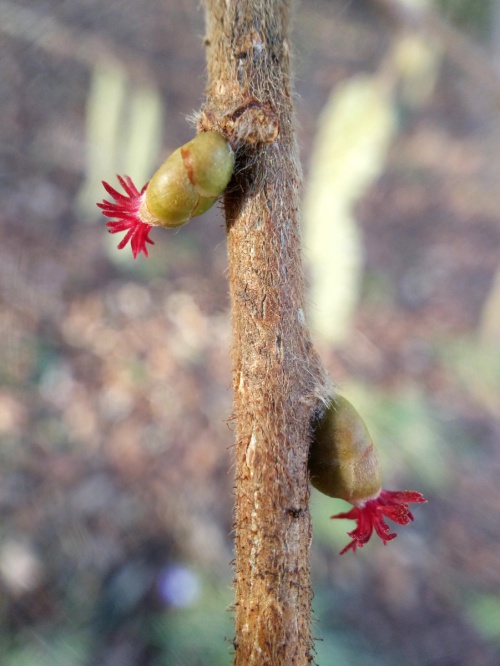 Peter Smith
Leicester, Western Park
31 January 2022
Female flowers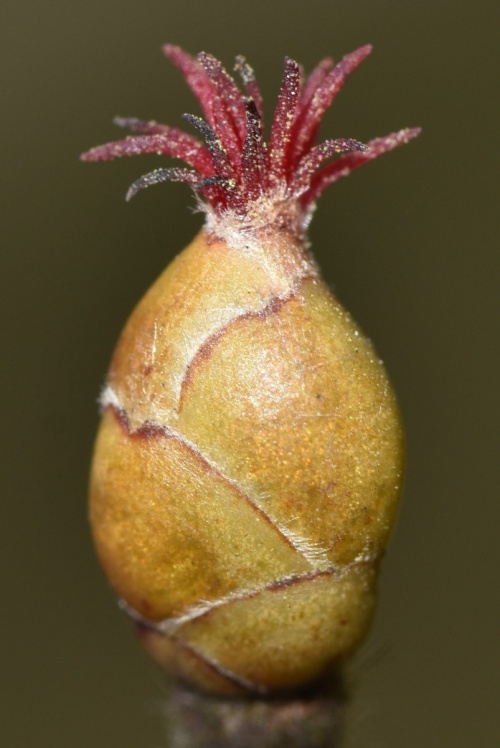 stepgray4
Plantation nr Wymeswold
26 February 2021
Female flower Barbara Cooper
Holwell Mineral Line
30 June 2014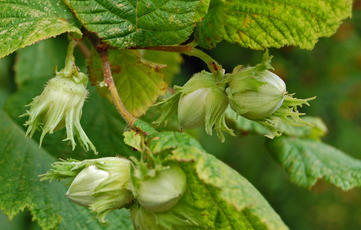 David Perrins
Battram
19 July 2011
nuts ripening David Gould
The Spearwort Fields
03 June 2017
glandular hairs



Leicestershire & Rutland Map
Enter a town or village to see local records
MAP KEY:
Yellow squares = NBN records (all known data)
Coloured circles = NatureSpot records: 2025+ | 2020-2024 | pre-2020
UK Map
Species profile
- Common names
- Hazelnut, Hazel
- Species group:
- Trees, Shrubs & Climbers
- Kingdom:
- Plantae
- Order:
- Fagales
- Family:
- Betulaceae
- Records on NatureSpot:
- 506
- First record:
- 01/07/1998 (John Mousley)
- Last record:
- 01/02/2026 (Catherine Horrell)
Total records by month
% of records within its species group
10km squares with records
The latest images and records displayed below include those awaiting verification checks so we cannot guarantee that every identification is correct. Once accepted, the record displays a green tick.
In the Latest Records section, click on the header to sort A-Z, and again to sort Z-A. Use the header boxes to filter the list.
Latest images
Latest records
 Alan Semper
Harby nature reserve
25 February 2015
Female flower above male catkins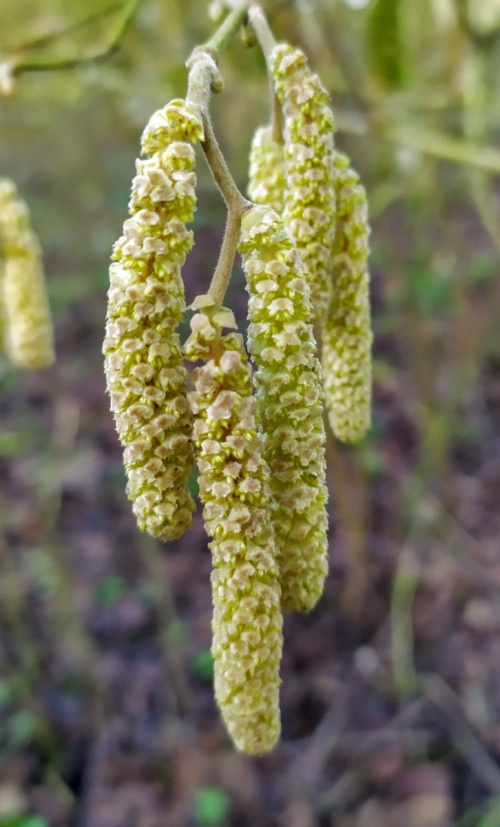 stepgray4
Wymeswold Woodland
16 February 2021
Male catkins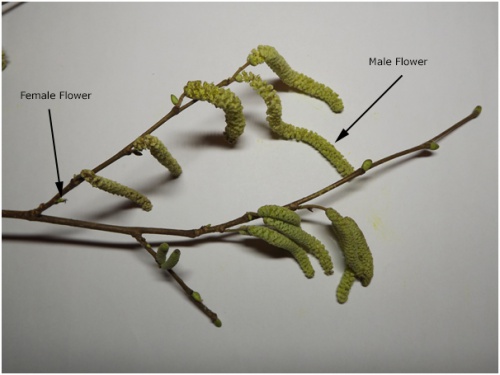 Bob Sheridan
Langham field
29 July 2016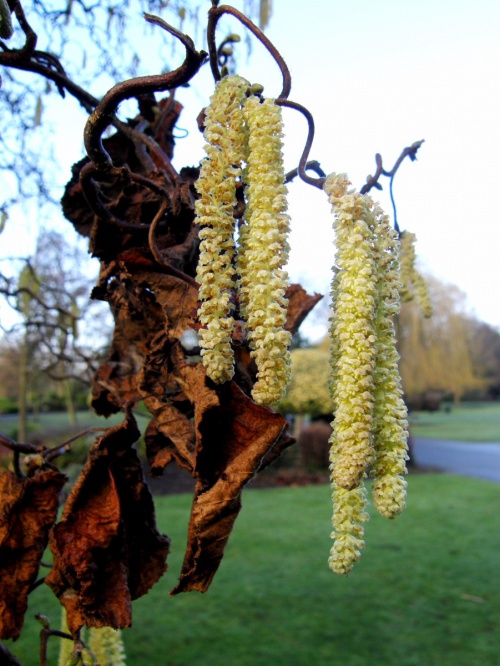 Saharima Roenisch
Abbey Park
06 March 2017
"Corkscrew Hazel", Red Female Flower Old Fosse Sapcote SP 4996 9237 (taken 5.3.2009).JPG) Graham Calow
Graham Calow
Sapcote
05 March 2009
female flowers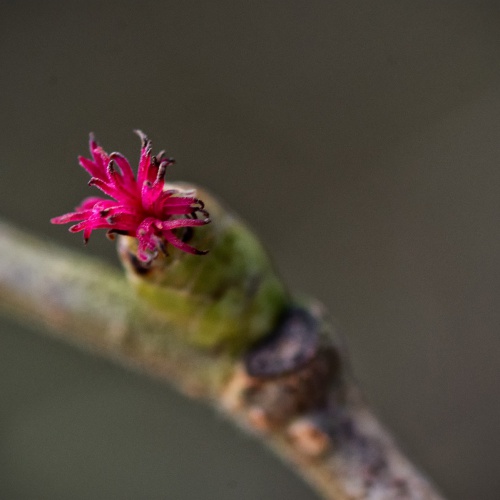 AJ Cann
Goadby
01 January 2018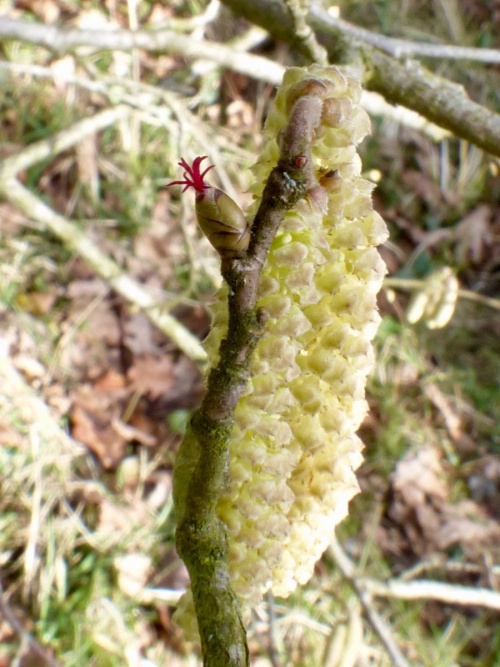 Ken Charity
Ulverscroft Lane
13 March 2018 Saharima Roenisch
Brocks Hill Country Park
15 January 2018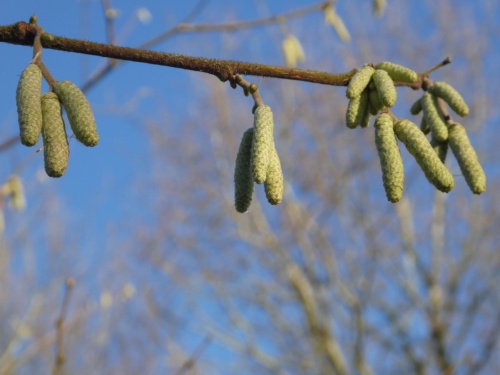 Frank Bedford
Donisthorpe New Wood
17 December 2020
Hazel male Flowers (catkins) Leicester Road Sapcote SP 4962 9333 (taken 10.2.2006).JPG) Graham Calow
Graham Calow
Sapcote
10 February 2006
male flowers (catkins) stepgray4
Plantation nr Wymeswold
26 February 2021
Male catkins flowering Andy's Rutland
Mill Lane-Empingham
26 March 2019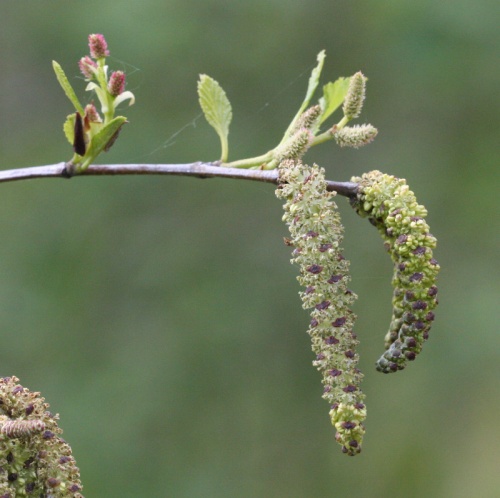 David Nicholls
Bagworth Heath Woods
12 May 2012 Leicester Road Lay-By Old Fosse (taken 15.4.2009)..JPG) Graham Calow
Graham Calow
Sapcote
15 April 2009
unusual blotched leaves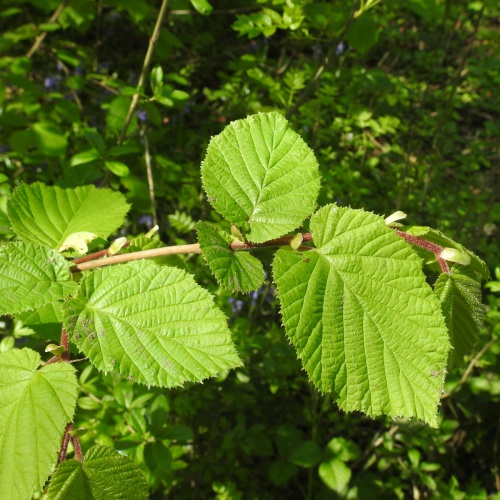 David Gould
Wood Close Plantation, Leicester.
06 May 2018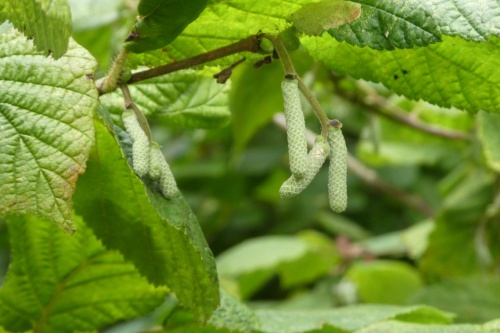 Frank Bedford
Ashby de la Zouch, Ingles Hill Woodland
25 September 2021 David Nicholls
Cloud Wood
04 May 2015 David Gould
The Spearwort Fields
07 May 2017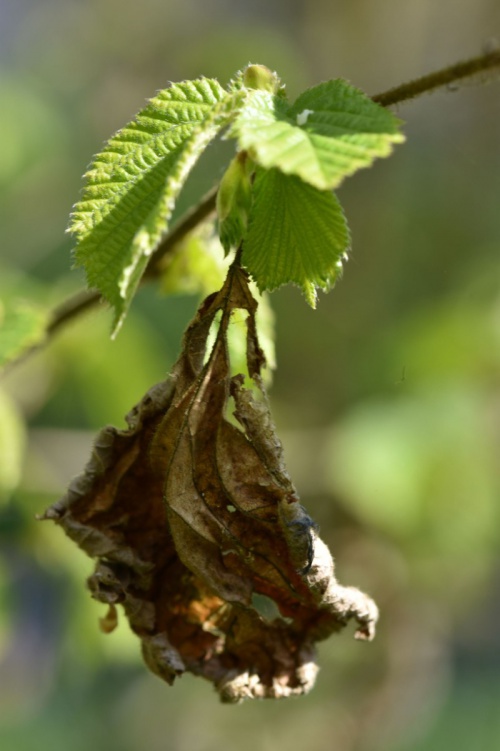 stepgray4
Great Merrible Wood
01 May 2021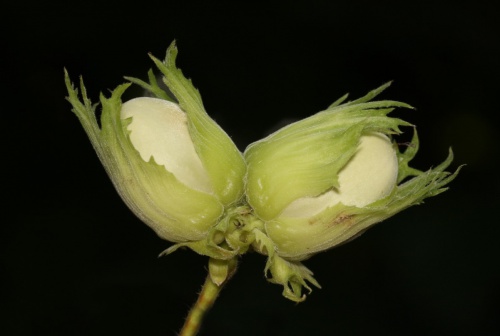 Jonesboy1
Croft
02 August 2021 David Nicholls
Cloud Wood
24 June 2011
developing nuts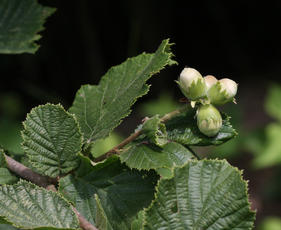 David Nicholls
Cloud Wood
24 June 2011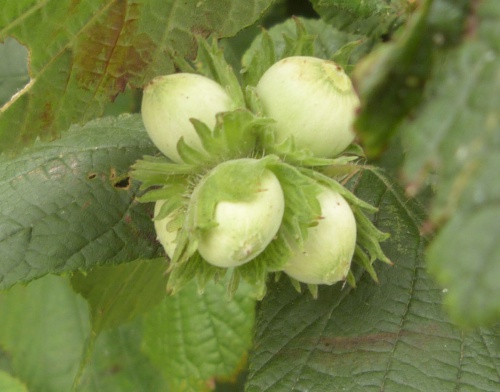 Graham Calow
Frolesworth
23 July 2015 Melinda Bell
Sutton Cheney,Ambion Wood
30 July 2020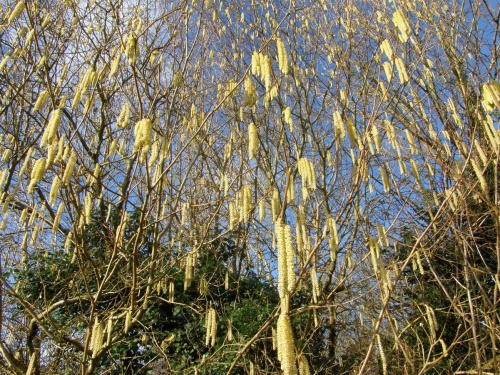 Saharima Roenisch
Knighton Park
28 February 2017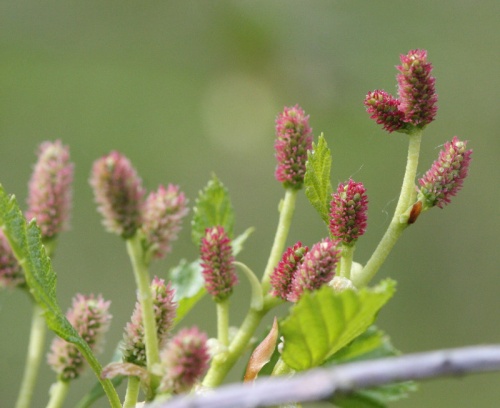 David Nicholls
Bagworth Heath Woods
12 May 2012
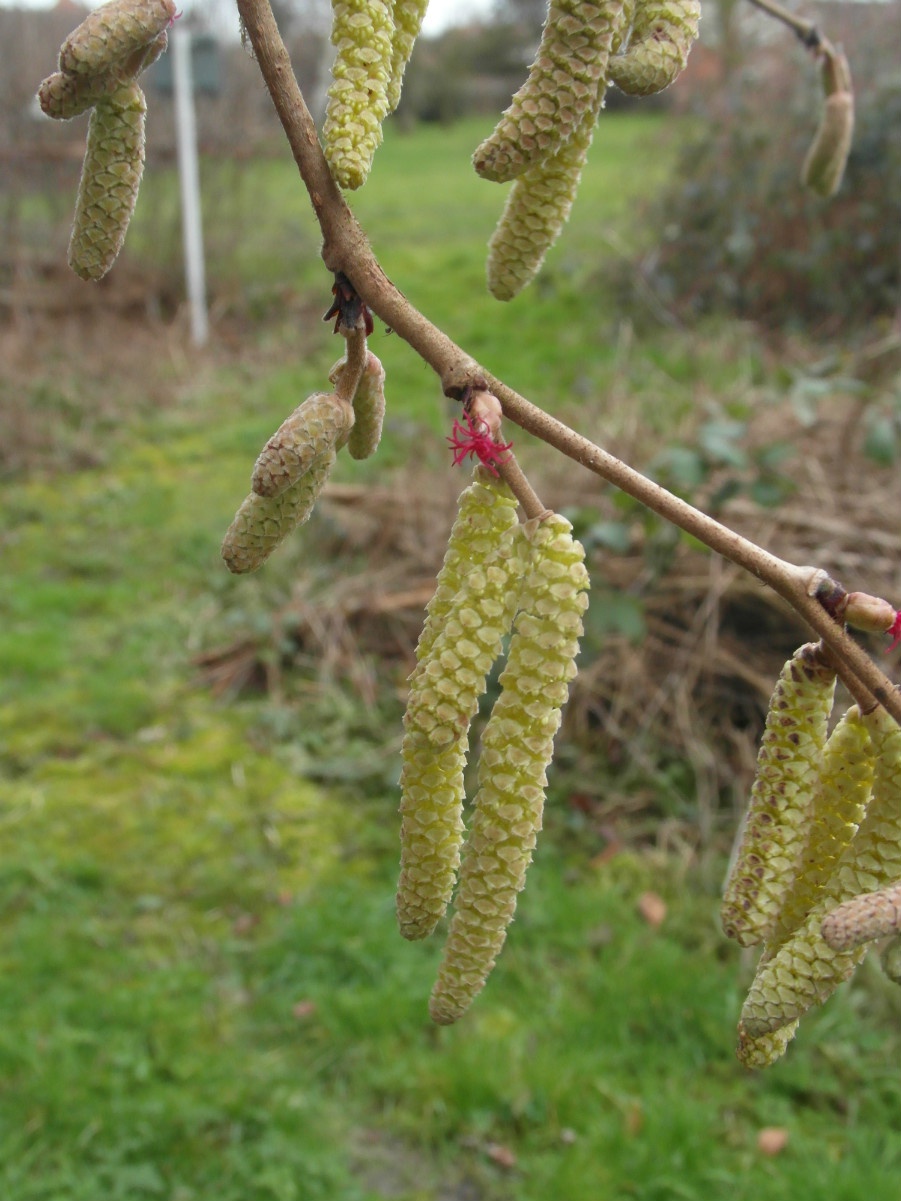


, Red Female Flower Old Fosse Sapcote SP 4996 9237 (taken 5.3.2009).JPG)


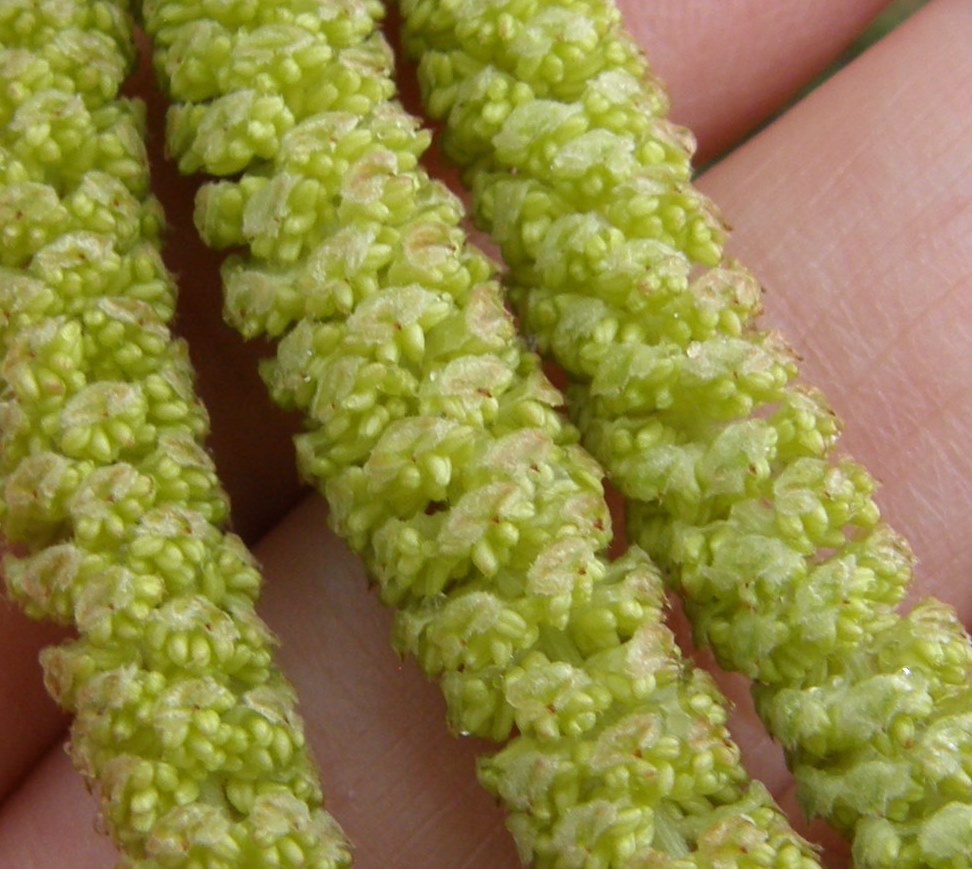
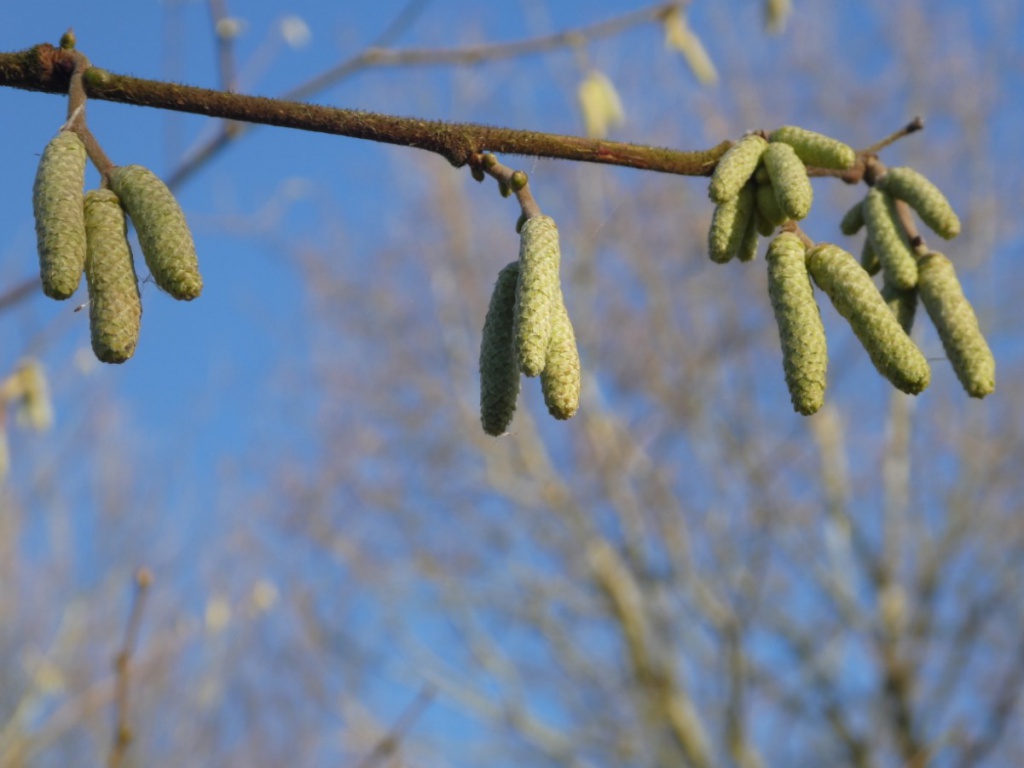
 male Flowers (catkins) Leicester Road Sapcote SP 4962 9333 (taken 10.2.2006).JPG)
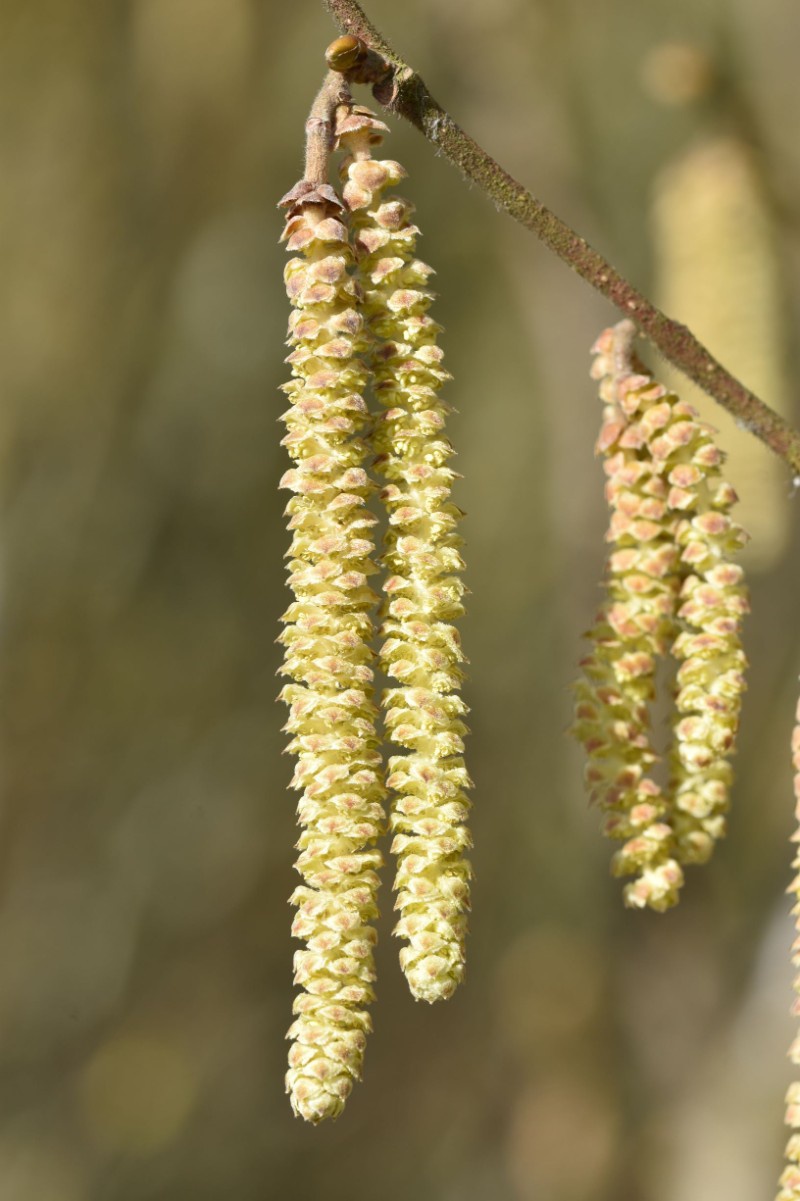

 Leicester Road Lay-By Old Fosse (taken 15.4.2009)..JPG)

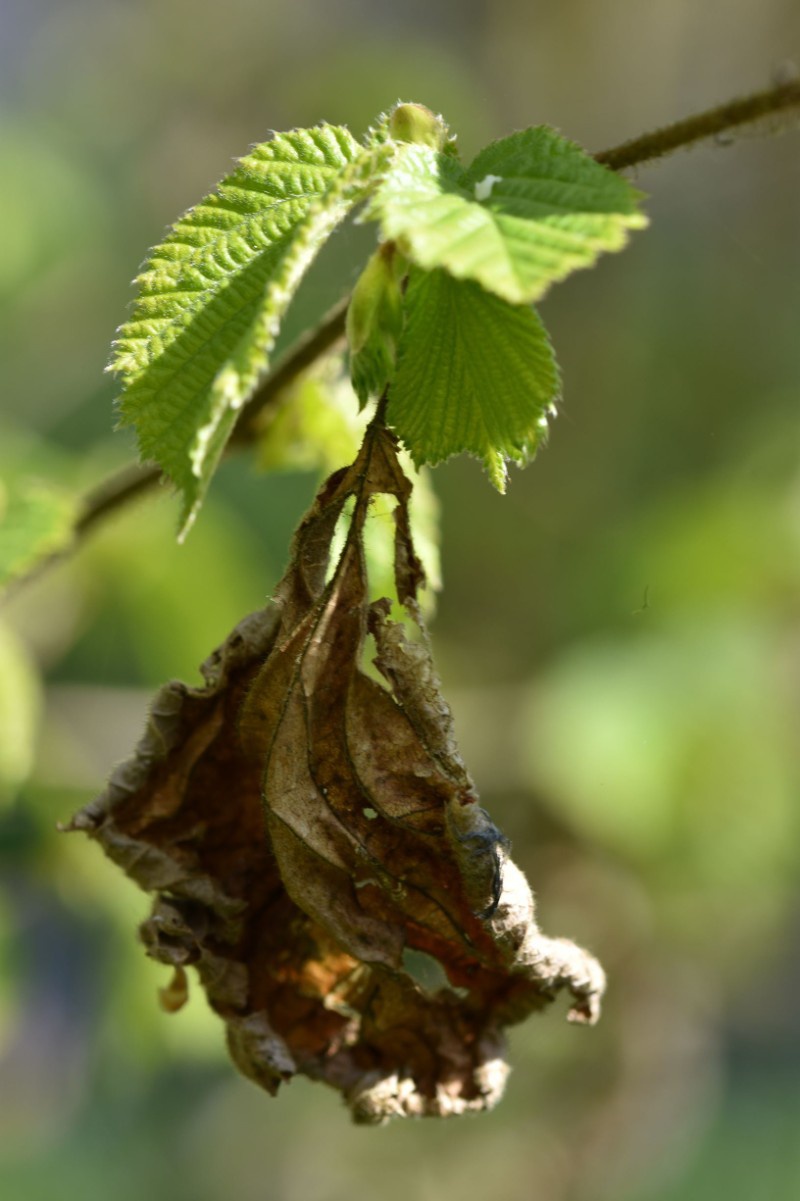
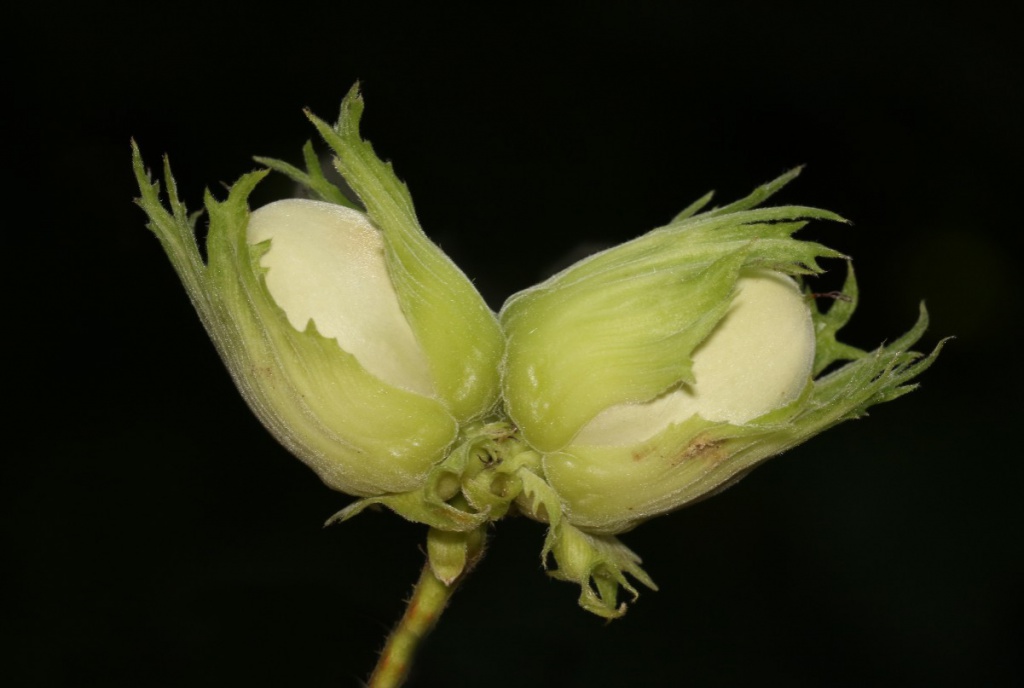
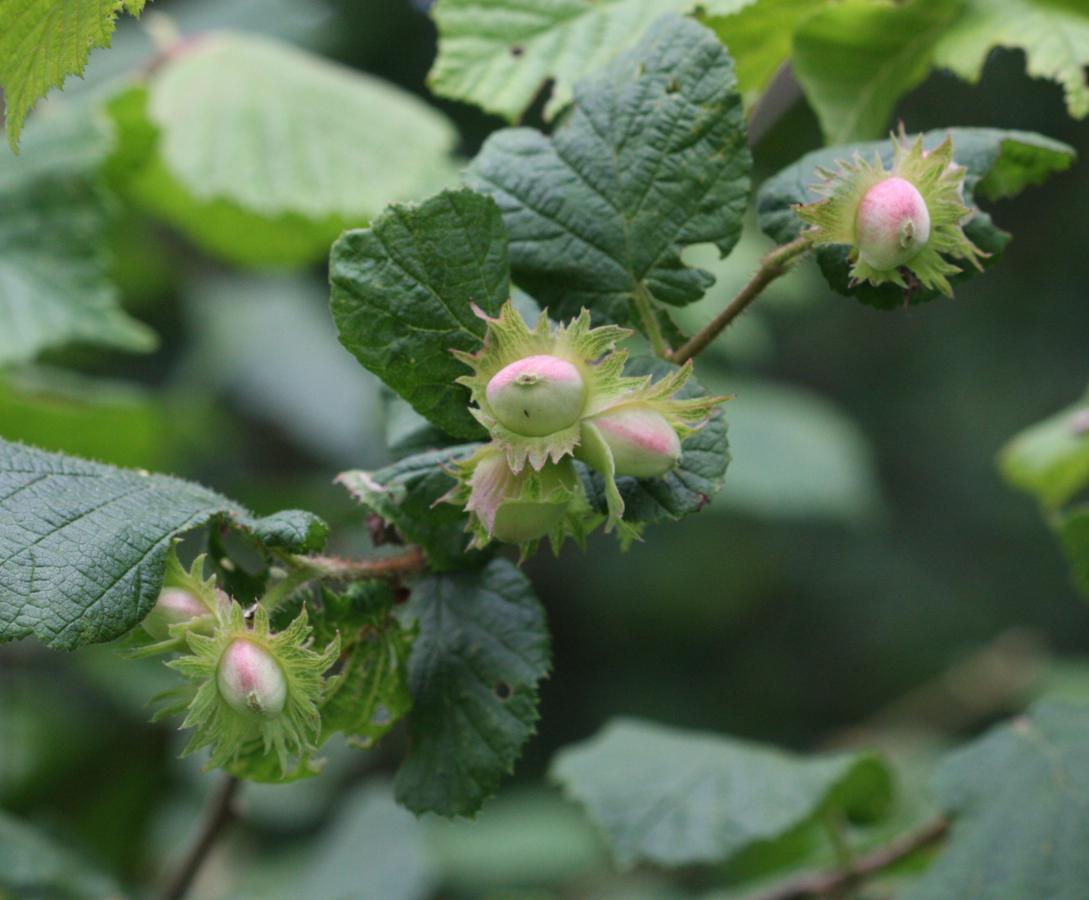
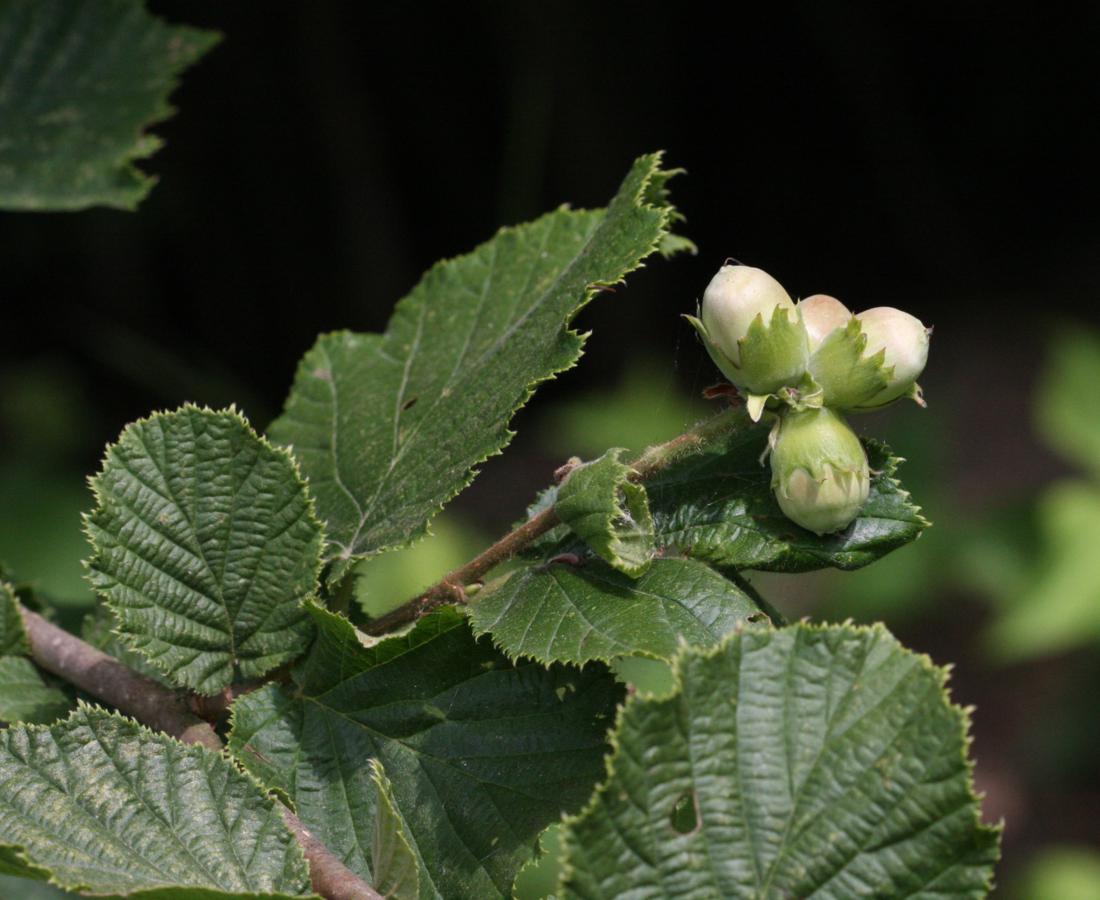


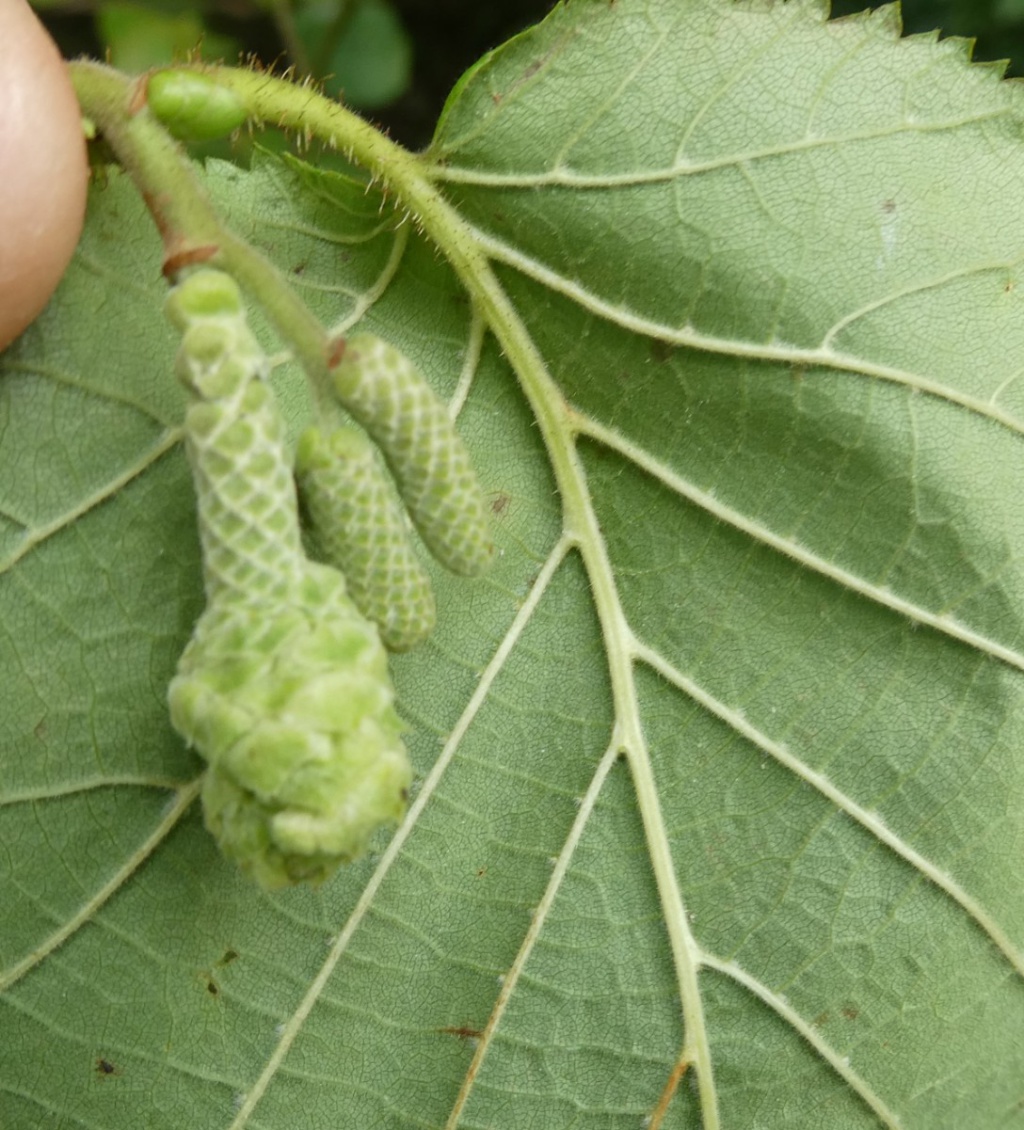
Contarinia coryli
The larva of the midge Contarinia coryli causes galls to form in the catkins of Hazel. The galls contains the white jumping midge larvae; the galls must be opened to confirm whether mites or gall midge larvae are present.
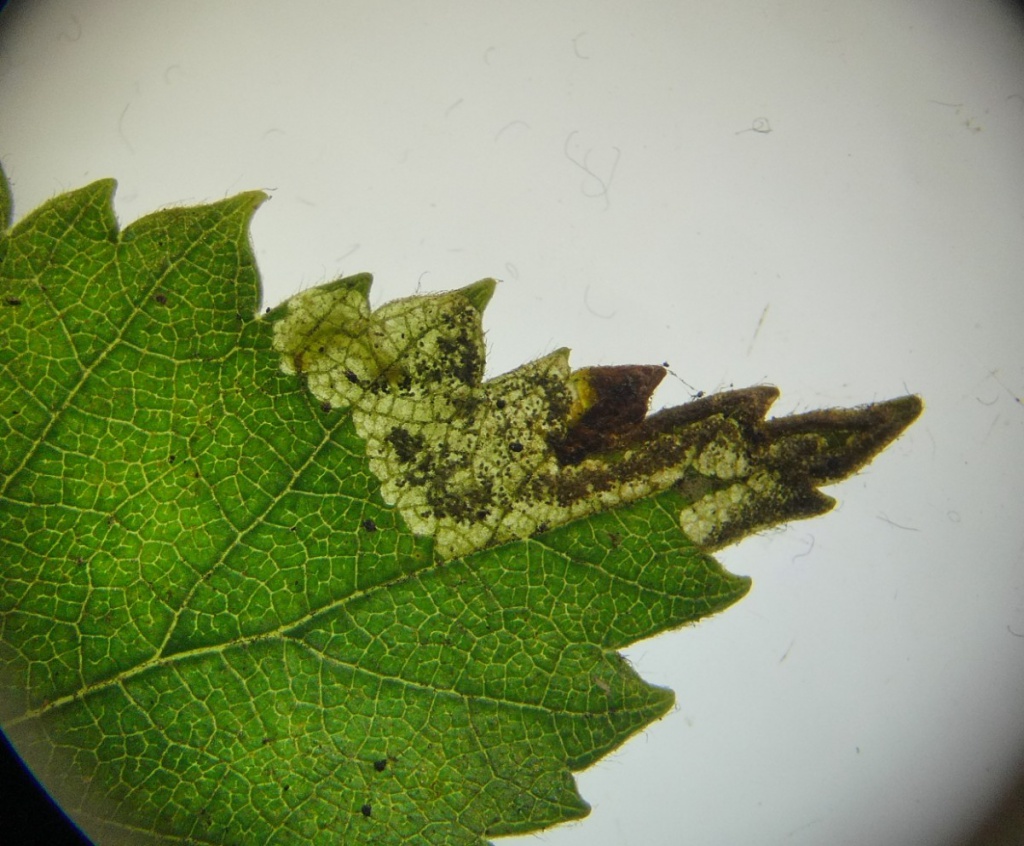
Ectoedemia minimella
The larva of the moth Ectoedemia minimella mines the leaves of Birch and Hazel creating a mine that begins as a contorted gallery which later becomes a blotch with scattered frass.
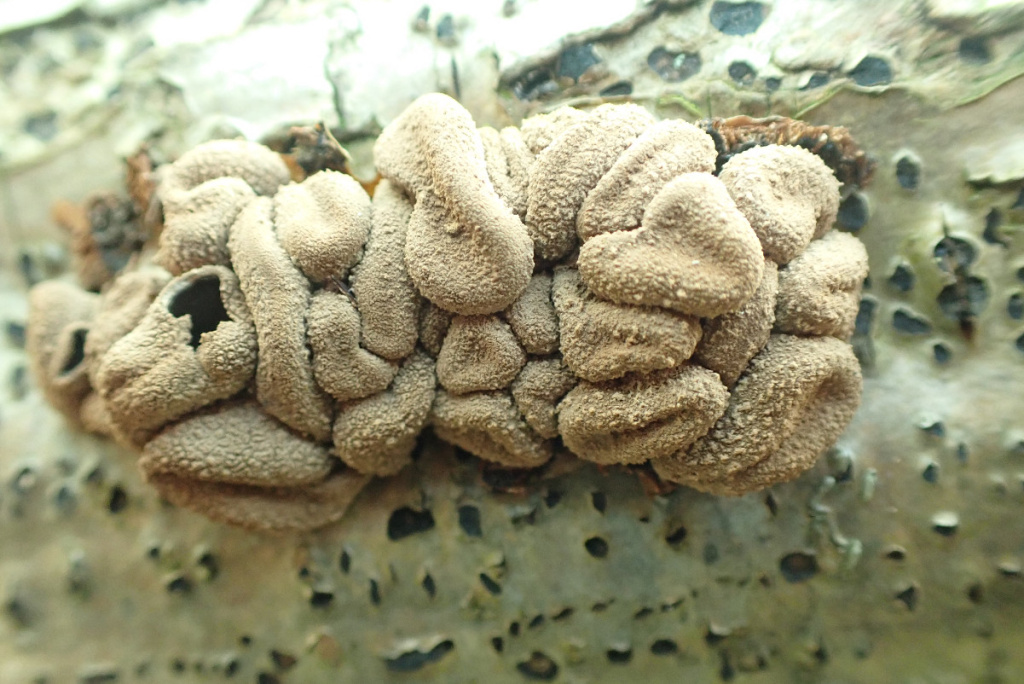
Spring Hazelcup
Spring Hazelcup (Encoelia furfuracea) fungi may occur as individuals, or in clusters of tightly closed cups with a scurfy outer surface. These cups open up to reveal a smooth, fertile, inner surface from which the spores are released. Eventually, the cups can flatten out completely to about 1.5cm across, although some of them retain an enclosed form. It is Associated with Hazel, Alder, and possibly Hornbeam.
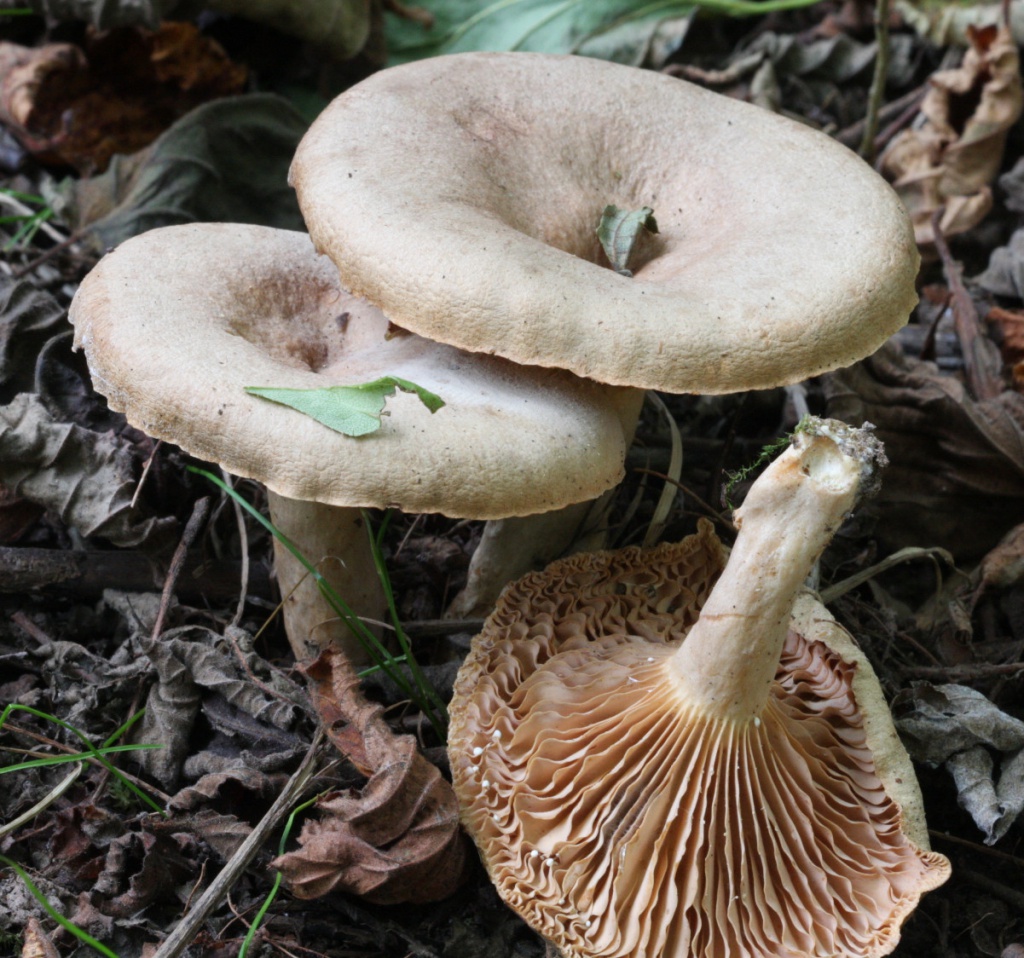
Fiery Milkcap
The Fiery Milkcap fungus - (Lactarius pyrogalus) is pale at first becoming deep ochre yellow when mature and differentiated from other similar Lactarius by its widely-spaced, yellowish gills. It is found on the forest floor in mixed woodland, especially in association with Hazel trees. The milk has a particularly hot taste - hence its common name
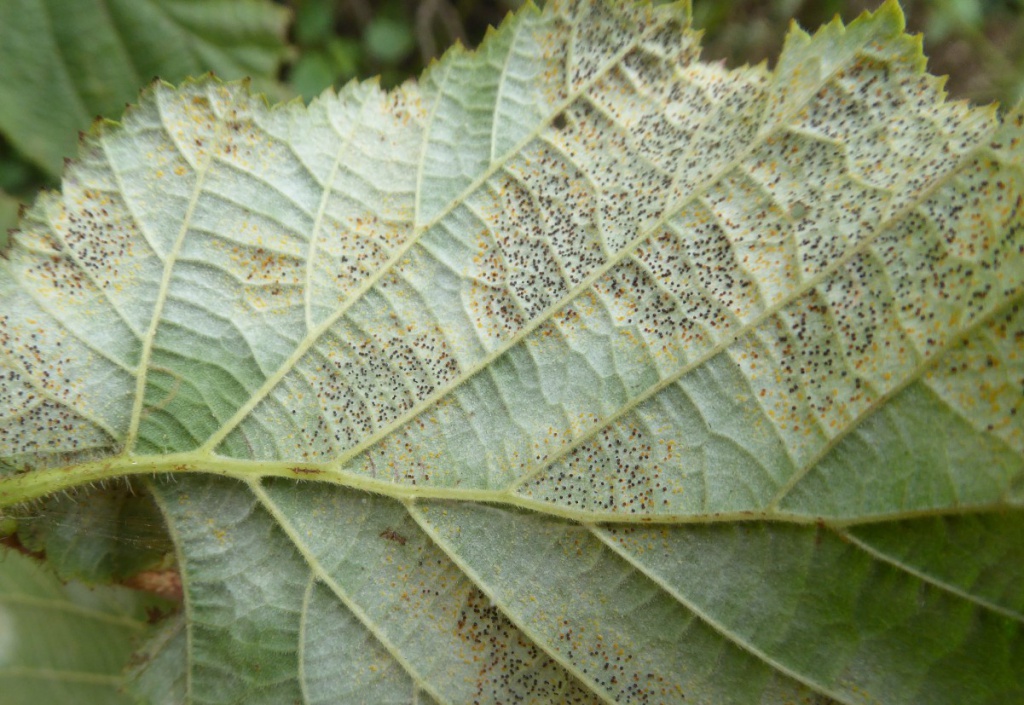
Phyllactinia guttata
Phyllactinia guttata is a powdery mildew found on several plant species including Hazel Corylus avellana. The fruiting bodies are called chasmothecia and produced on the mycelium on the underside of the leaf, visible as minute spheres later in the season. These are yellow or brown when developing and black when mature.
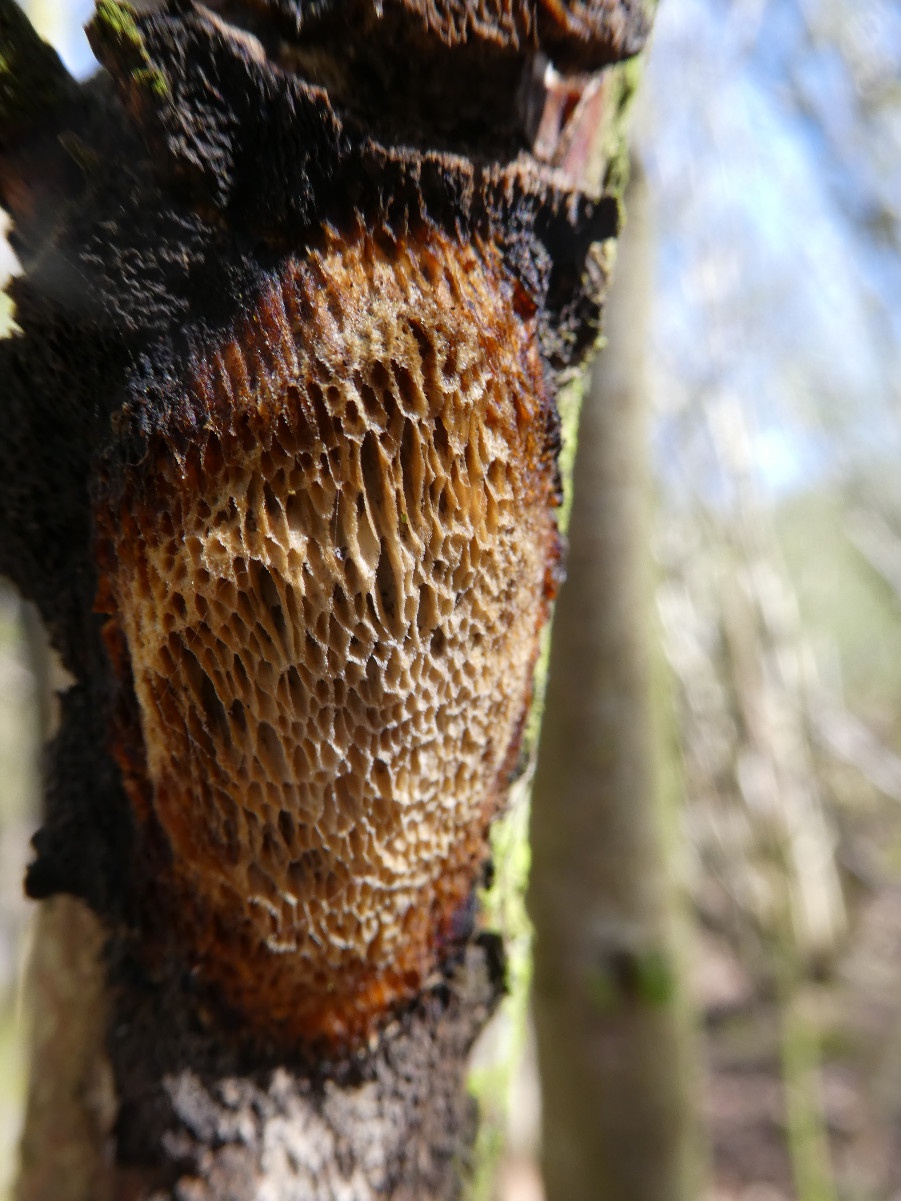
Hazel Porecrust
Hazel Porecrust (Dichomitus campestris) has the form of a resupinate (inverted, or appearing as if upside down) crust with the fertile surface uppermost, but occasionally forms brackets. Crusts are oval in shape, ranging in colour from cream to rusty brown.
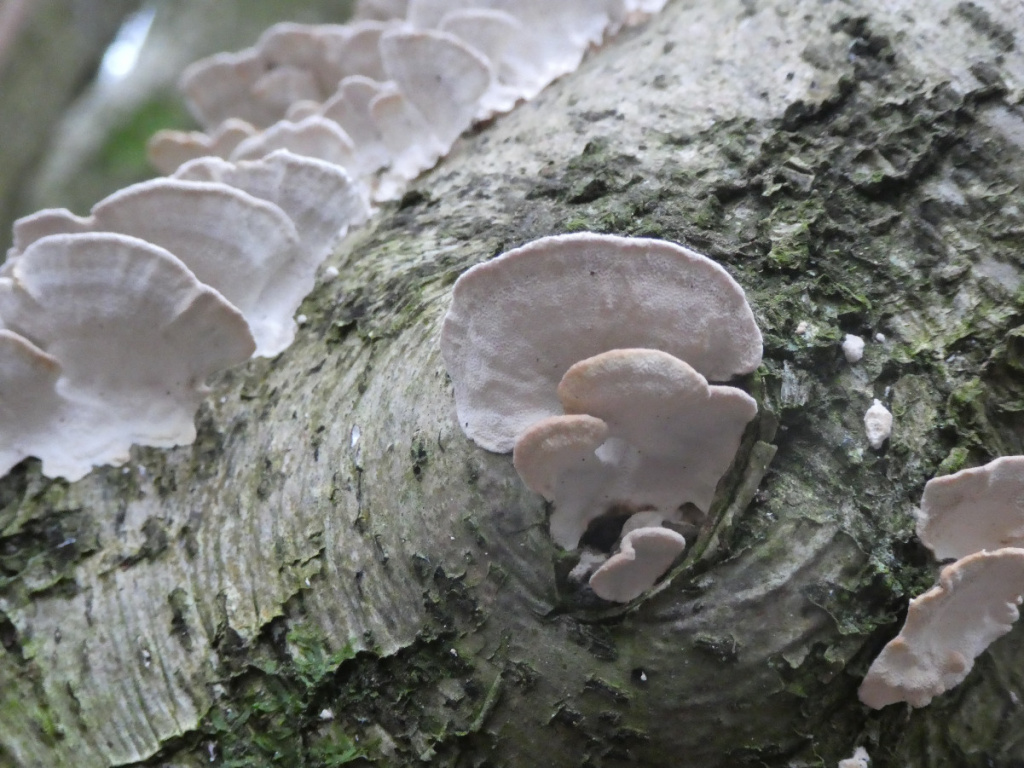
Hazel Bracket
Skeletocutis semipileata fungus is resupinate (inverted, or appearing as if upside down) or forming brackets, usually on Hazel branches. with whitish to brownish upper surface. The fertile surface is white to cream and has very small round pores. It causes a white rot.

Hazel Woodwart
Hazel Woodwart (Hypoxylon fuscum) is a fungus that causes small, warty, brown growths which stand proud on the bark of dead Hazel branches.
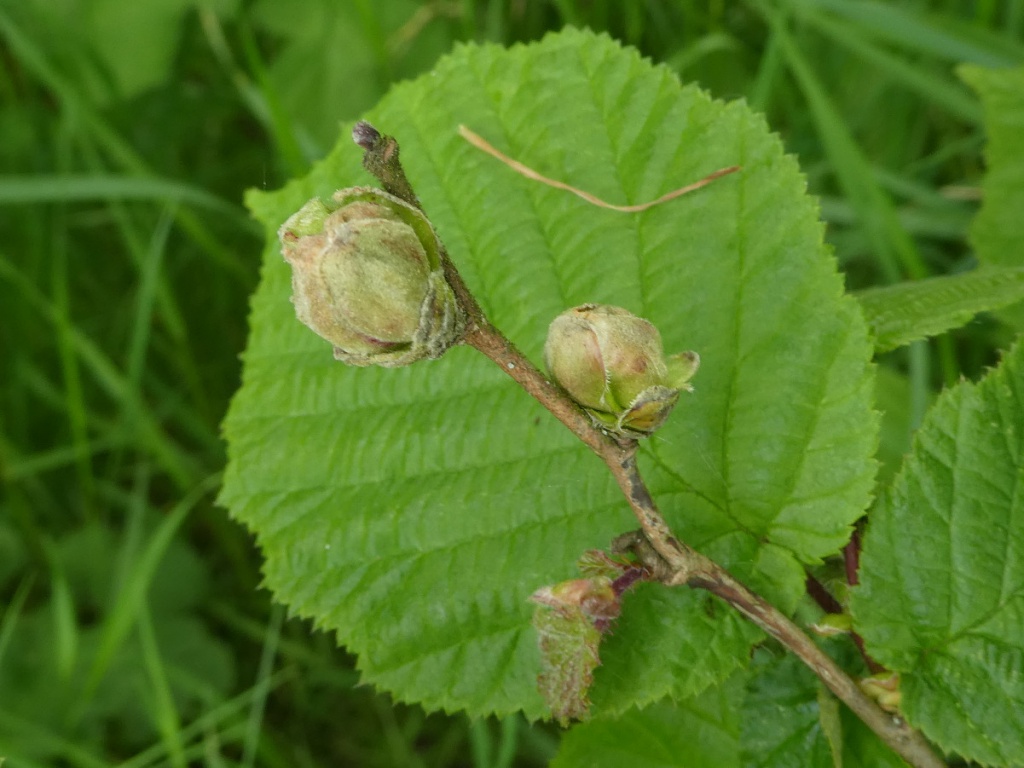
Phytoptus avellanae
Phytoptus avellanae is a gall mite species that induces big bud galls of up to 10 millimetres across, sometimes slightly open, on the buds of Hazel and on Filbert.
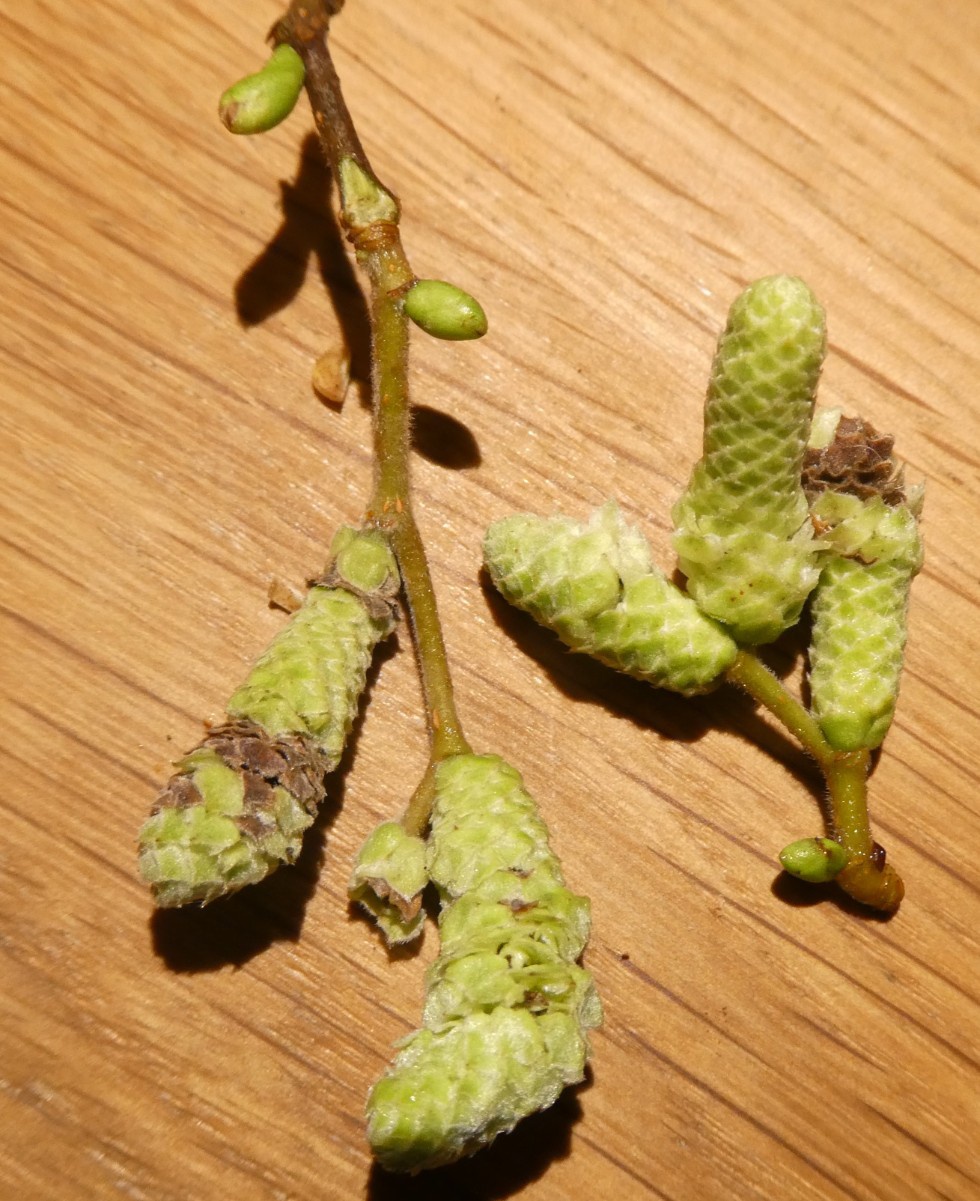
Phyllocoptruta coryli
The mite Phyllocoptruta coryli causes galls to form in the catkins of Hazel. There are two very similar galls on Hazel catkins. Phyllocoptruta coryli contains mites (which are very small and may need magnification under a microscope to see them), whereas Contarinia coryli contains white jumping cecid larvae. To distinguish between these two - the galls must be opened to confirm whether mites or gall midge larvae are present.
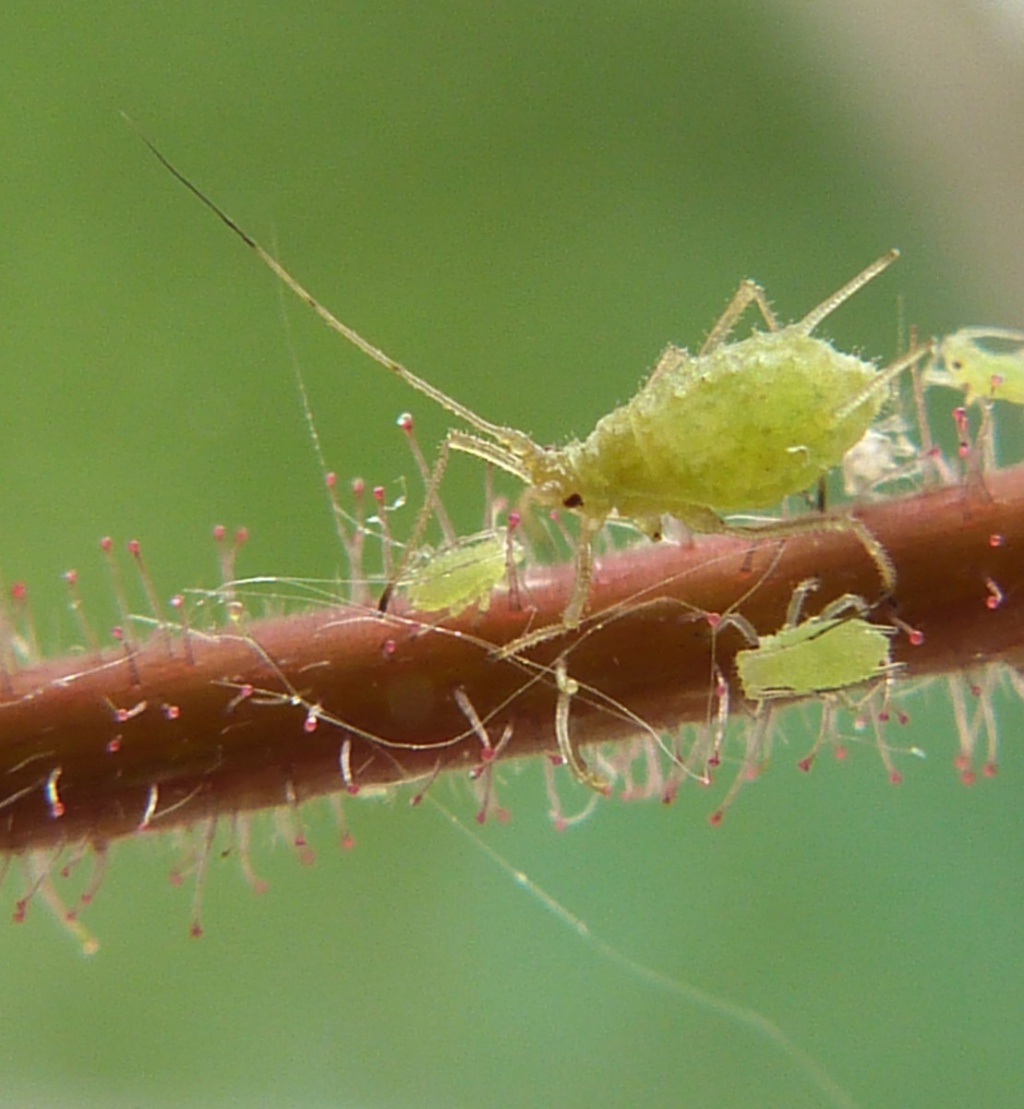
Corylobium avellanae
The aphid Corylobium avellanae is associated with Hazel. It mainly feeds on the fast-growing shoots and only rarely on the leaves. Corylobium avellanae apterae are usually yellowish-green but in one form the aphid is mottled with red.
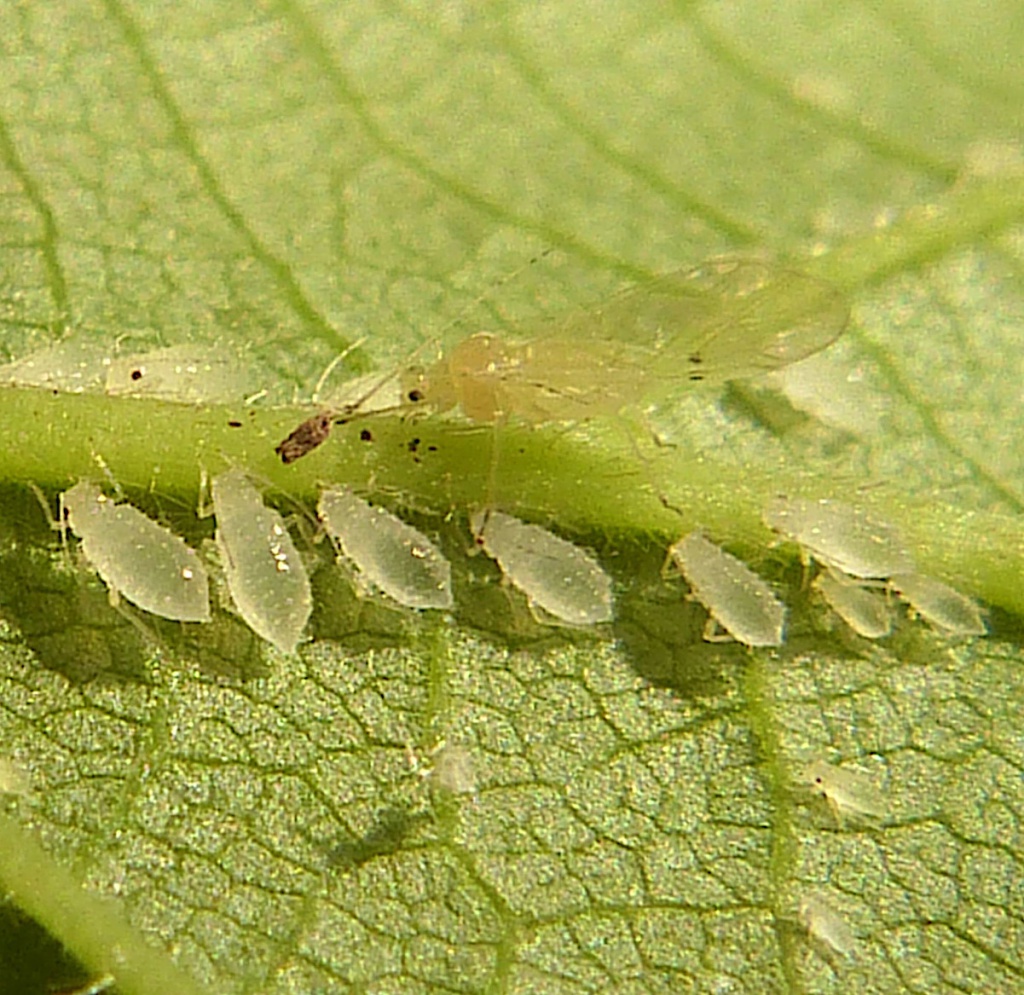
Myzocallis coryli
Myzocallis coryli aphids are very pale coloured. The alatae body length is 1.3 to 2.2 mm. The species has ringed antennae and a inconspicuous dot on the wings of winged adults. Myzocallis coryli is associated with Hazel - the aphids live on the undersides of leaves.
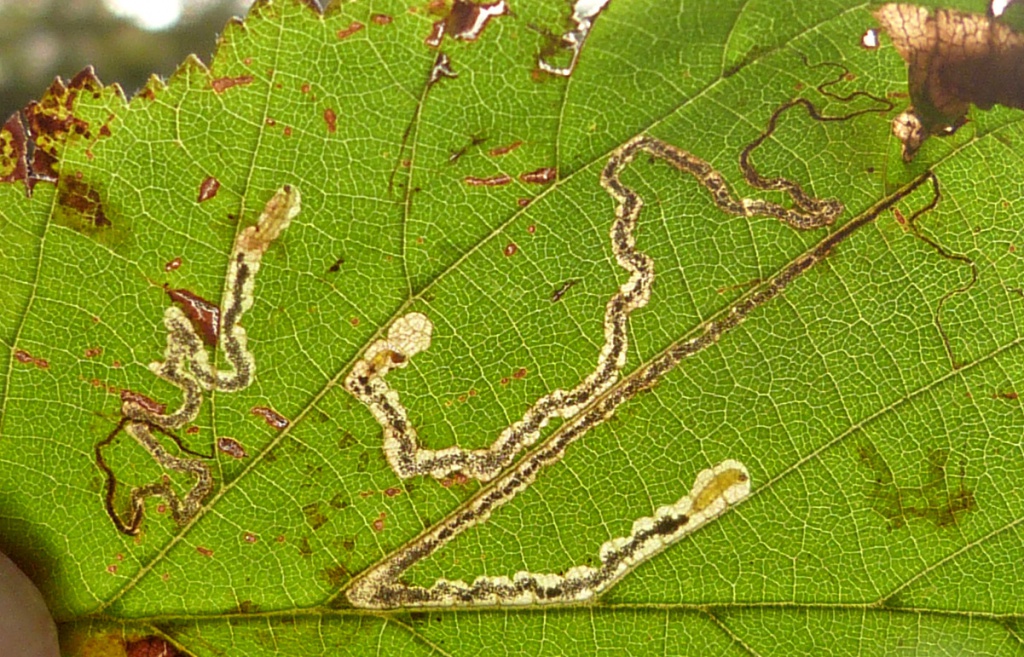
Stigmella microtheriella
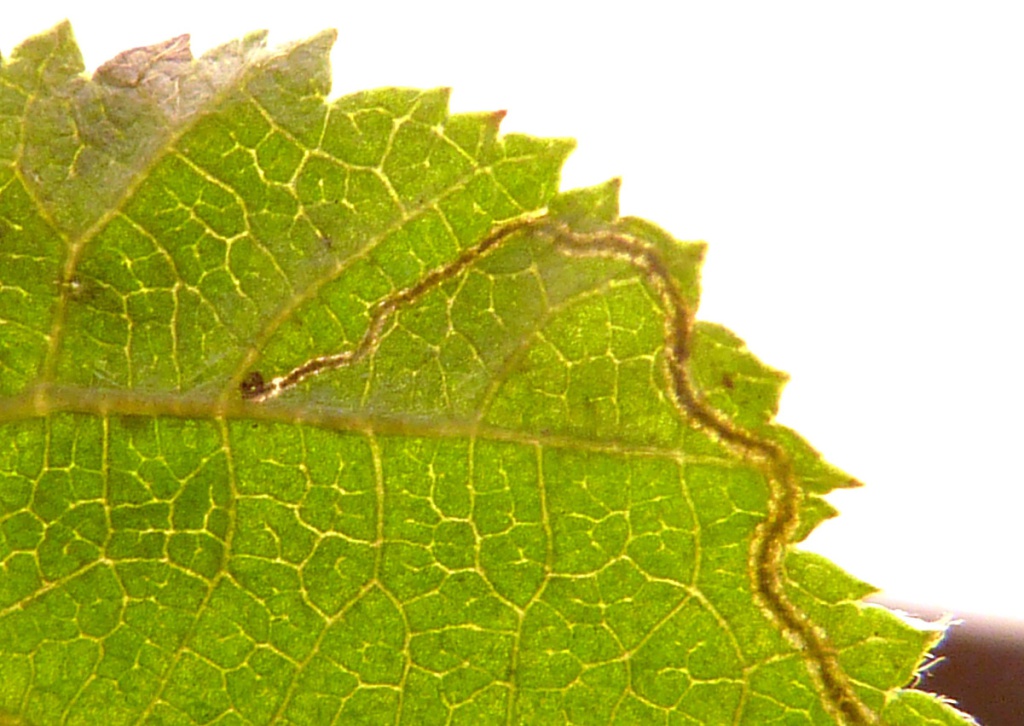
The larva of the moth Stigmella microtheriella mines the leaves of Hazel and Hornbeam, creating a very long narrow mine; on Hazel the mine often wanders all over the leaf; in Hornbeam it tends to be thicker and follow main veins. The egg is underside, not in a leaf-axil.
Stigmella floslactella
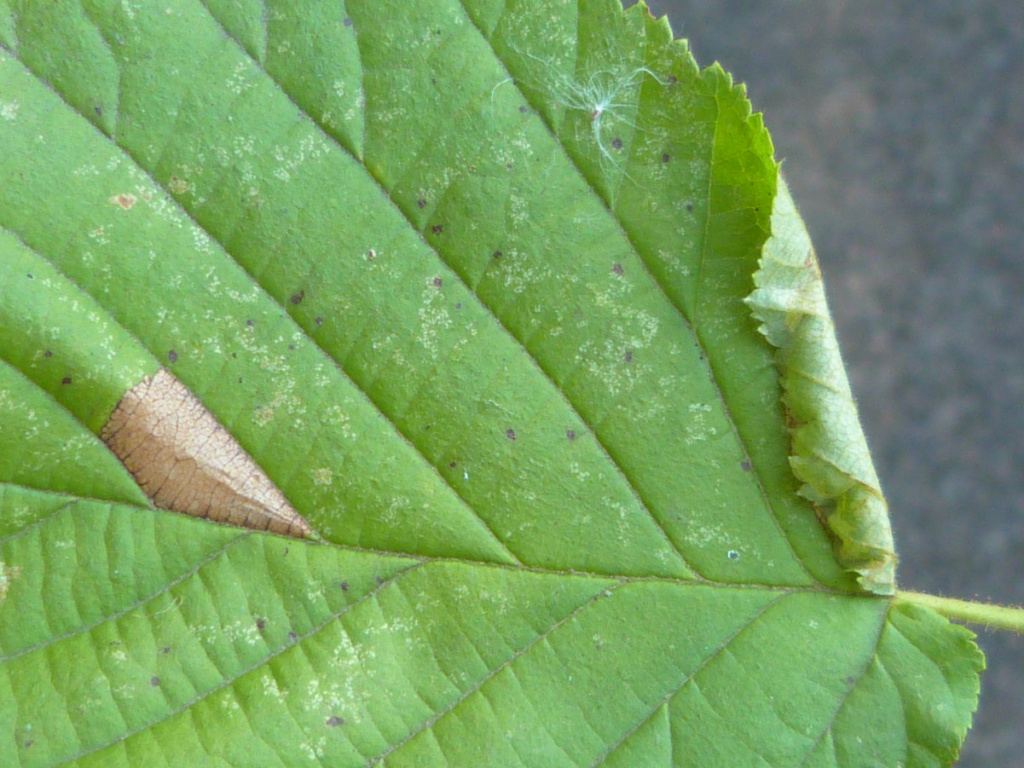
The larva of the moth Stigmella floslactella mines the leaves of Hazel. Stigmella floslactella mines are generally wider, less angular than those of Stigmella microtheriella and contain more scattered frass. The egg is underside, in a leaf-axil, and the larva mines venter (underside) down.
Parornix devoniella
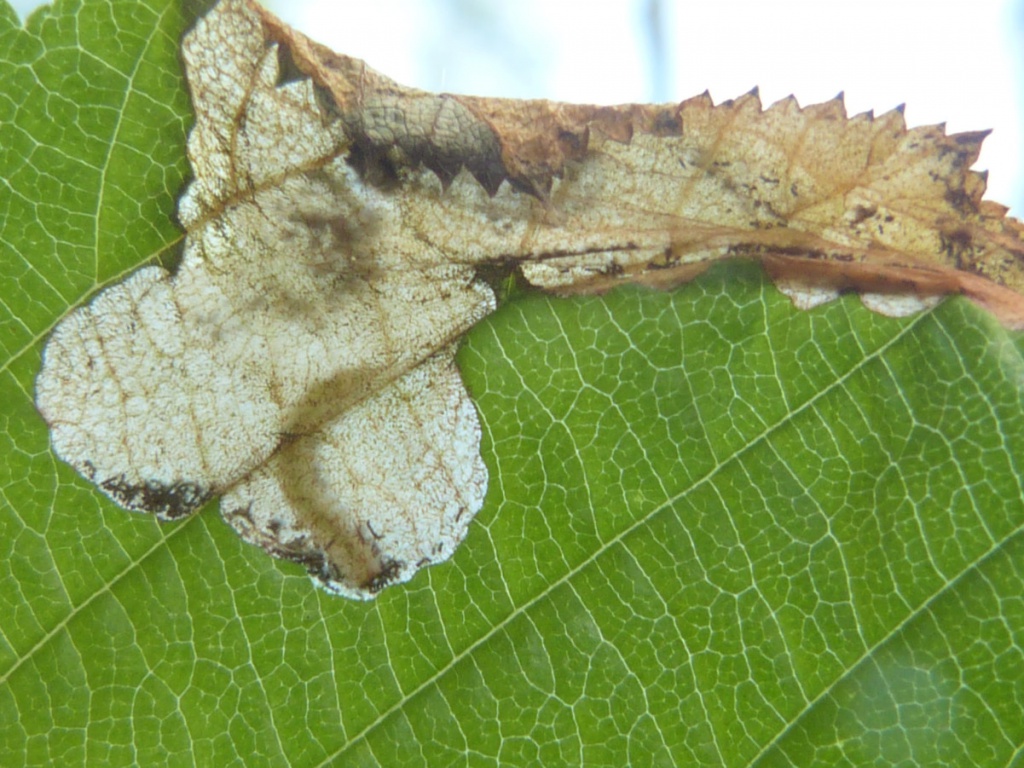
The larva of the moth Parornix devoniella mines the leaves of Hazel, initially creating a squarish or triangular tentiform mine on the underside, and then folding over the edge of the same leaf, or one nearby. In common with other Parornix larvae, the larva is whitish with 4 black spots on the pronotum
Paracrania chrysolepidella
The larvae of the moth Paracrania chrysolepidella feed on Hazel creating fairly large blotch mines.

Nut Leaf Blister Moth
The caterpillars form a rounded, silvery blotch on the upper surface of Hazel leaves. There can be several mines to one leaf and the mines are very visible in late summer and autumn.
Phyllonorycter nicellii
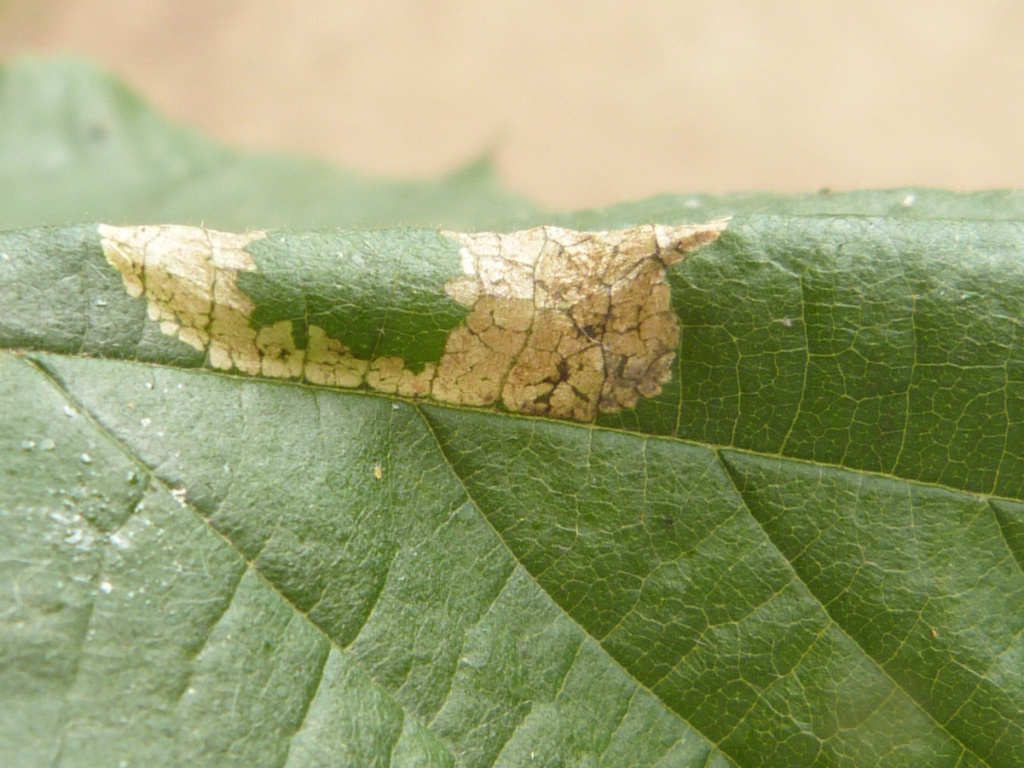
The caterpillars feed on the underside of Hazel leaves, causing a bulge on the upper surface between two veins which is usually brown with a patch of green.