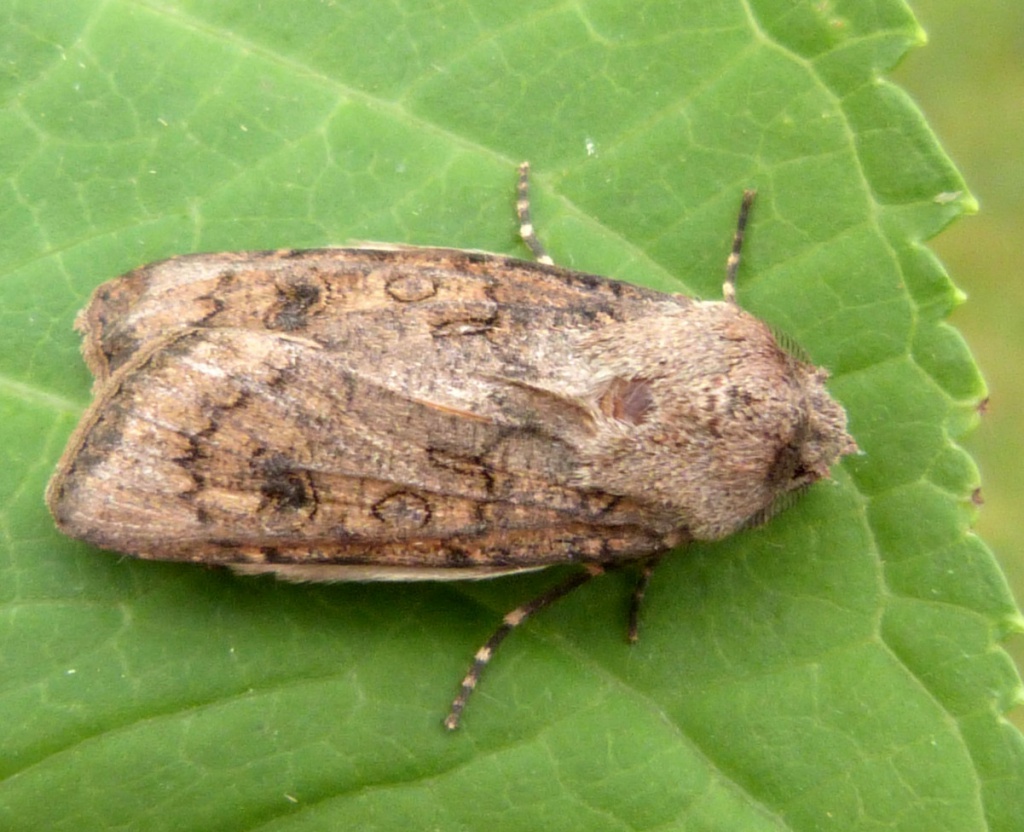
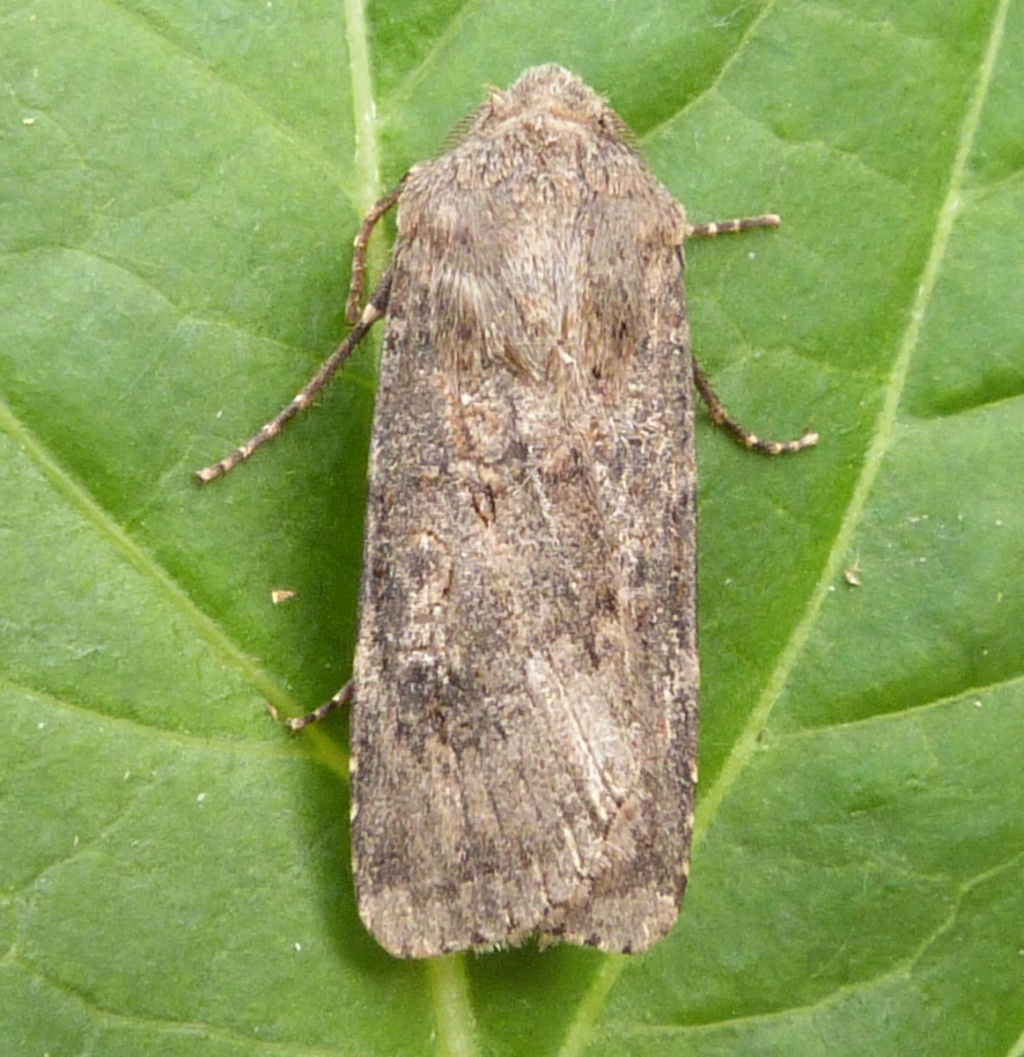
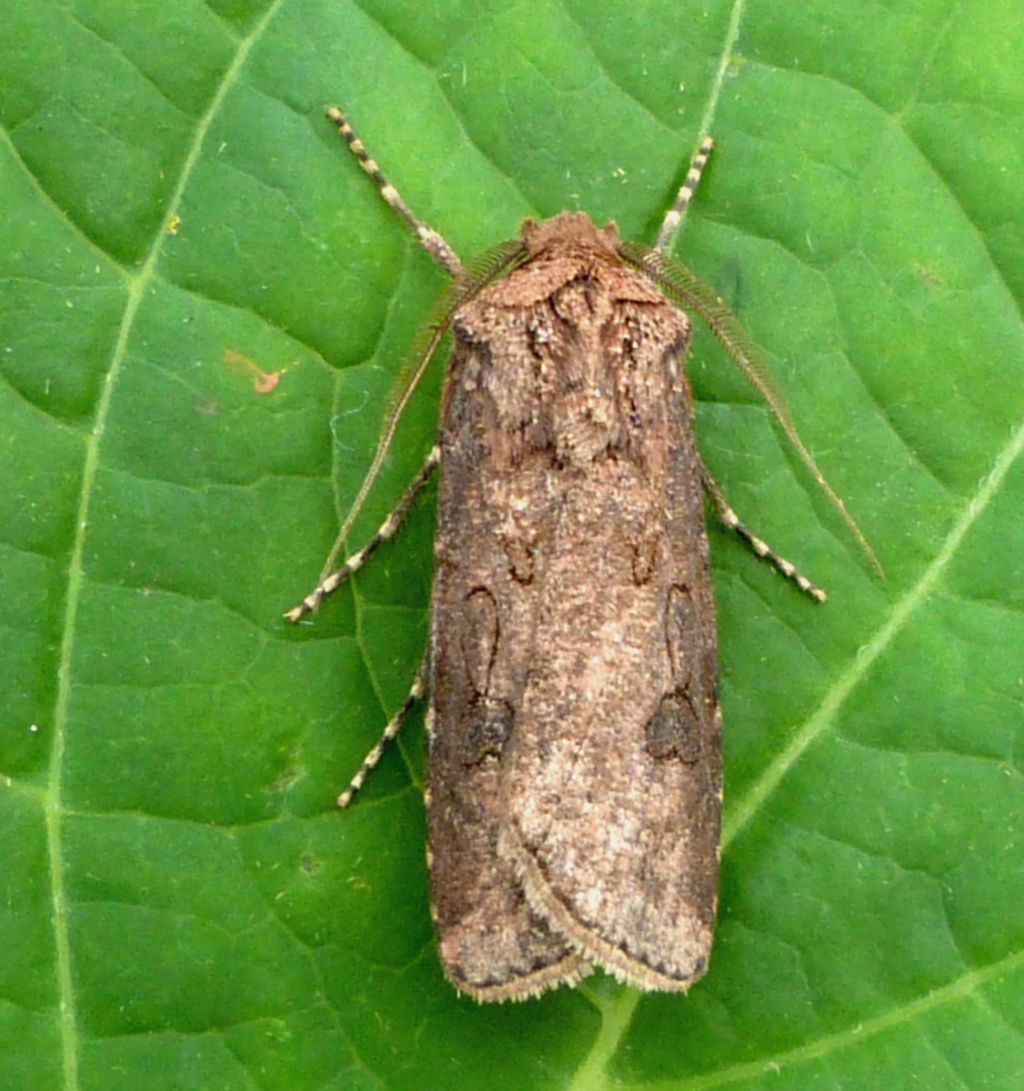
Turnip Moth - Agrotis segetum
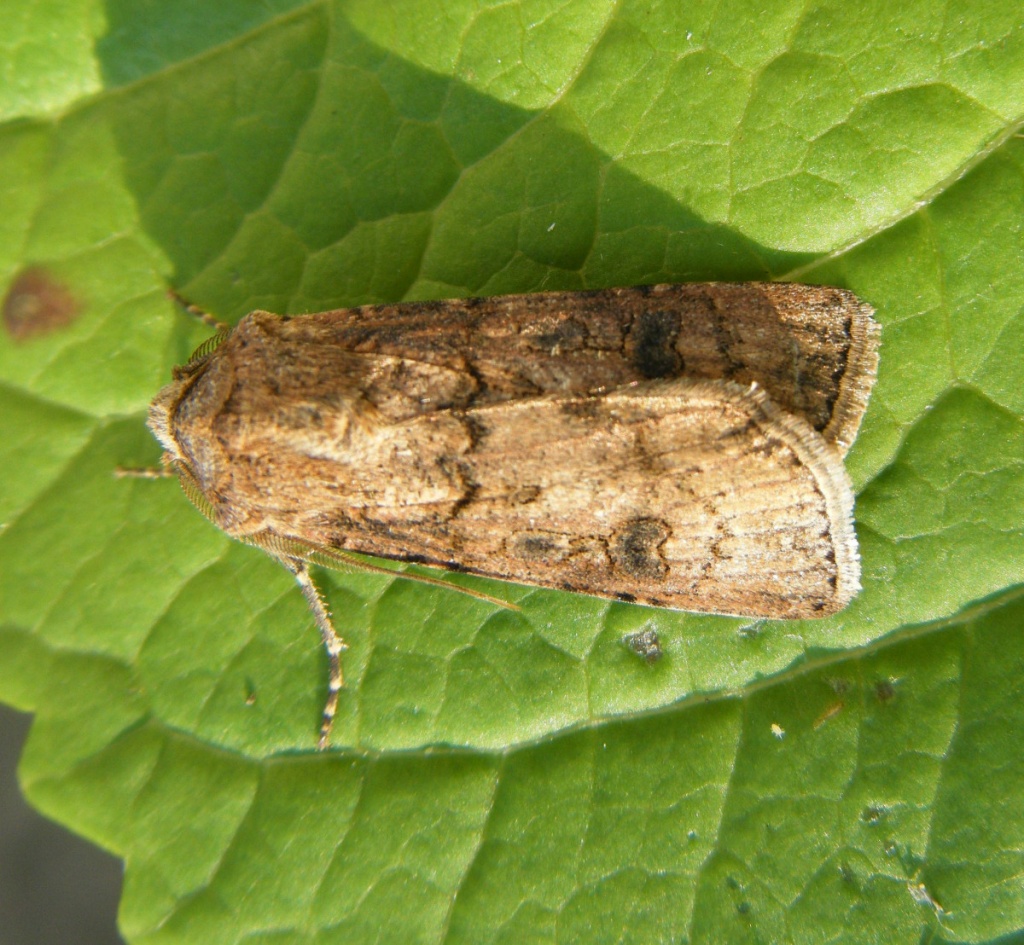
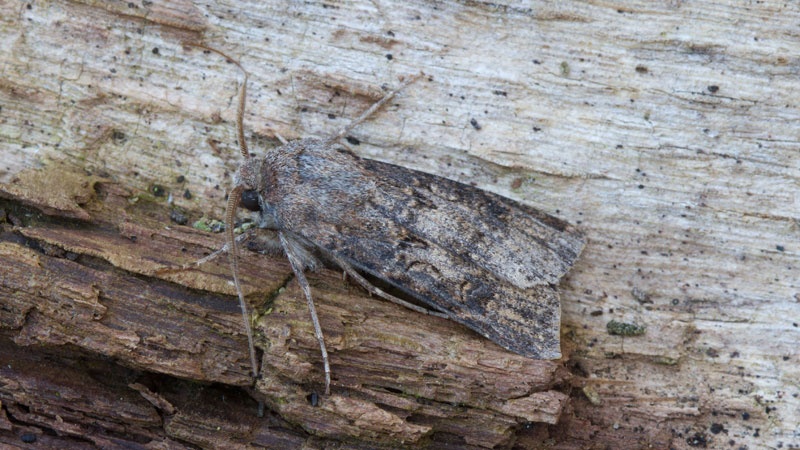
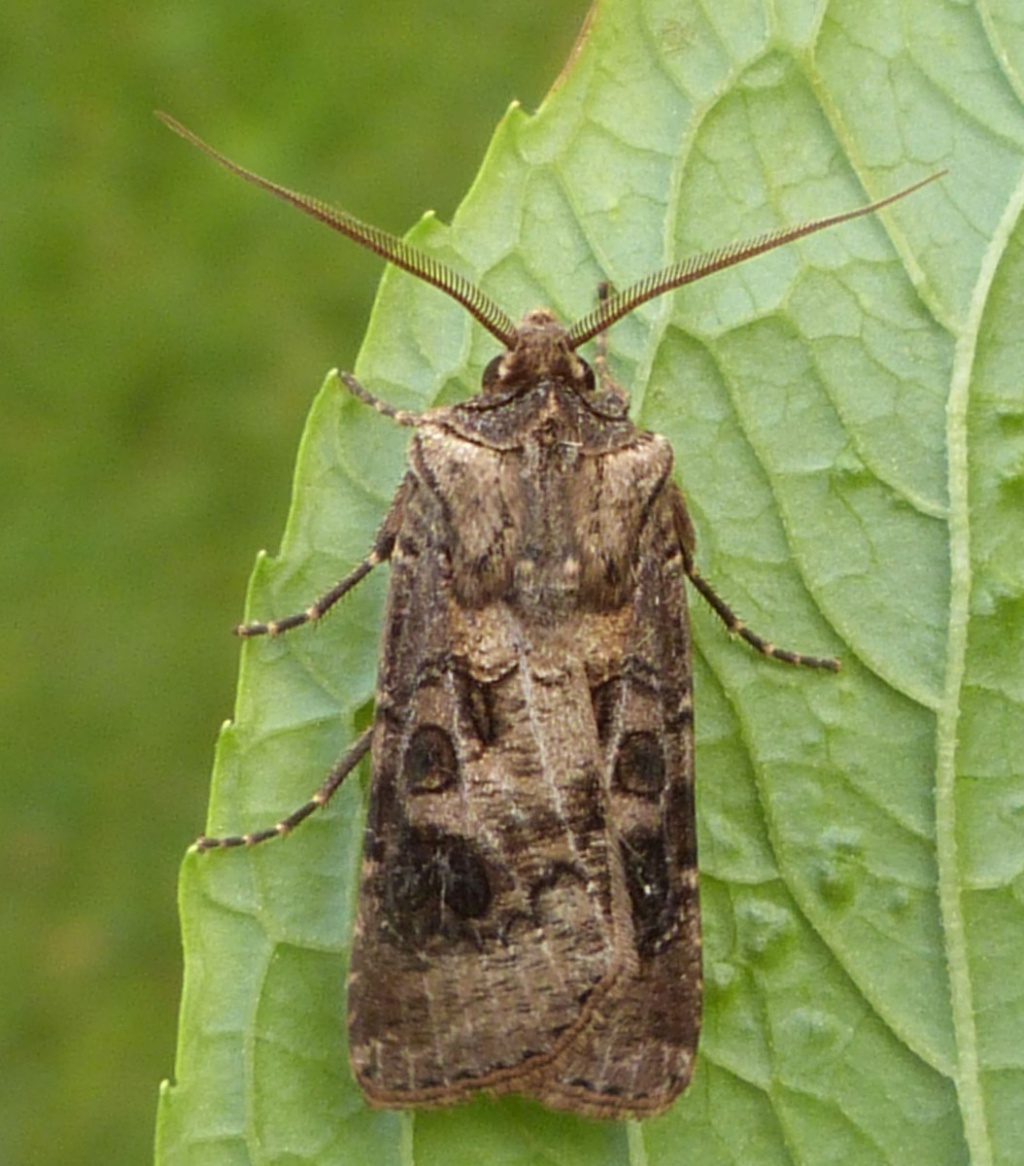
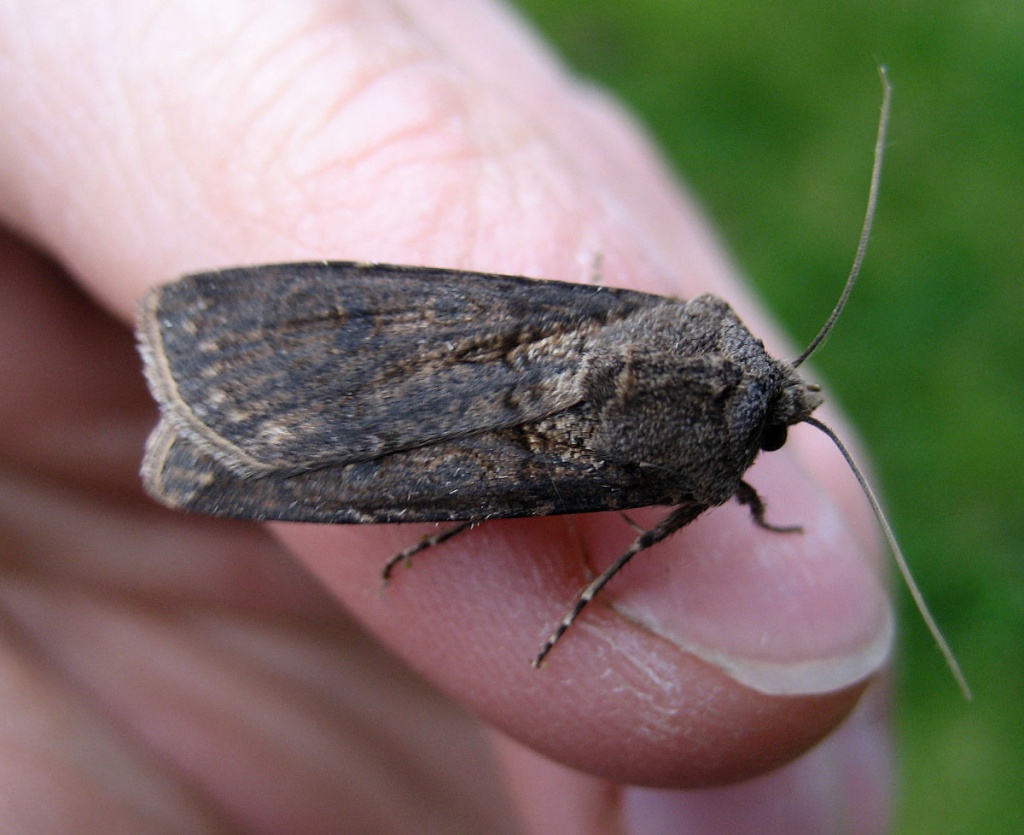
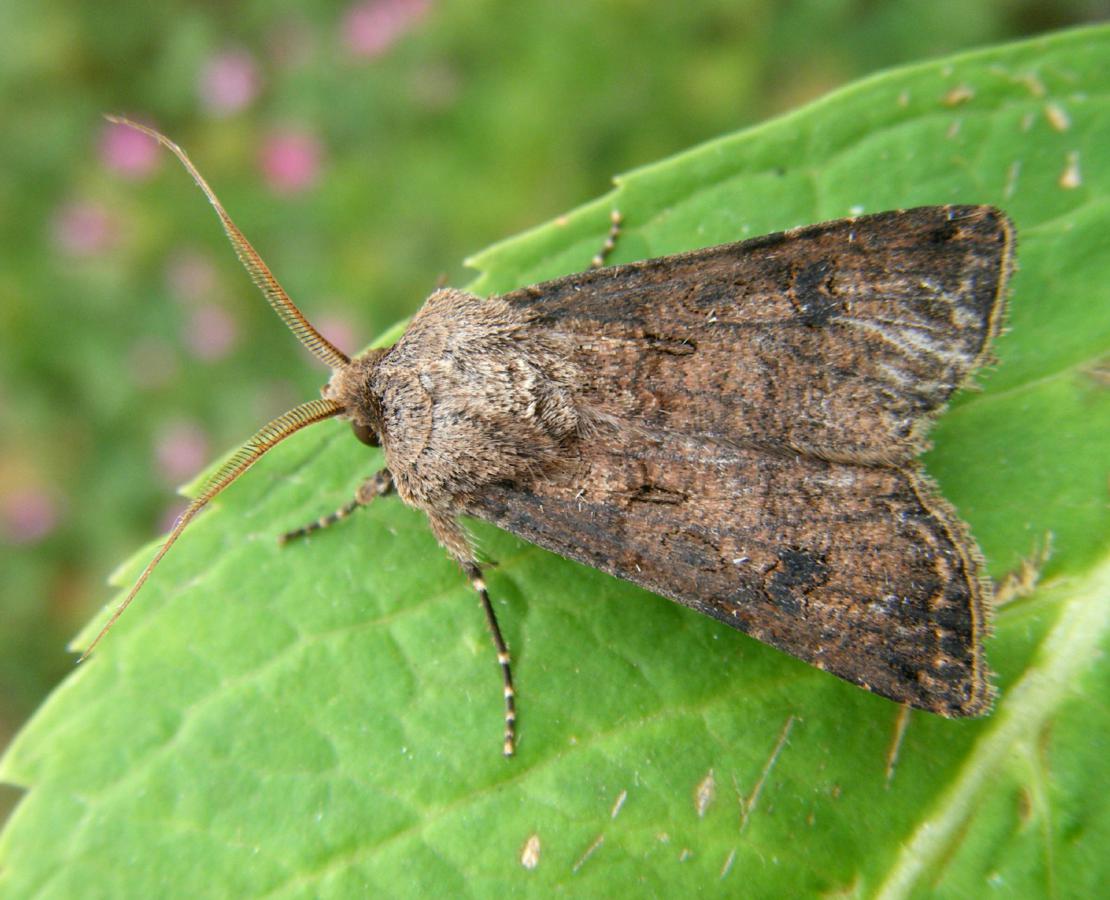
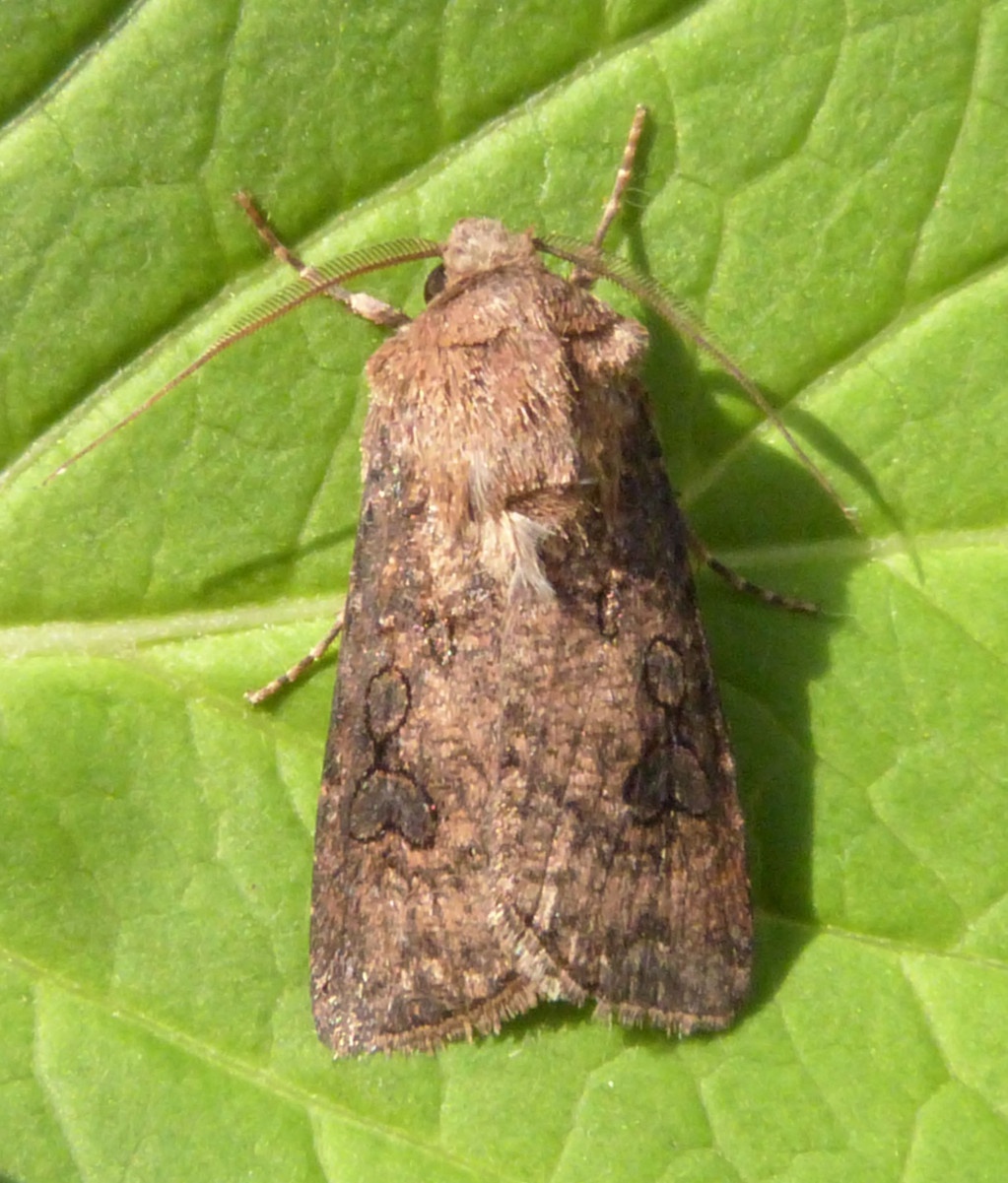
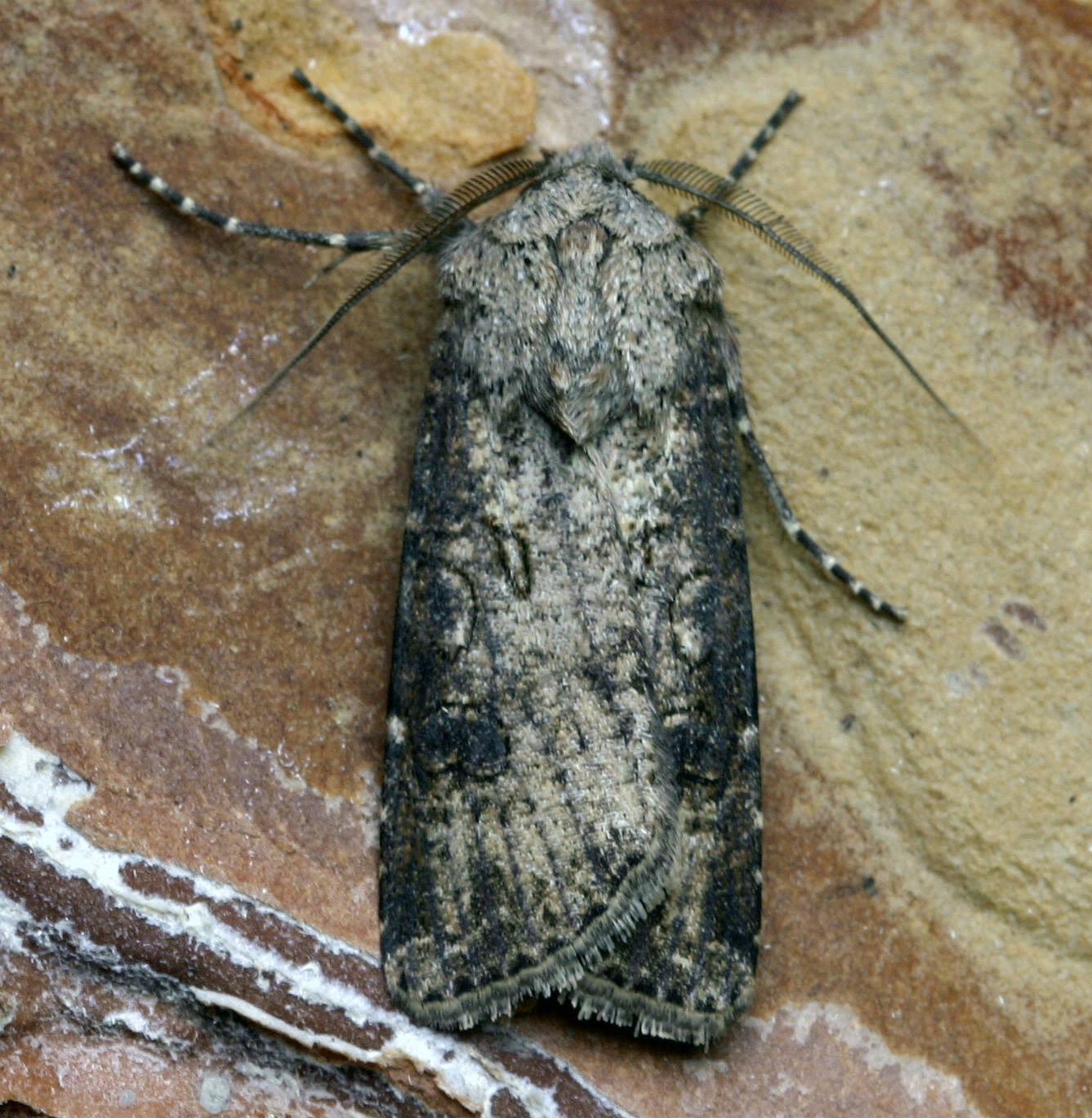
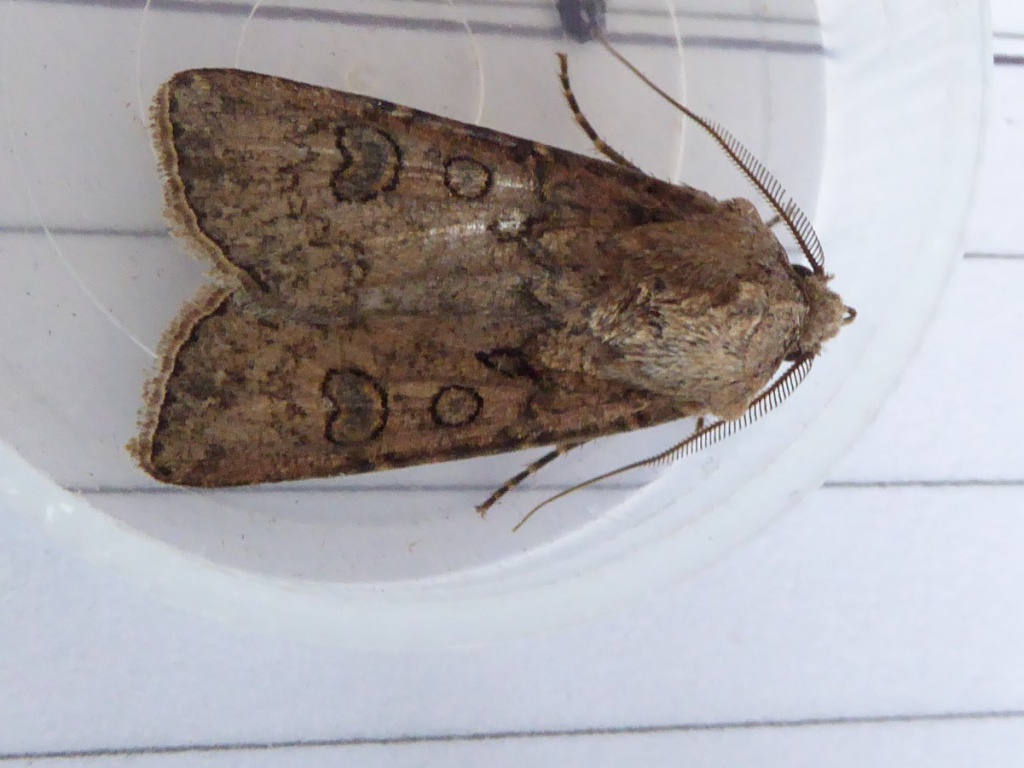
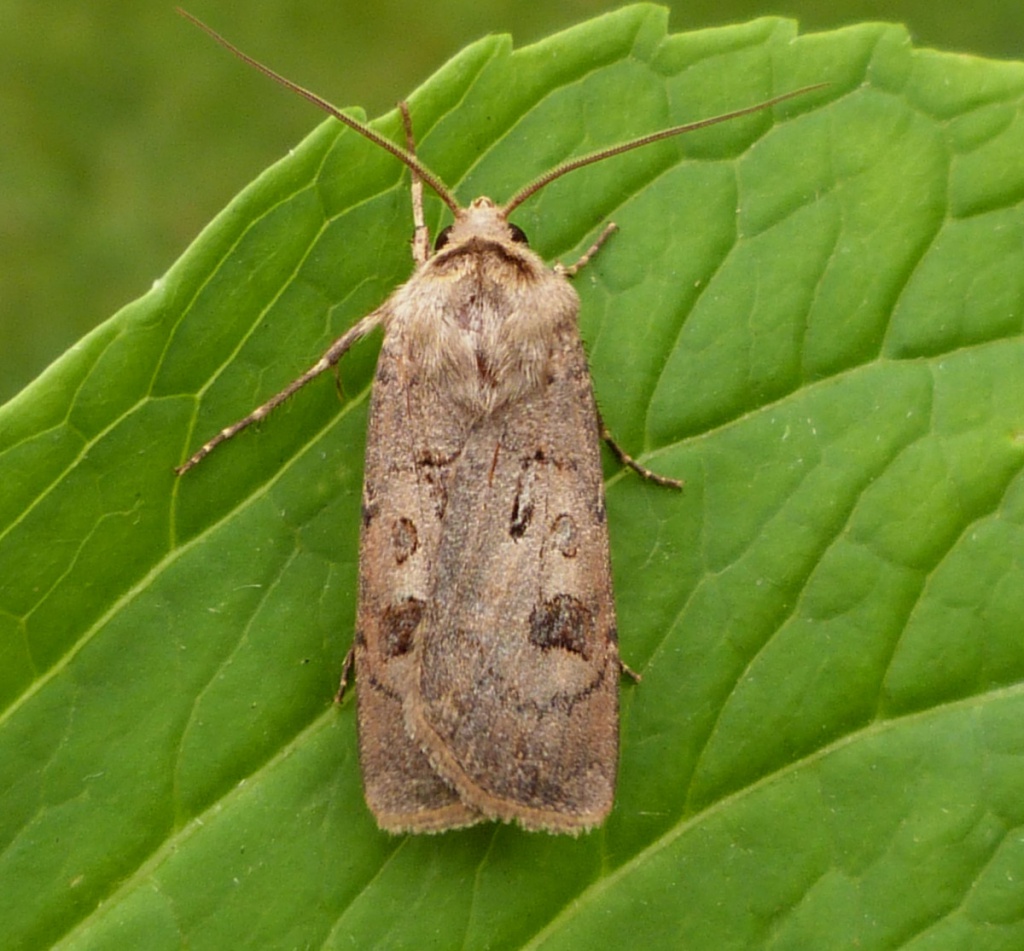
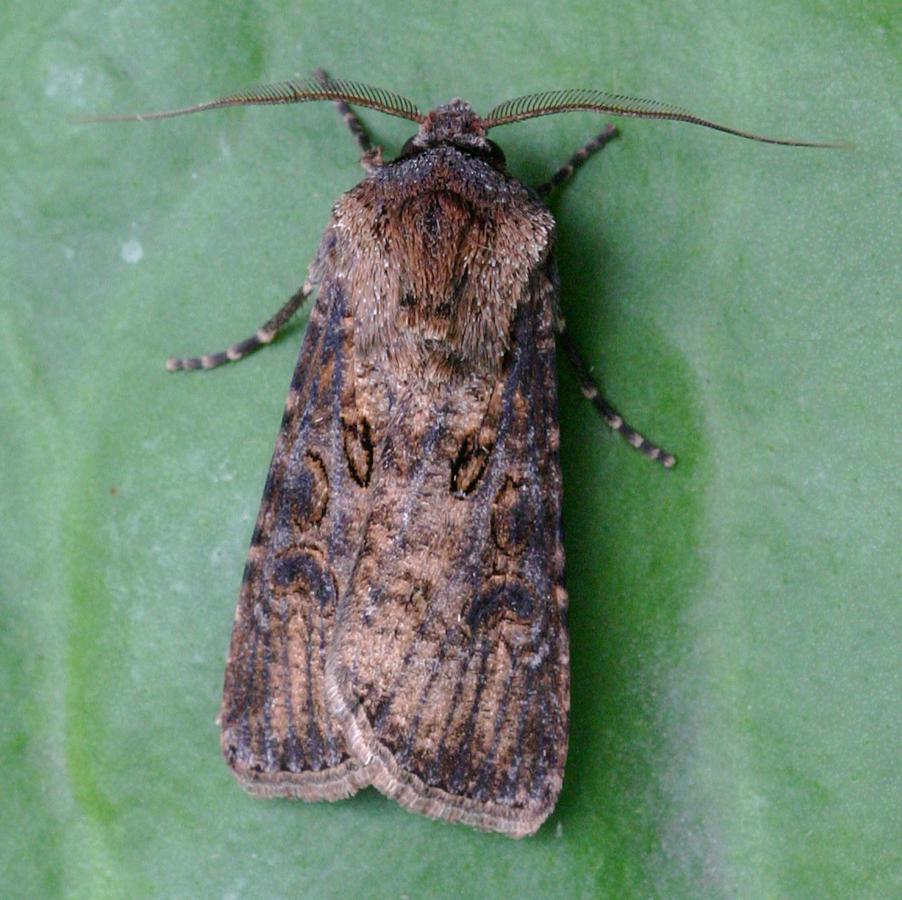
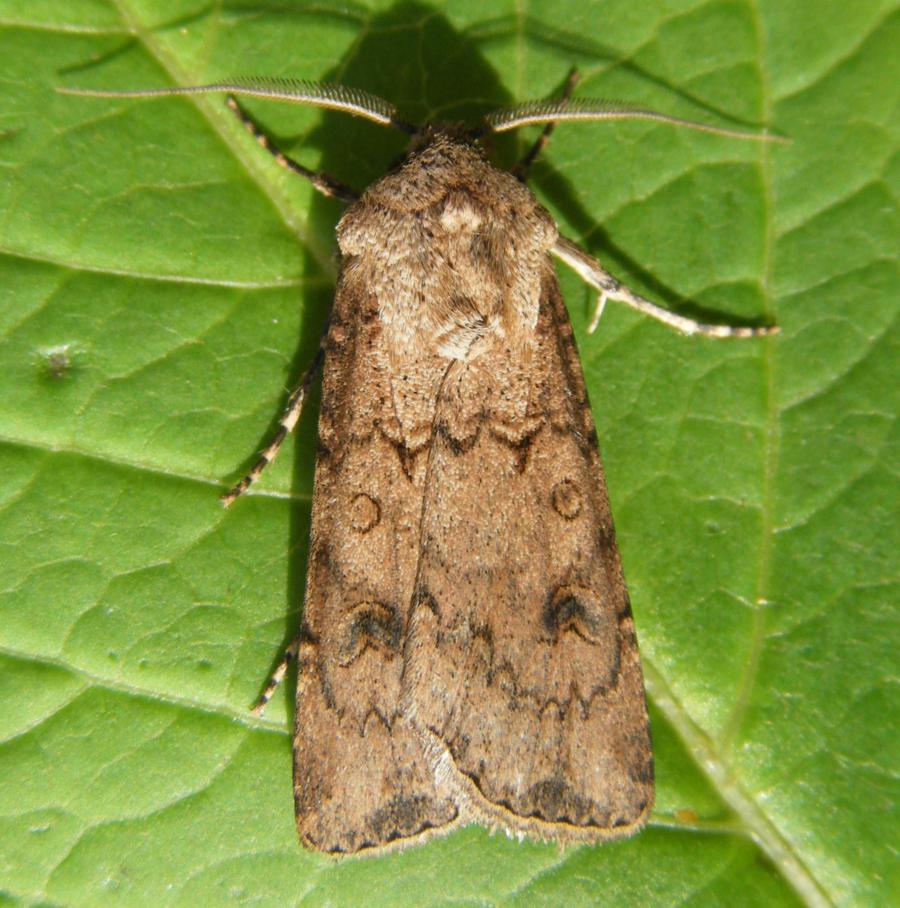
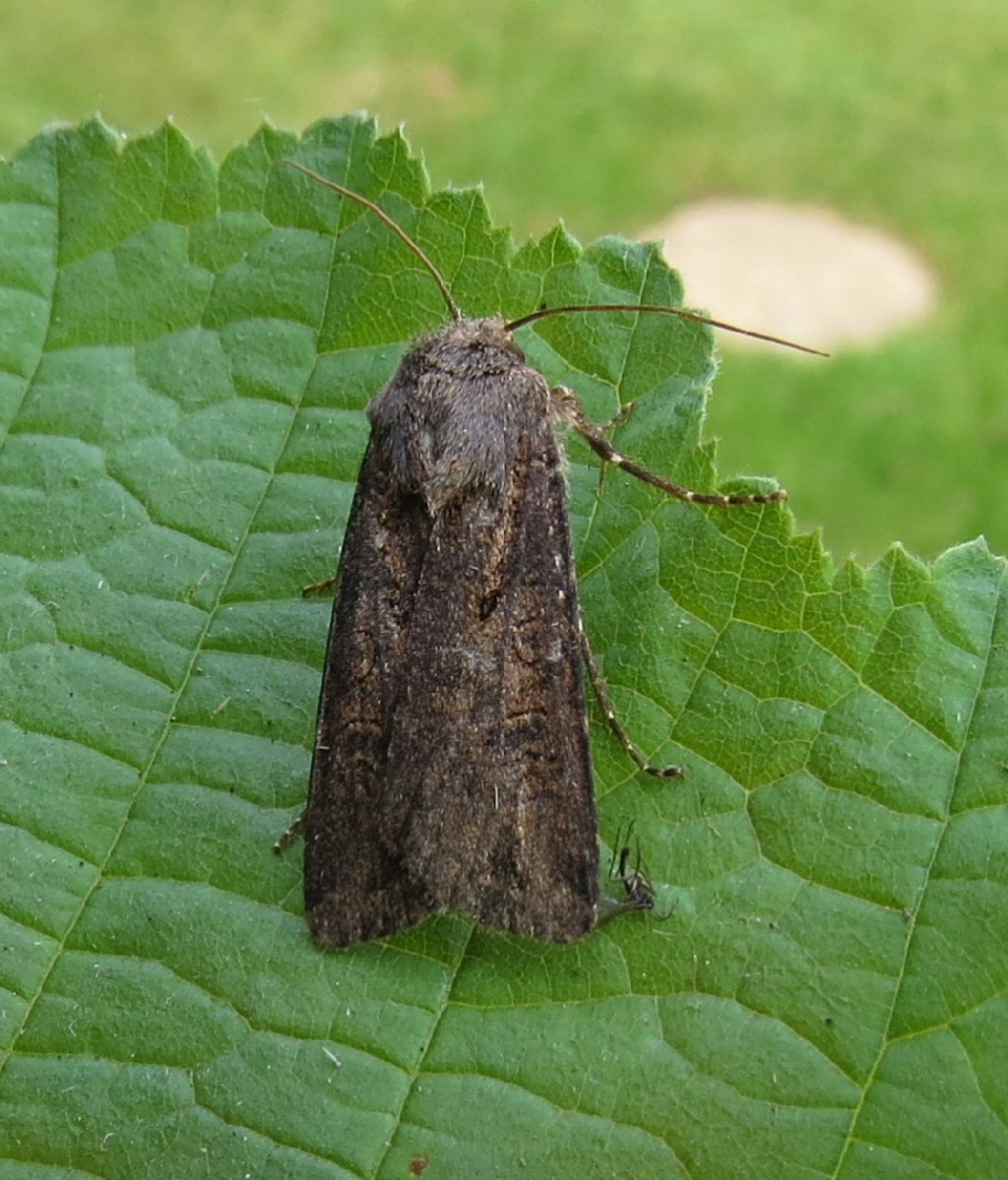
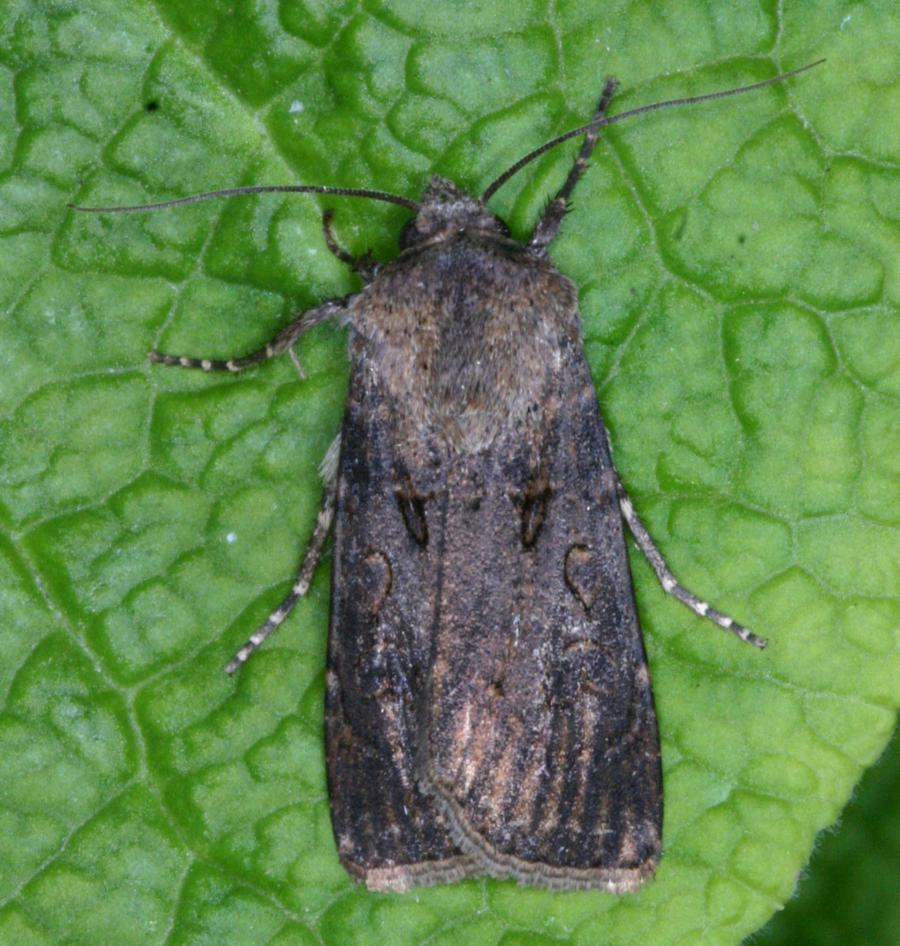
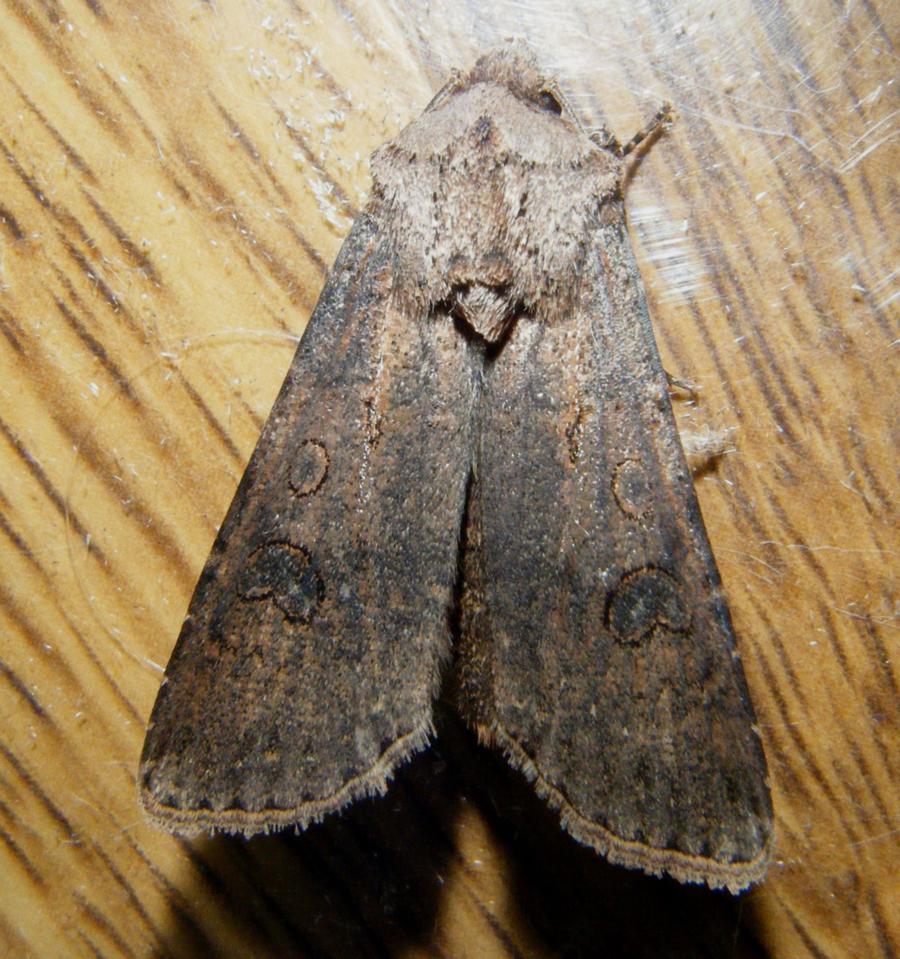
Although showing many colour forms, this moth usually shows a neat, pale fringe with a narrow inner dark line on the forewing, and has very white hindwings.

Gardens, farmland, parkland, oak woodland and sand-dunes.
The species is double-brooded, flying in May and June, and again in August and September/October.
The larvae live underground and feed on the roots of root vegetables, herbaceous plants and other cultivated crops. Their destructive habit of biting off the shoots of small seedlings gave rise to the name 'cutworms'.
It is common throughout most of Britain, though scarcer in Scotland.In a recent survey to determine the status of all macro moths in Britain this species was classified as common.
Common in Leicestershire and Rutland. L&R Moth Group status = A (common and resident)
Video: The Turnip Moth - Agrotis segetum
Leicestershire moth expert Paul Palmer: https://www.youtube.com/watch?v=Z7wF5NOxOFE
 Graham Calow
Sapcote garden1
09 June 2011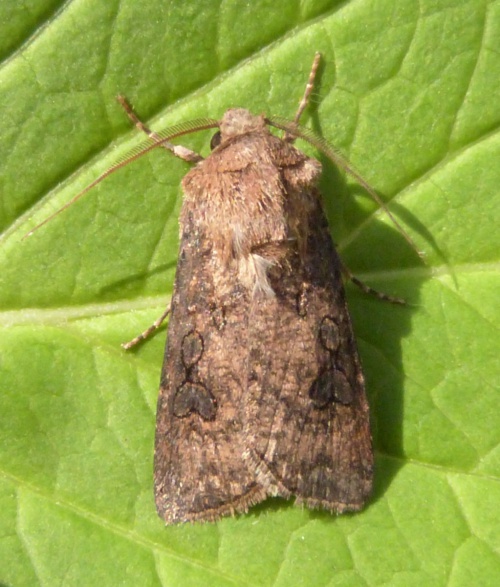 Graham Calow
Sapcote garden1
16 June 2014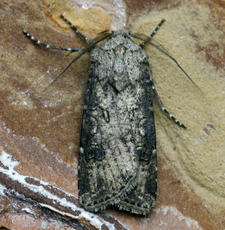 David Nicholls
Ratby garden1
14 July 2007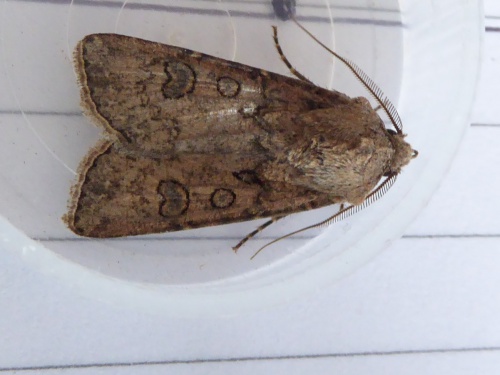 Margaret McLoughlin
Whitwick Garden
12 October 2016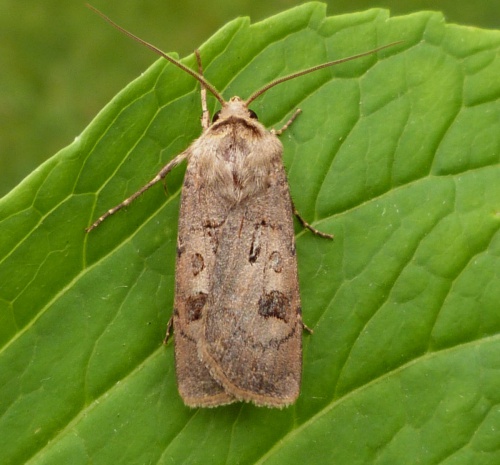 Graham Calow
Sapcote garden1
26 June 2013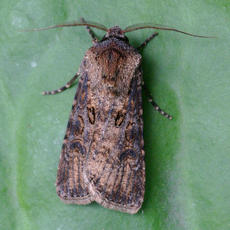 David Nicholls
Ratby garden1
25 June 2006
Leicestershire & Rutland Map
Enter a town or village to see local records
MAP KEY:
Yellow squares = NBN records (all known data)
Coloured circles = NatureSpot records: 2025+ | 2020-2024 | pre-2020
UK Map
Species profile
- Common names
- Turnip Moth
- Species group:
- insect - moth
- Kingdom:
- Animalia
- Order:
- Lepidoptera
- Family:
- Noctuidae
- Records on NatureSpot:
- 483
- First record:
- 29/06/1949 (Wesley, Isaac)
- Last record:
- 06/07/2026 (Johnson, Andrew)
Total records by month
% of records within its species group
10km squares with records
The latest images and records displayed below include those awaiting verification checks so we cannot guarantee that every identification is correct. Once accepted, the record displays a green tick.
In the Latest Records section, click on the header to sort A-Z, and again to sort Z-A. Use the header boxes to filter the list.
Latest images
Latest records
 Graham Calow
Sapcote garden1
10 October 2010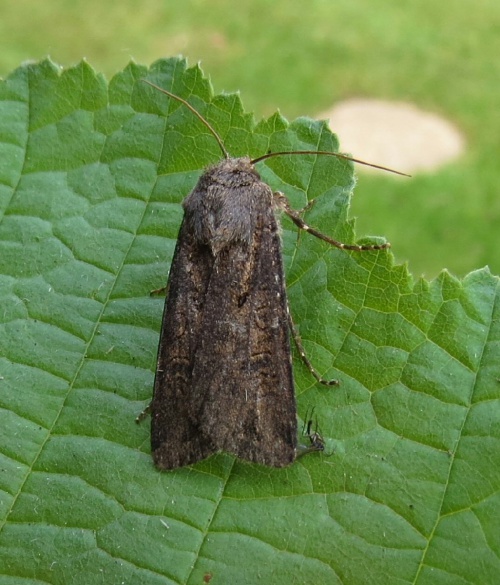 Jonesboy1
Broughton Astley
05 September 2013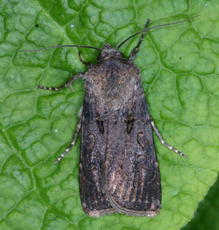 David Nicholls
Ratby garden1
23 June 2006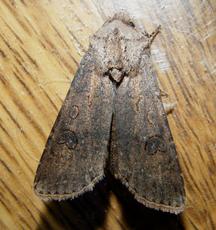 Graham Calow
Sapcote garden1
12 October 2010 Harecroft Crescent Sapcote SP49019371 (taken 23.8.2010).JPG) Graham Calow
Graham Calow
Sapcote garden1
23 August 2010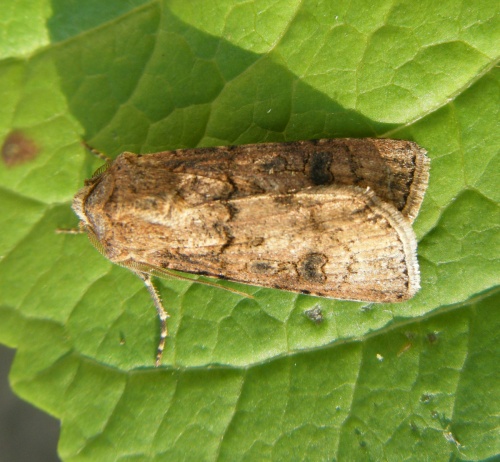 Graham Calow
Sapcote garden1
16 June 2012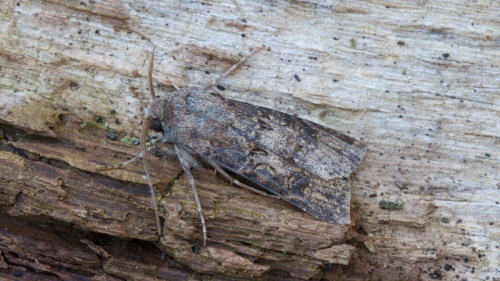 Rod Baker
Newton Harcourt
12 July 2012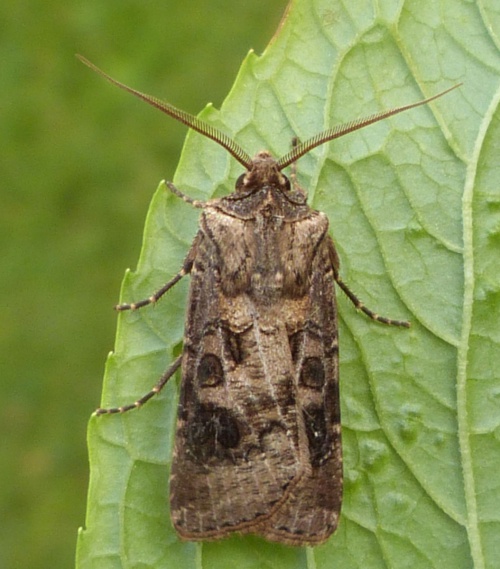 Graham Calow
Sapcote garden1
30 June 2013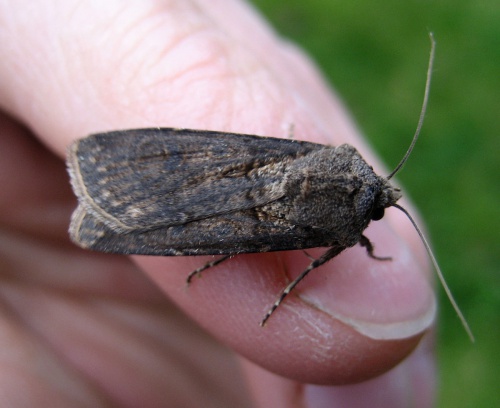 Pete Leonard
Harby
09 June 2013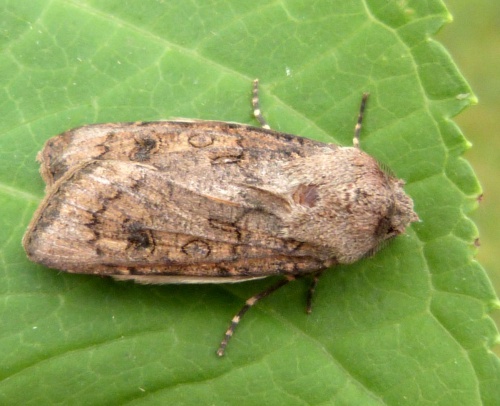 Graham Calow
Sapcote garden1
18 September 2014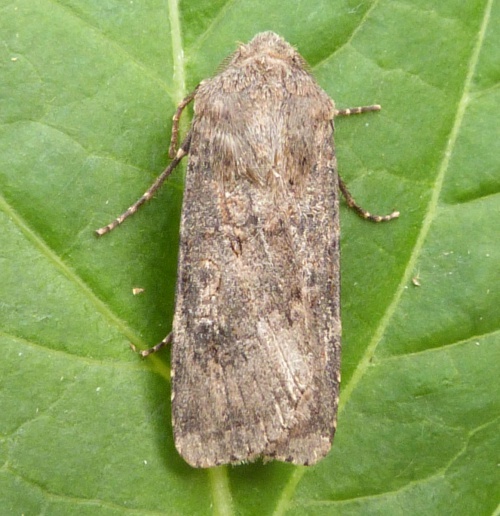 Graham Calow
Sapcote garden1
01 June 2014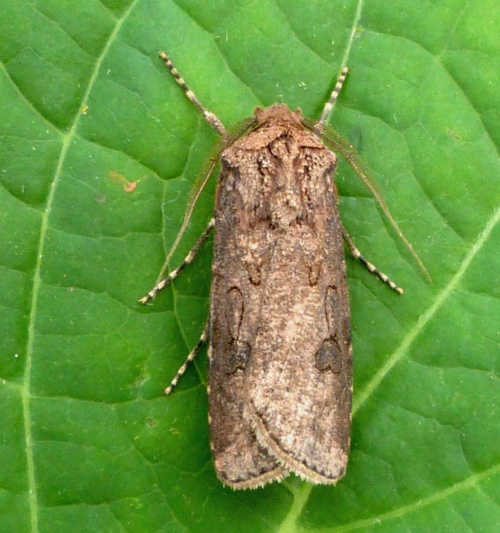 Graham Calow
Sapcote garden1
06 July 2012
 Harecroft Crescent Sapcote SP49019371 (taken 23.8.2010).JPG)