

Lesser Burdock - Arctium minus
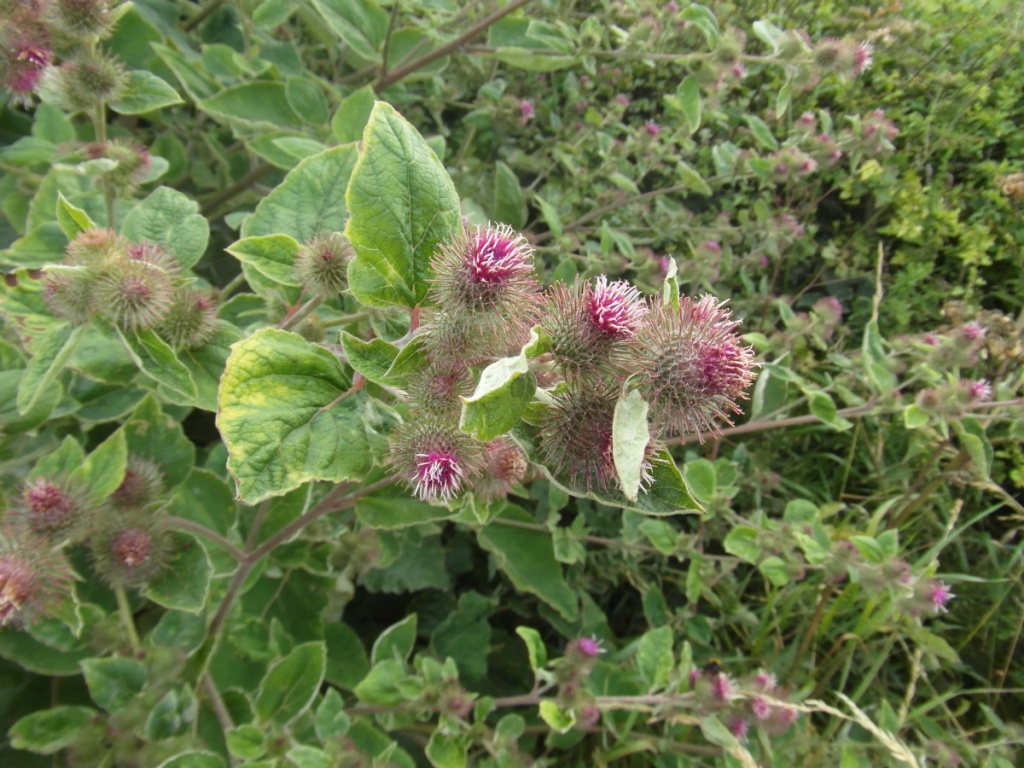
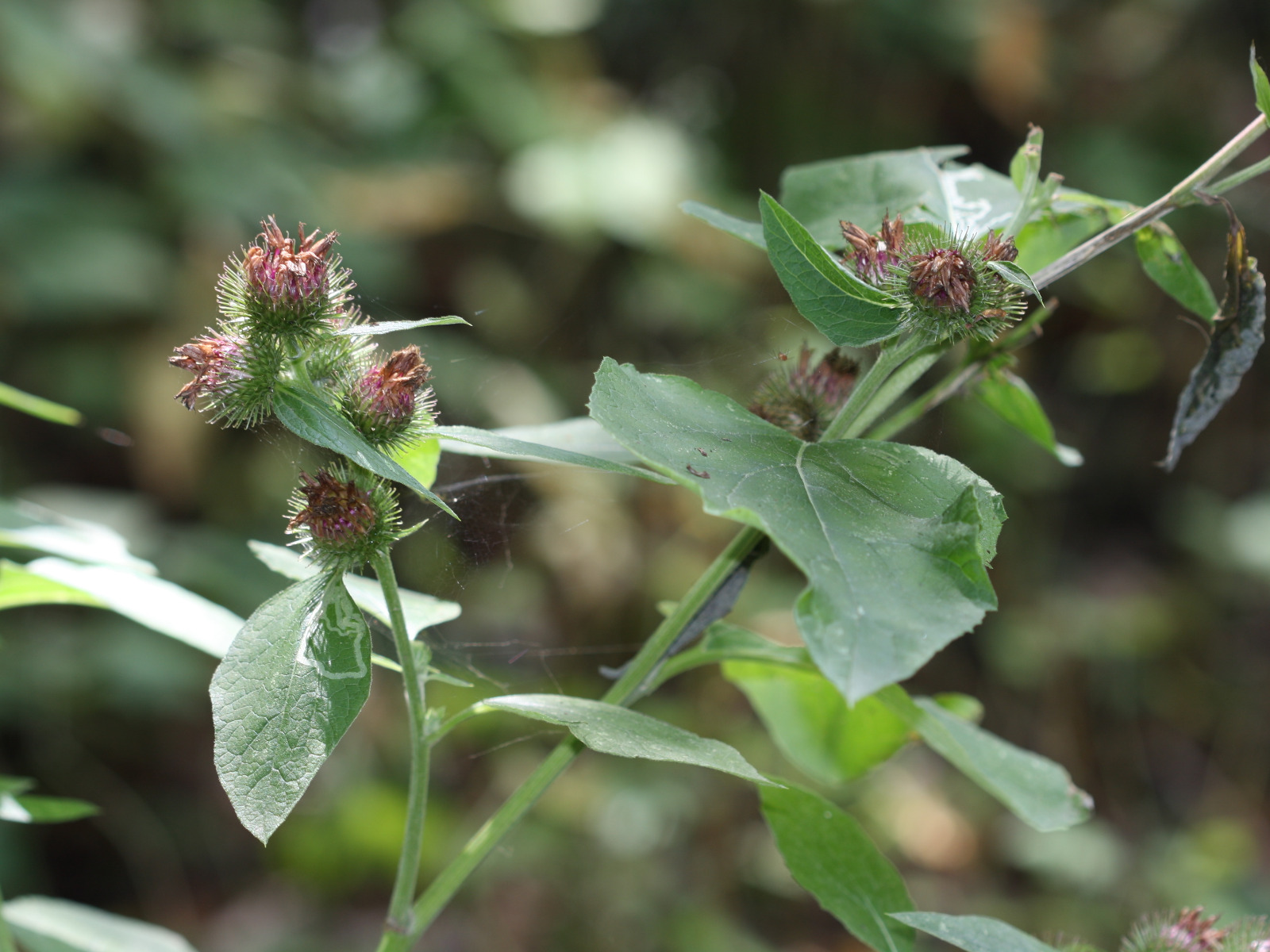
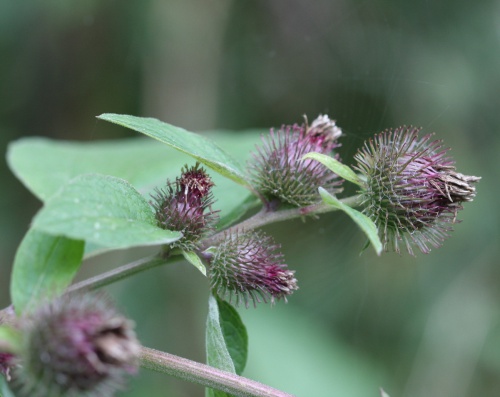
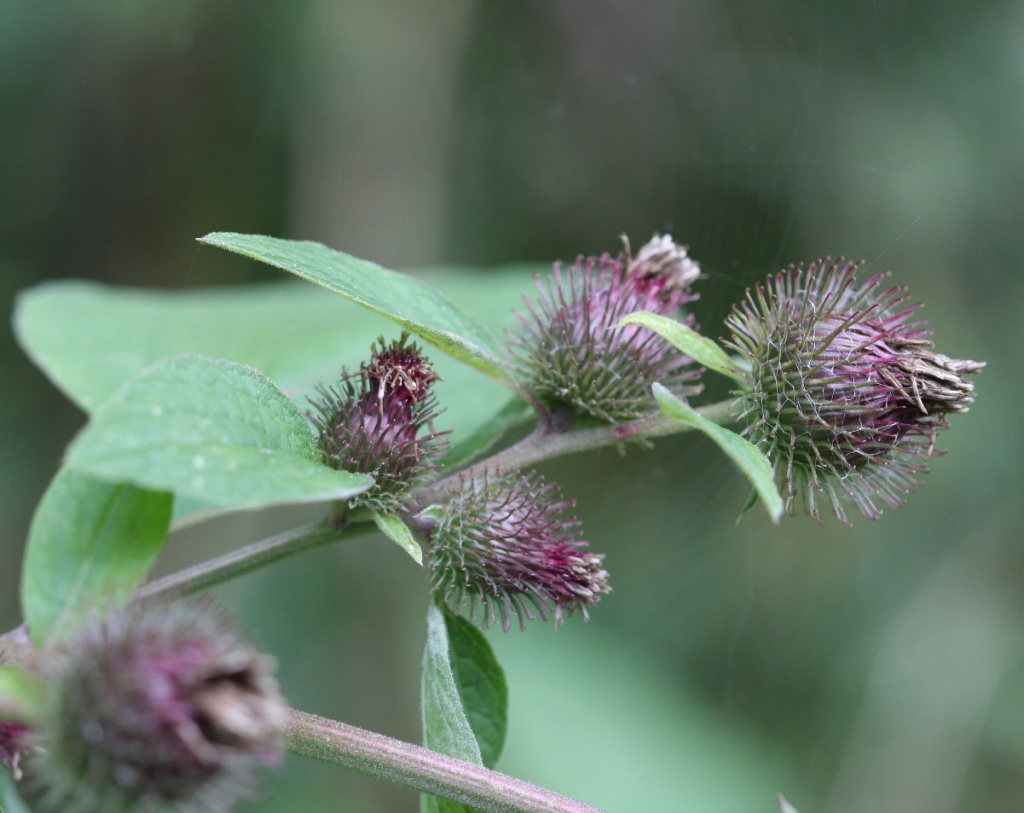
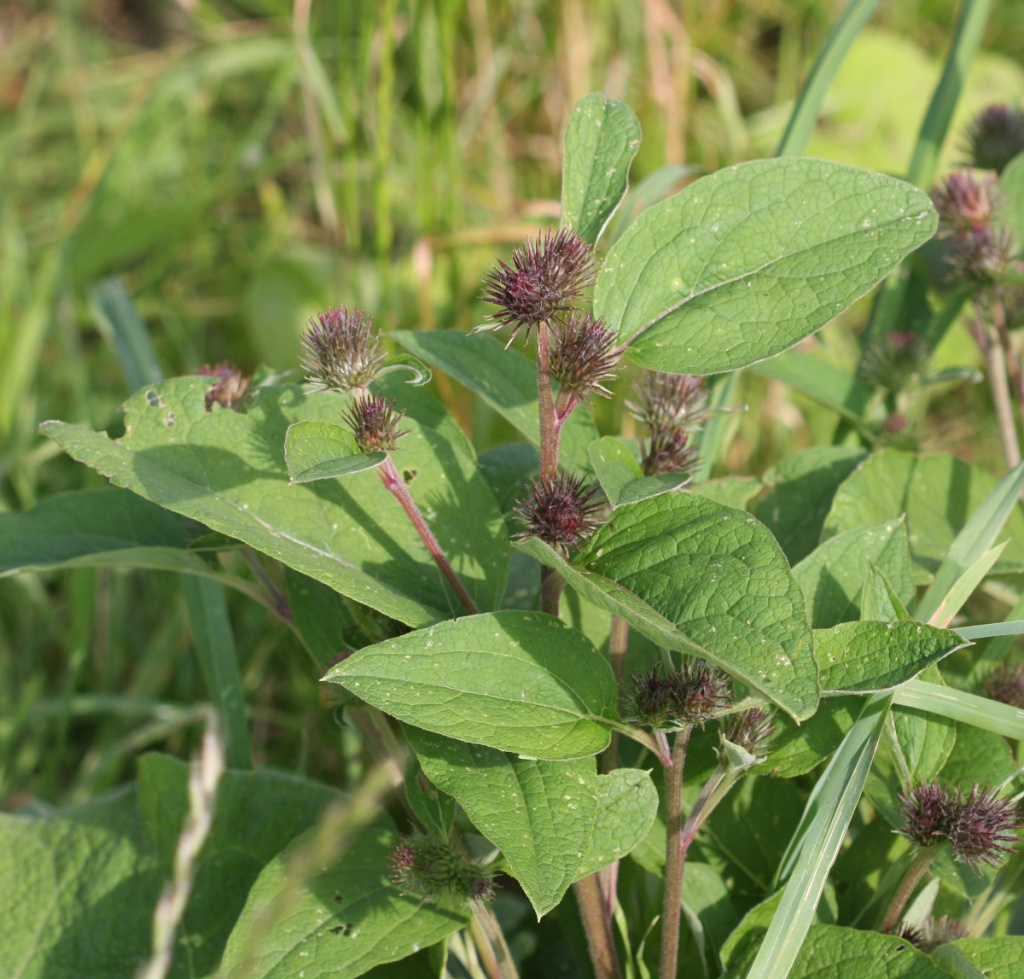
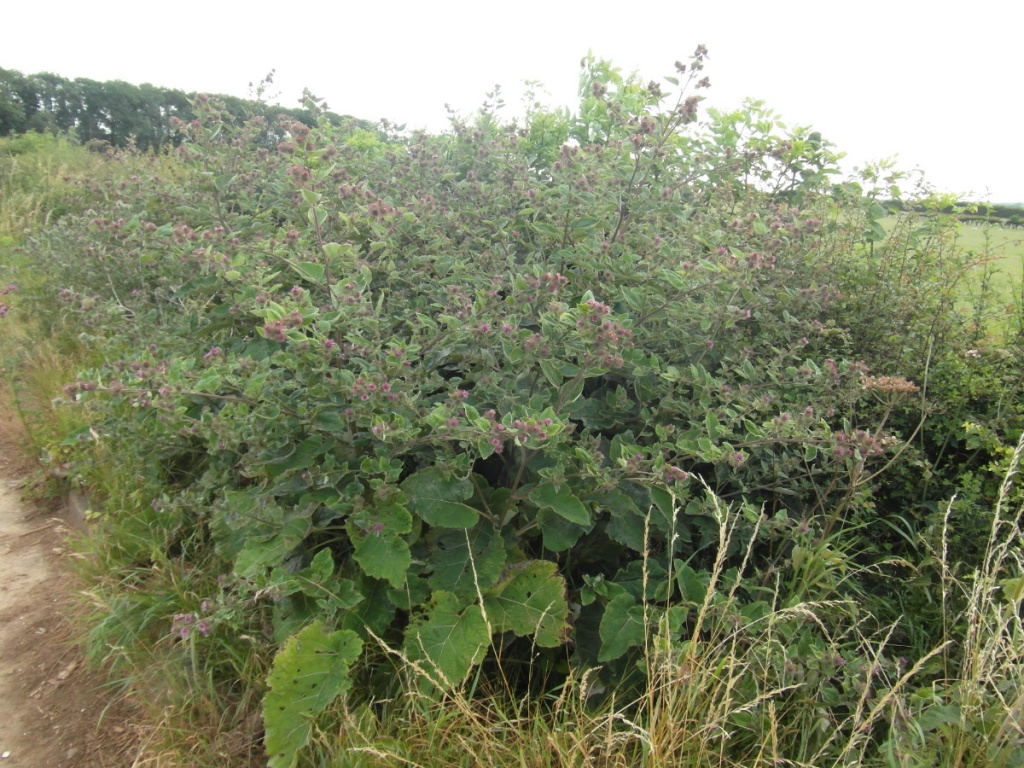
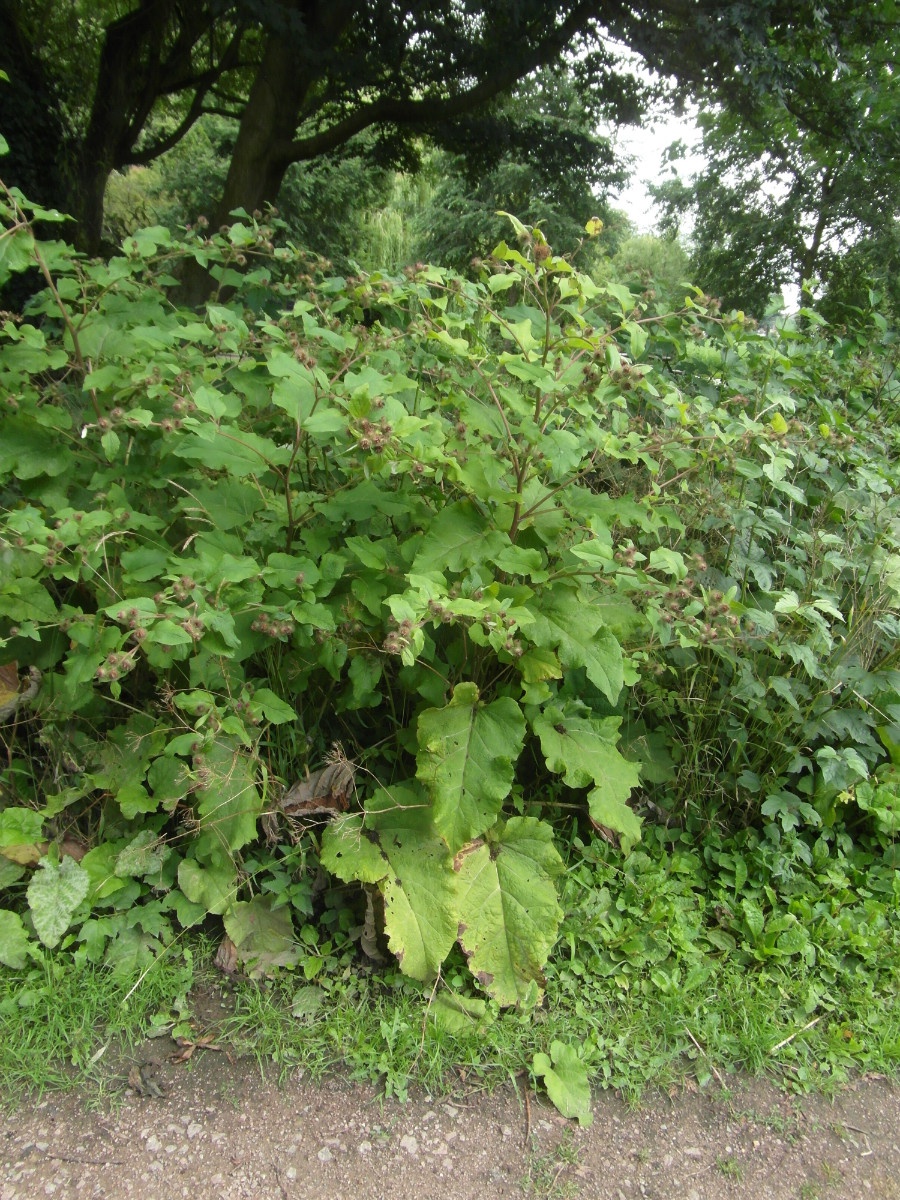
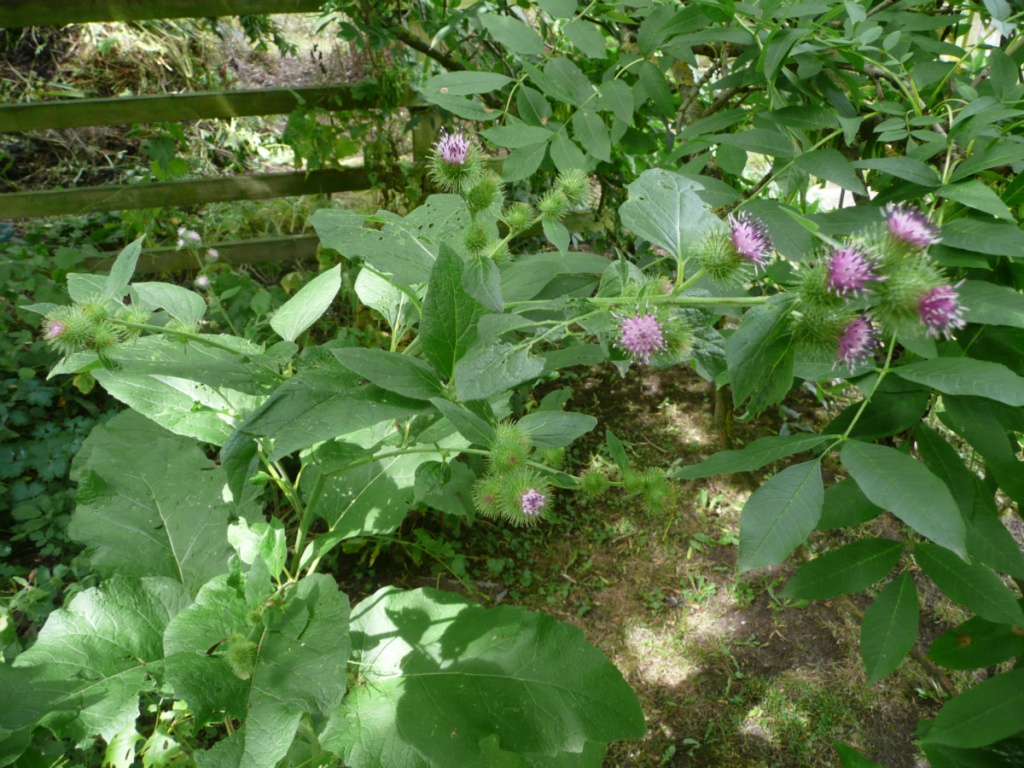
Medium to tall plant to 1.5 metres. Stems hairy, often reddish, with down-curved branches. Basal leaves large (to 50 cm) with hollow stalks. Flowers purple - flowerheads 15 to 18 mm (15 to 25 mm in fruit) the outside bracts green or purple tinged often cottony when young.
Greater and Wood Burdocks

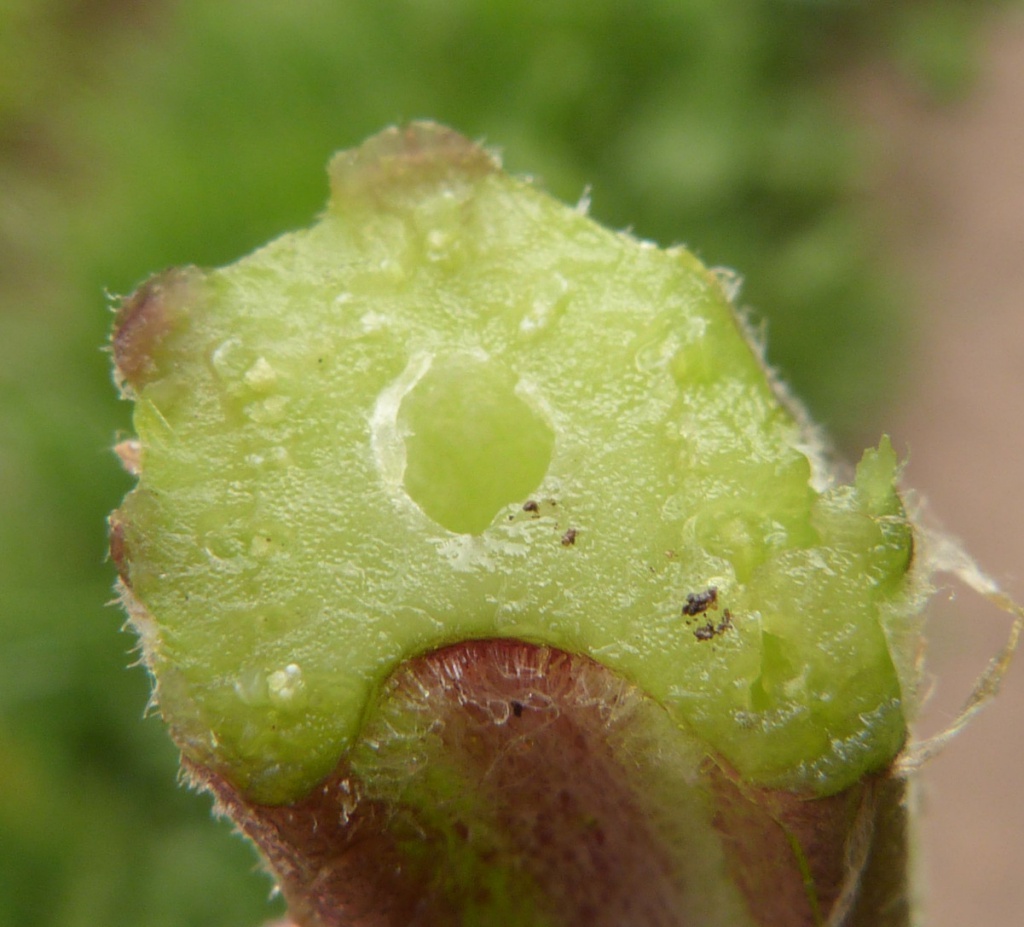
A more or less racemose inflorescence (the outer flowers have short stalks or are stalkless). Hollow petiole to the basal leaves. It can have glabrous or hairy flowers.
Arctium nemorosum ( Wood Burdock) is rare in VC55, with sessile outer flowers and glabrous flowers; it is very similar to A minus, with differences in the phyllaries; a specimen would be needed for verification.
A photo of the plant in its habitat, showing the whole flower-head. if not in flower, evidence that the basal leaf petiole has been checked
Variety of habitats and soils except very acid ones.
July to September.
Biennial.
Quite a common plant nationally except in the north of Scotland.
Quite common in Leicestershire and Rutland. In the 1979 Flora survey of Leicestershire it was found in 473 of the 617 tetrads.
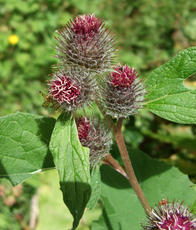 Denise Stretton
Jubilee Walk, Leire
02 August 2011 Grace Road Sapcote SP 4915 9359 (taken 5.7.2006).JPG) Graham Calow
Graham Calow
Sapcote
05 July 2006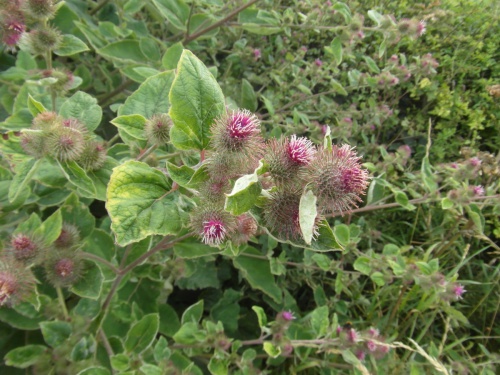 Alan Semper
Stonesby
24 July 2013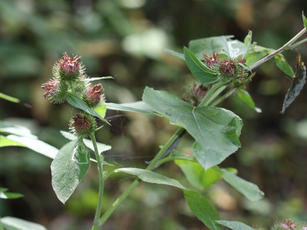 David Nicholls
Swithland Wood
25 August 2011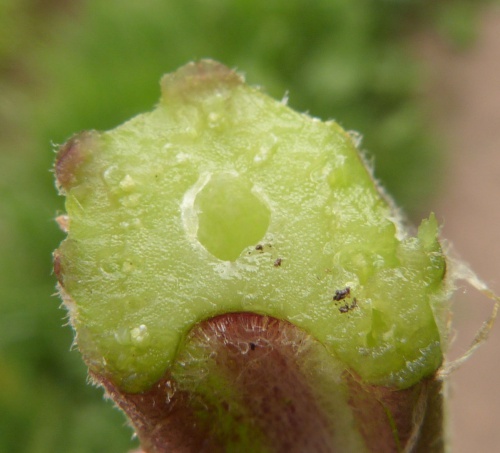 Graham Calow
Near High Cross
03 June 2016
hollow stem of basal leaf
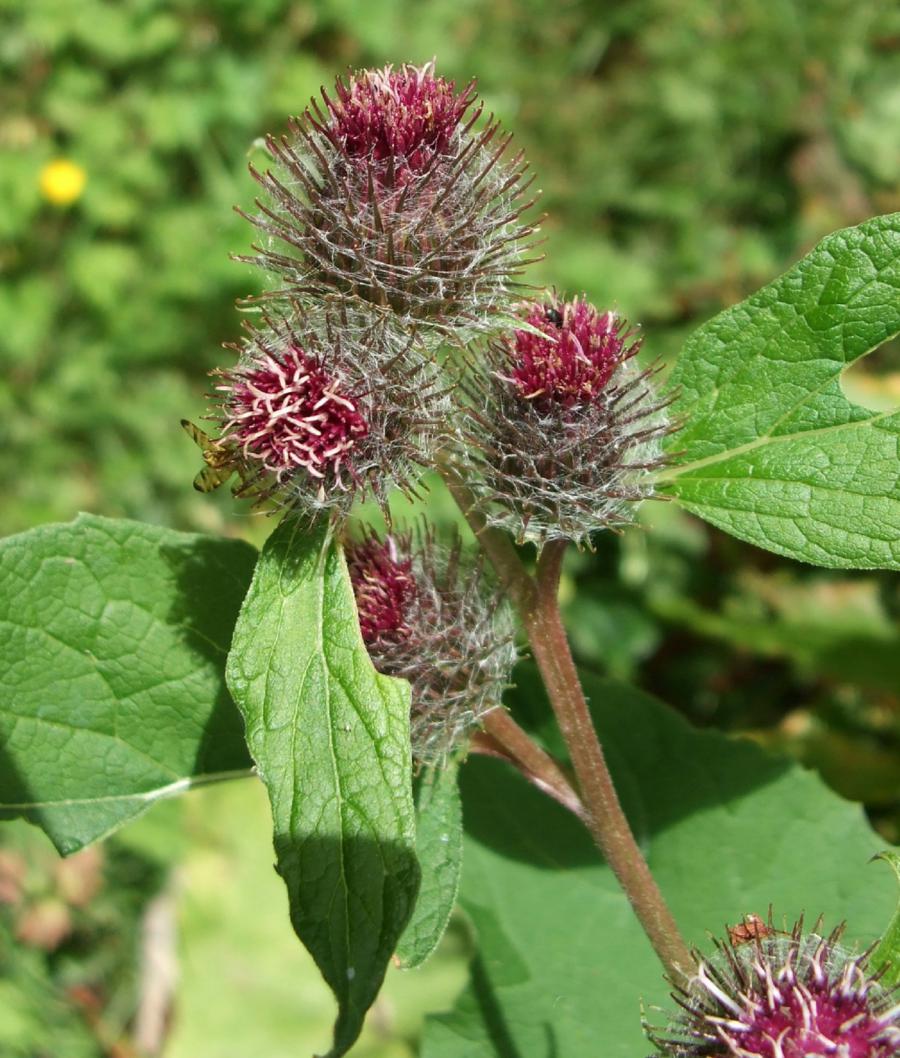
 Grace Road Sapcote SP 4915 9359 (taken 5.7.2006).JPG)
Leicestershire & Rutland Map
Enter a town or village to see local records
MAP KEY:
Yellow squares = NBN records (all known data)
Coloured circles = NatureSpot records: 2025+ | 2020-2024 | pre-2020
UK Map
Species profile
- Common names
- Lesser Burdock
- Species group:
- flowering plant
- Kingdom:
- Plantae
- Order:
- Asterales
- Family:
- Asteraceae
- Records on NatureSpot:
- 228
- First record:
- 05/07/2006 (Calow, Graham)
- Last record:
- 22/07/2025 (lemmon, roy)
Total records by month
% of records within its species group
10km squares with records
The latest images and records displayed below include those awaiting verification checks so we cannot guarantee that every identification is correct. Once accepted, the record displays a green tick.
In the Latest Records section, click on the header to sort A-Z, and again to sort Z-A. Use the header boxes to filter the list.
Latest images
Latest records
 David Nicholls
Martinshaw Wood
31 August 2013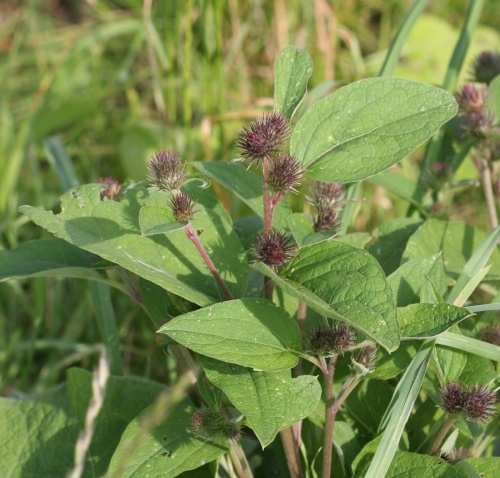 David Nicholls
Ashby Canal, Shackerstone
15 September 2012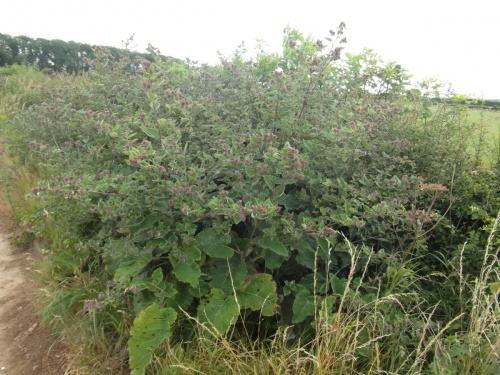 Alan Semper
Stonesby
24 July 2013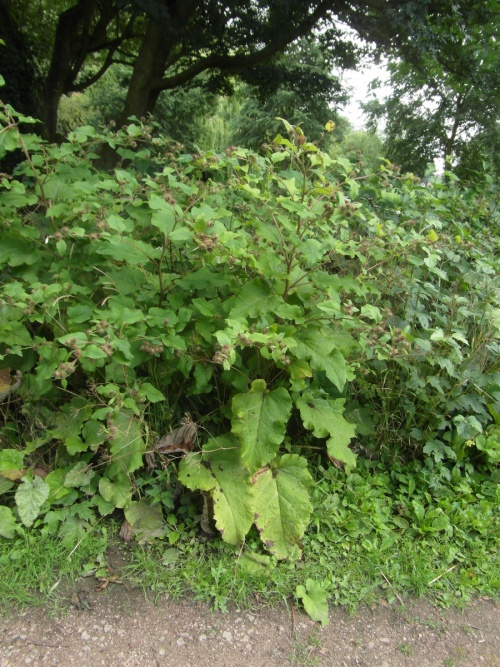 Alan Semper
Melton, Priors Close Park
06 August 2013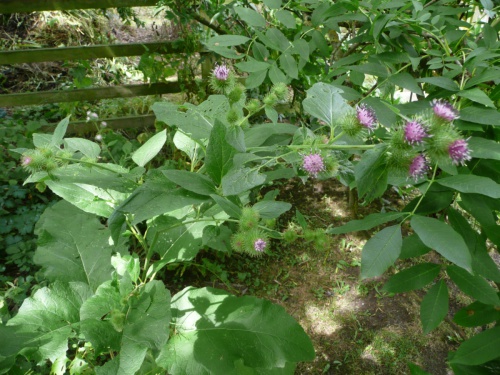 Barbara Cooper
Long Clawson
26 July 2013
Chromatomyia syngenesiae
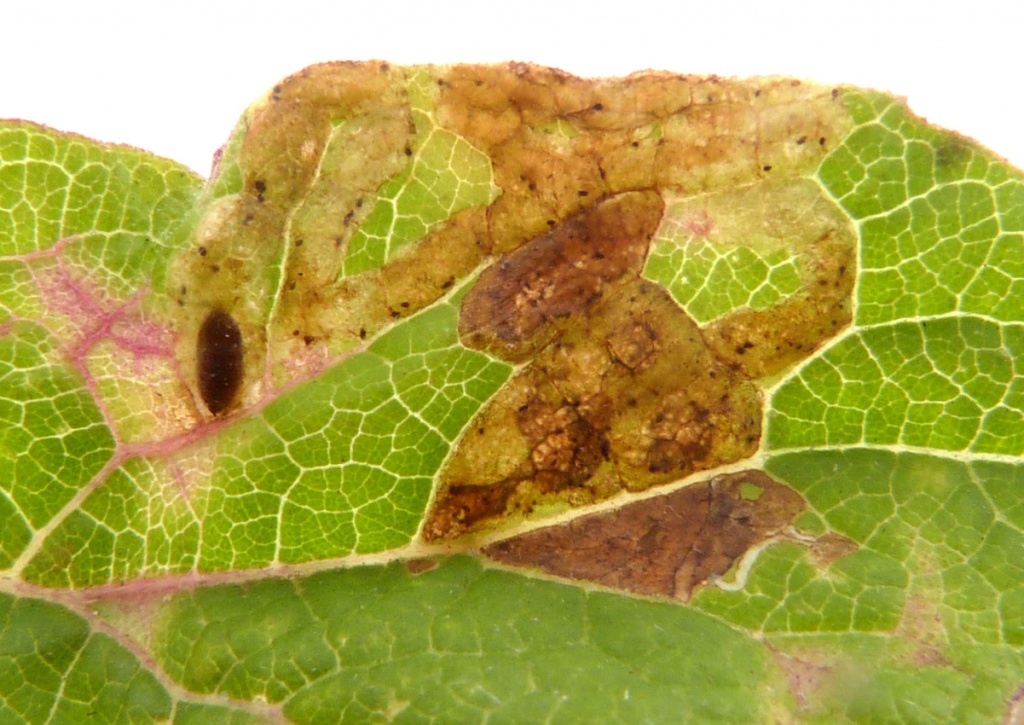
The larva of the Agomyzid fly Chromatomyia syngenesiae mines the leaves of various plants creating an upper-surface (sometimes lower surface also) corridor. Frass appears in isolated grains. Pupation takes place within the mine, usually in a lower-surface, puparial chamber. The larvae of Chromatomyia syngenesiae and Chromatomyia horticola form identical mines on a wide range of plants and for most purposes they are treated as an aggregate Chromatomyia horticola/syngenesiae agg. (also known as Chromatomyia 'atricornis'). However, in Britain only Chromatomyia syngenesiae is known to mine Lesser Burdock.
Phytomyza lappae
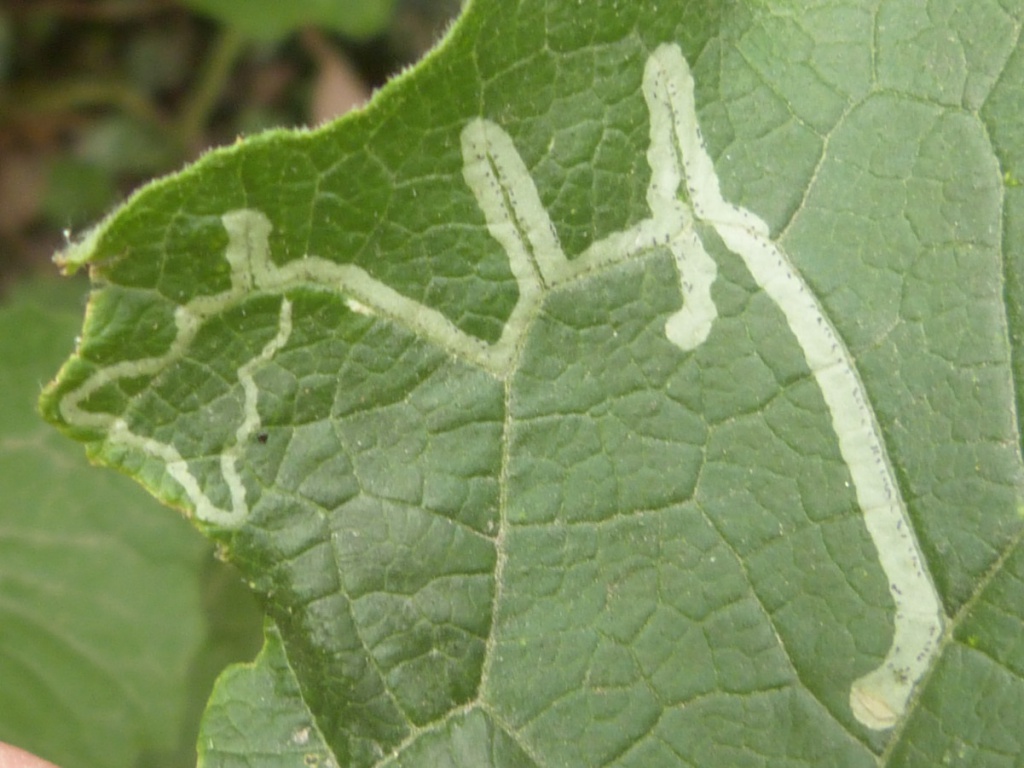
The larva of the Agromyzid fly Phytomyza lappae mines the leaves of Burdock species. The leafmine is a long, narrow, linear mine which often follows a vein and can appear angular because of this. Many larvae may occur on a single leaf.