

Common Whitebeam - Sorbus aria agg.
Whitebeams comprise a very complex group of species and hybrids, many of which are rare native species. The species and several hybrids or cultivated varieties are commonly planted in parks, gardens and streets.
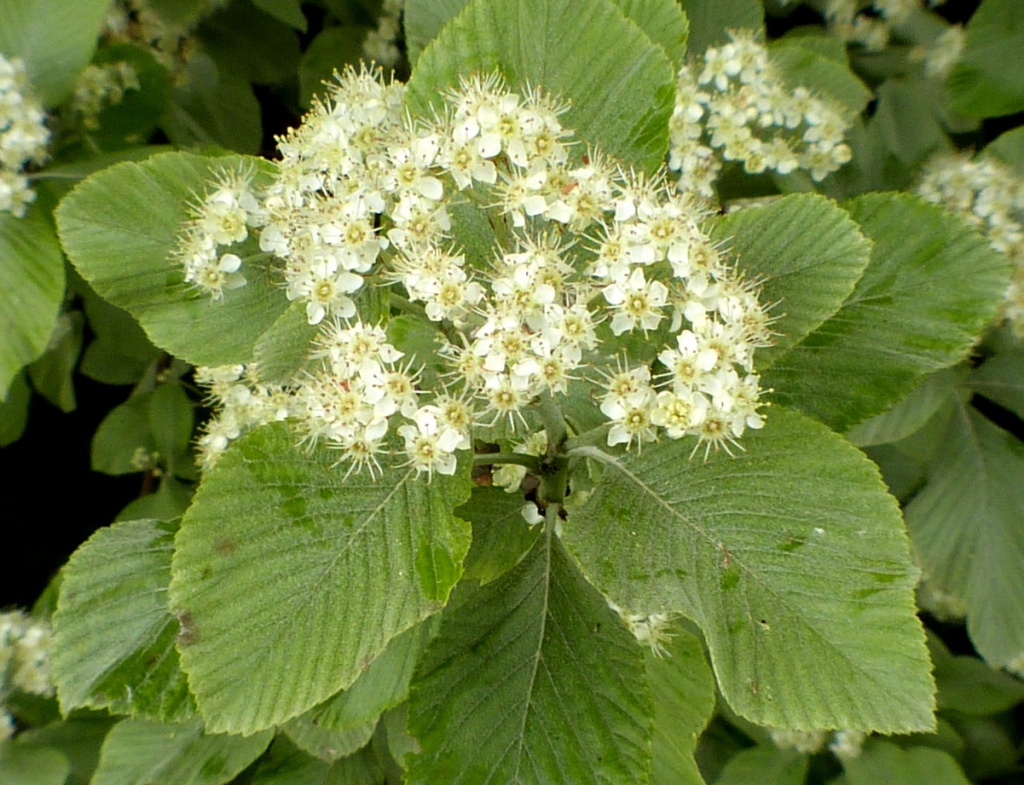
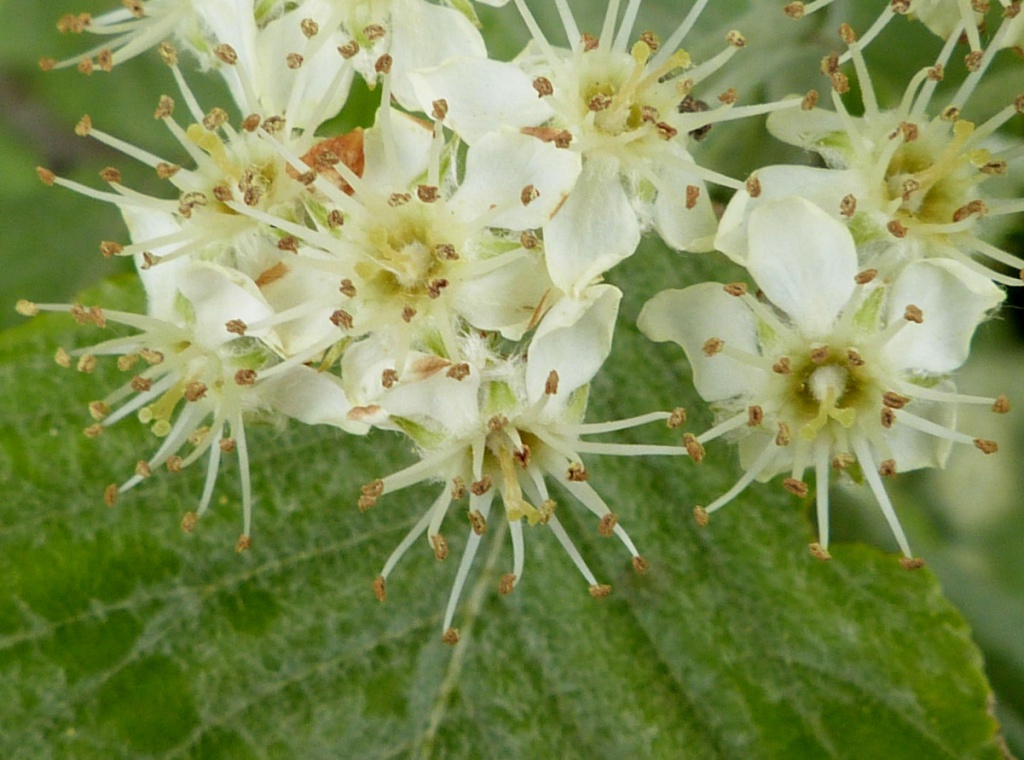
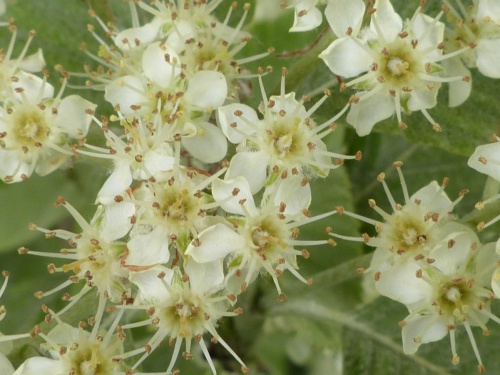
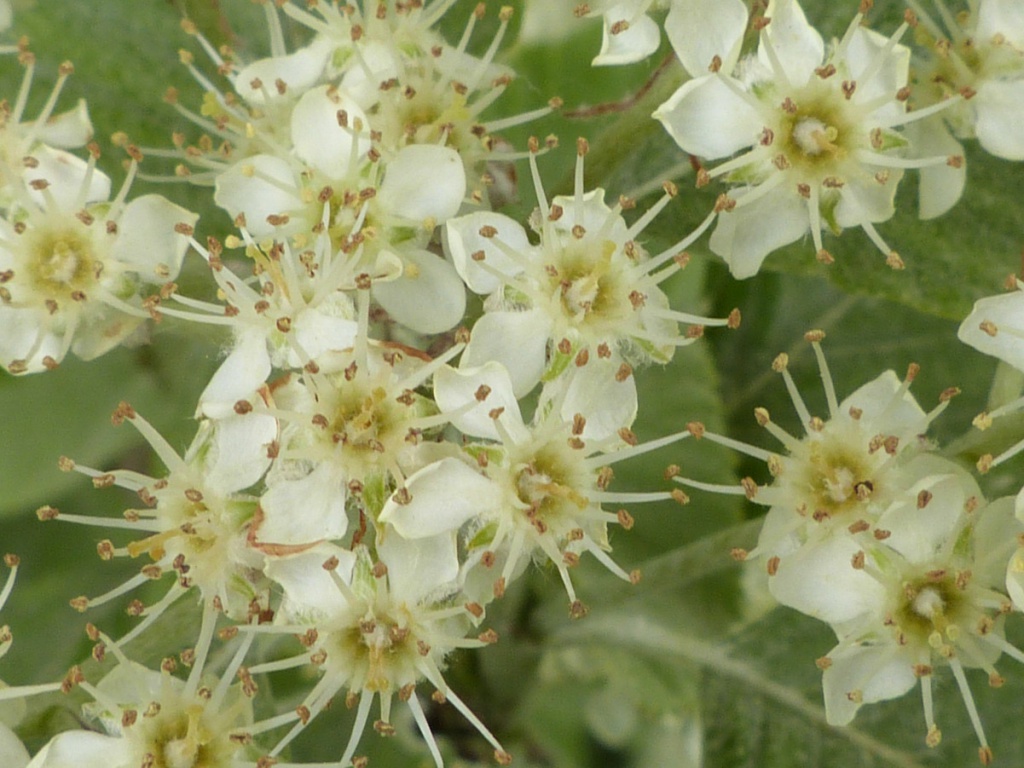
The leaves in the Sorbus aria aggregate are toothed, and may be shallowly lobed. The leaf undersides are densely tomentose - i.e. covered in short, white or greyish woolly and matted hairs. The fruits are scarlet to crimson.
Sorbus latifolia agg. and Sorbus intermedia agg. are commonly planted. They differ in leaf-shape and colour of berries.

Photograph leaves, including undersides, and fruits
Woods and scrub on calcareous soils as a native species, but widely planted in parks, gardens and roadside verges and often bird-sown and naturalised.
Uncommon as a native species in Leicestershire and Rutland but very often planted and naturalised.
Identifying Whitebeams is difficult due to hybridisation and the presence of planted and naturalised cultivated varieties and hybrids. Examination of leaves and fruits of a specimen with reference to a key such as Stace 4th edition is usually needed to identify to species; they are therefore best recorded as species aggregates.
 junction B4114 and Sharnford Road Sapcote SP 4935 9252 (taken 8.5..2008).JPG) Graham Calow
Graham Calow
Sapcote
08 May 2008
tree in leaf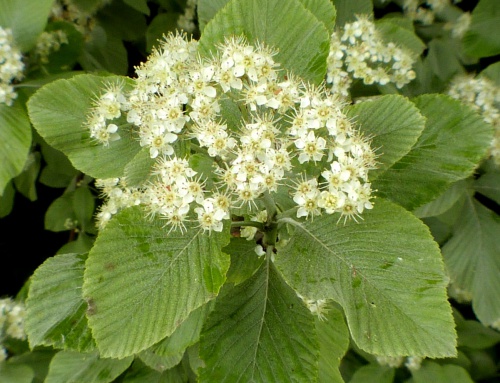 Graham Calow
Sapcote
14 May 2014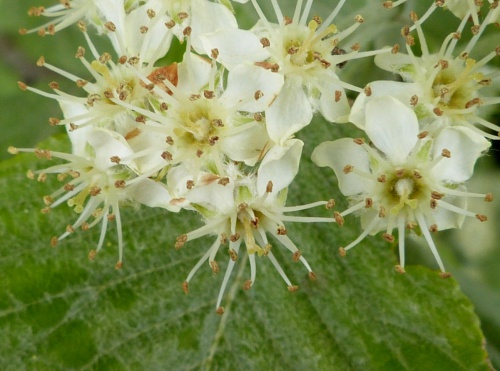 Graham Calow
Sapcote
14 May 2014 B4114 at junction with Sharnford Road Sapcote SP 4935 9252 (taken 27.4.2008).JPG) Graham Calow
Graham Calow
Sapcote
27 April 2008
buds new growth junction B4114 and Sharnford Road Sapcote SP 4935 9252 (taken 8.5..2008)..JPG) Graham Calow
Graham Calow
Sapcote
08 May 2008
young leaves, B4114 at junction with Sharnford Road Sapcote SP 4935 9252 (taken 19.9.2007).JPG) Graham Calow
Graham Calow
Sapcote
19 September 2007
fruit (berries)
 junction B4114 and Sharnford Road Sapcote SP 4935 9252 (taken 8.5..2008).JPG)
 B4114 at junction with Sharnford Road Sapcote SP 4935 9252 (taken 27.4.2008).JPG)
 new growth junction B4114 and Sharnford Road Sapcote SP 4935 9252 (taken 8.5..2008)..JPG)
, B4114 at junction with Sharnford Road Sapcote SP 4935 9252 (taken 19.9.2007).JPG)
Leicestershire & Rutland Map
Enter a town or village to see local records
MAP KEY:
Yellow squares = NBN records (all known data)
Coloured circles = NatureSpot records: 2025+ | 2020-2024 | pre-2020
UK Map
Species profile
- Common names
- Common Whitebeam
- Species group:
- flowering plant
- Kingdom:
- Plantae
- Order:
- Rosales
- Family:
- Rosaceae
- Records on NatureSpot:
- 62
- First record:
- 19/09/2007 (Calow, Graham)
- Last record:
- 20/06/2026 (Mabbett, Craig)
Total records by month
% of records within its species group
10km squares with records
The latest images and records displayed below include those awaiting verification checks so we cannot guarantee that every identification is correct. Once accepted, the record displays a green tick.
In the Latest Records section, click on the header to sort A-Z, and again to sort Z-A. Use the header boxes to filter the list.
Latest images
Latest records
 Graham Calow
Sapcote
14 May 2014.. B4114 at junction with Sharnford Road Sapcote SP 4935 9252 (taken 27.4.2008).JPG) Graham Calow
Graham Calow
Sapcote
27 April 2008
tree in bud
.. B4114 at junction with Sharnford Road Sapcote SP 4935 9252 (taken 27.4.2008).JPG)
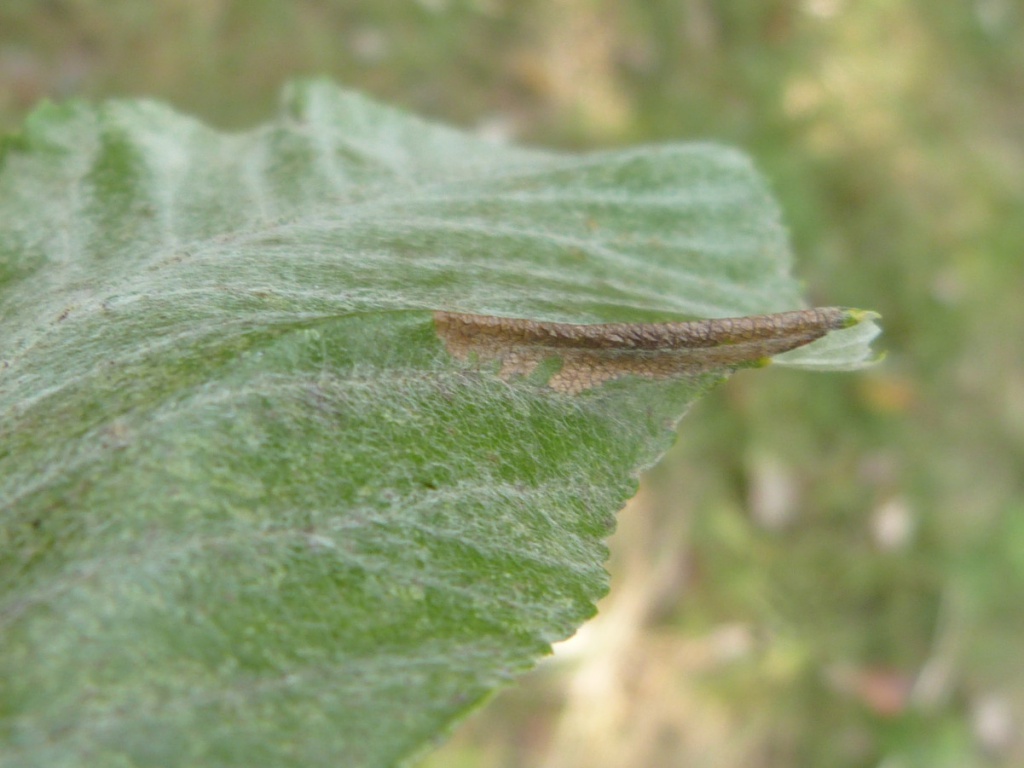
Parornix scoticella
The larva of the moth Parornix scoticella feeds on Rowan and Whitebeam and occasionally on Apple. A blotch is formed in the leaf which turns brown, and the larva pupates in a folded portion of the leaf.
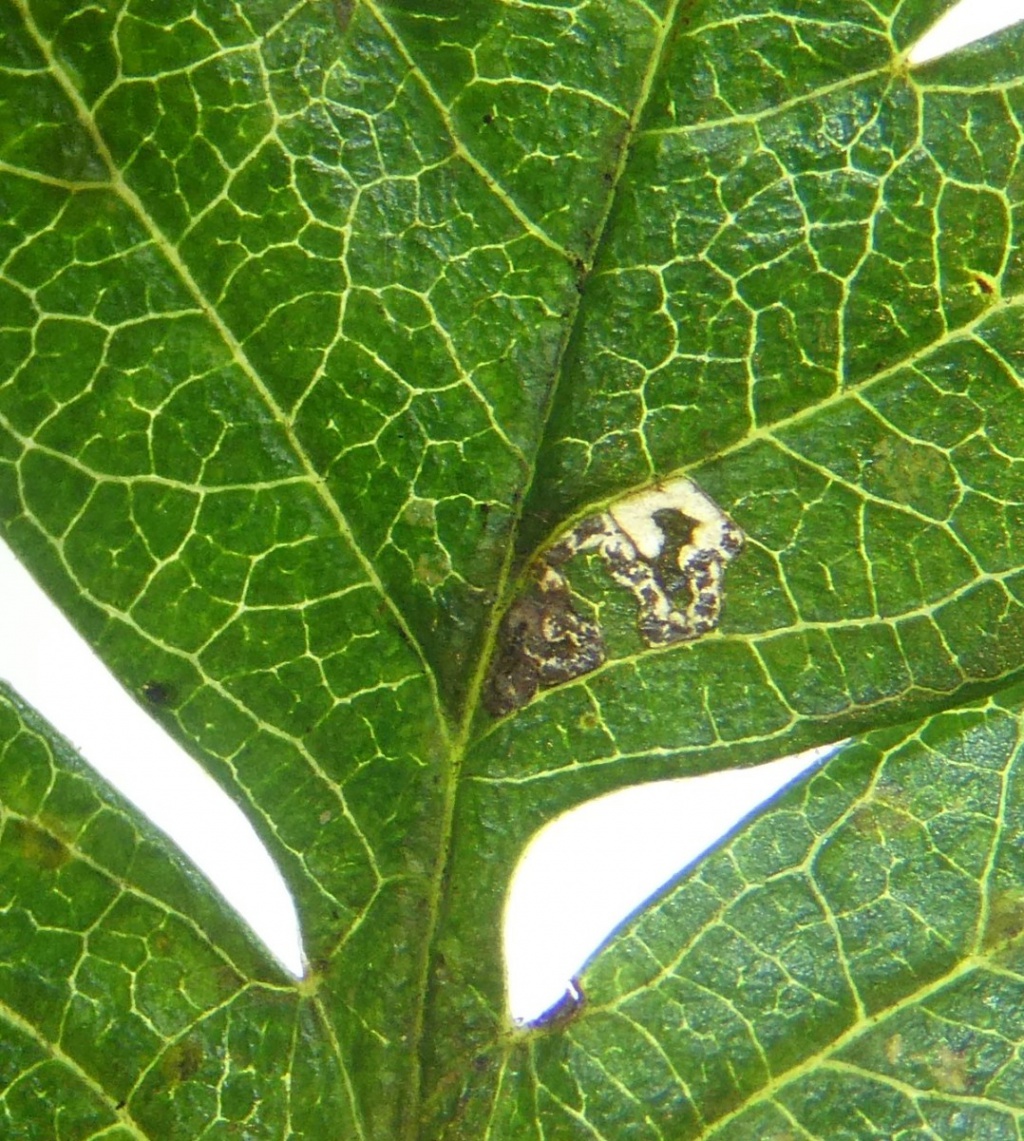
Bucculatrix bechsteinella
Bucculatrix bechsteinella is a small moth with a wingspan of 7 to 9 mm. It is pale buff with brown markings. The leafmine produced by the larva is usually on Hawthorn, and is small and in a vein axil, with blackish frass. The exit gallery is clear, and angular in shape.
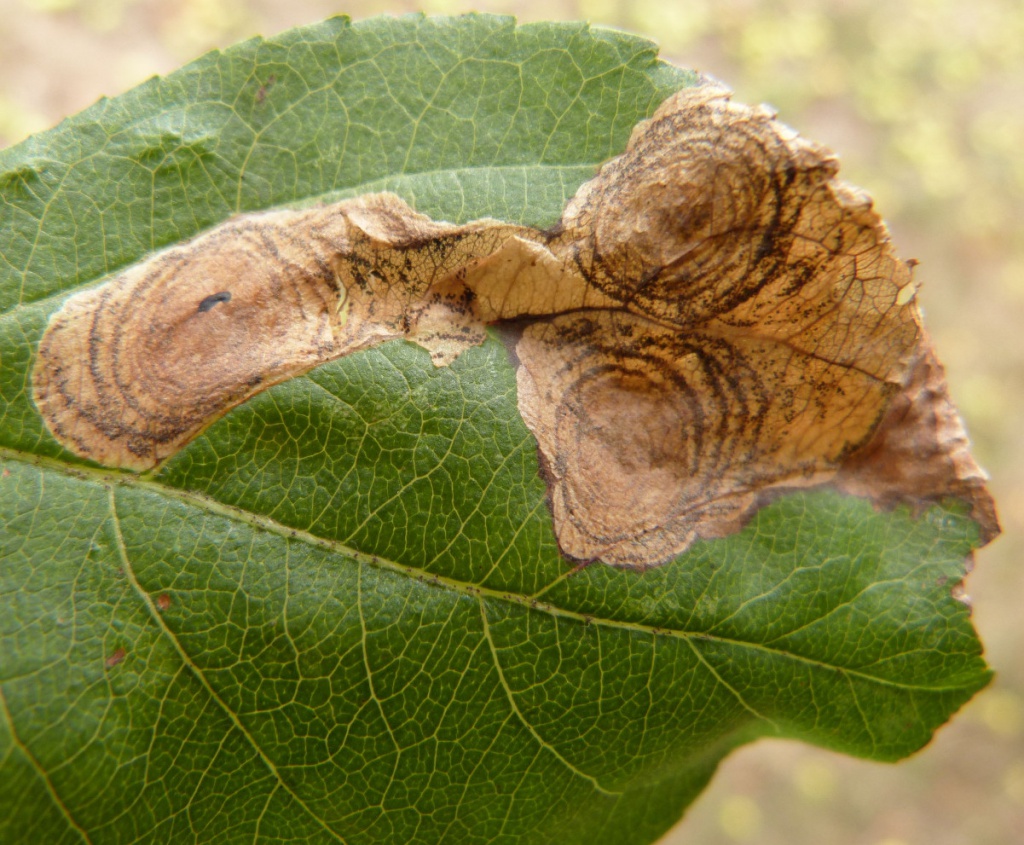
Pear Leaf Blister Moth
The larva of the Pear Leaf Blister Moth (Leucoptera malifoliella) makes a distinctive round blotch leafmine in a leaf of Apple, Hawthorn or Pear with a spiral frass pattern in concentric rings, sometimes several mines in one leaf.
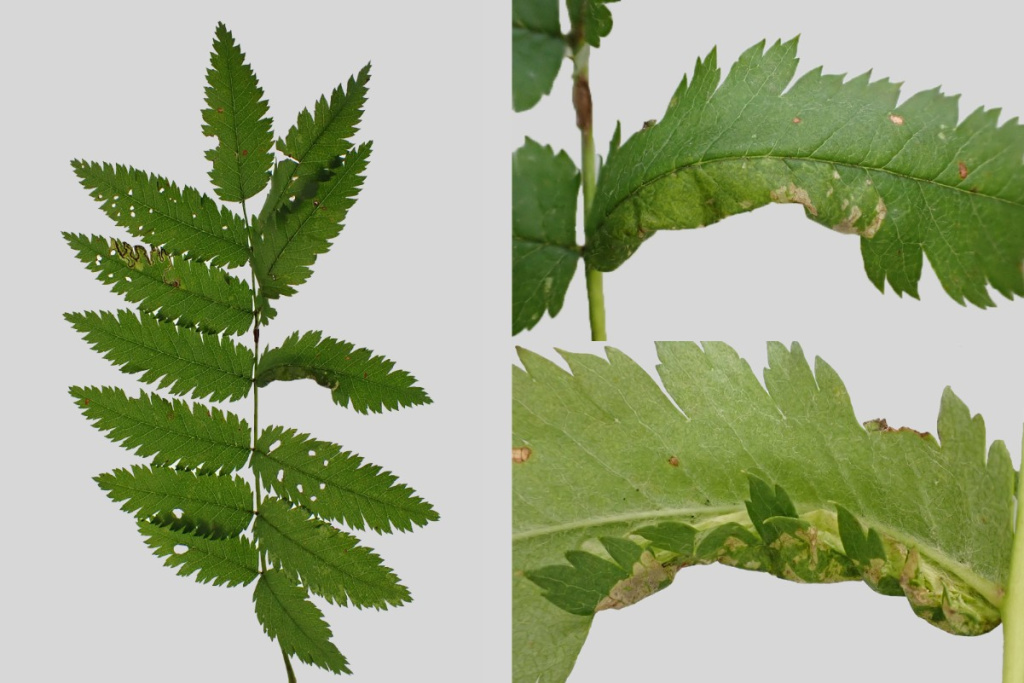
Phyllonorycter sorbi
The larva of the moth Phyllonorycter sorbi mines the leaves of Rowan or Bird Cherry, and occasionally on Whitebeam or other hosts in the Rosaceae, creating a long tentiform mine along the midrib/eaf-edge on Rowan. The under-surface has several sharp folds. The pupa inside is in a strong white cocoon. The mature larva is yellow with a pale brown head.
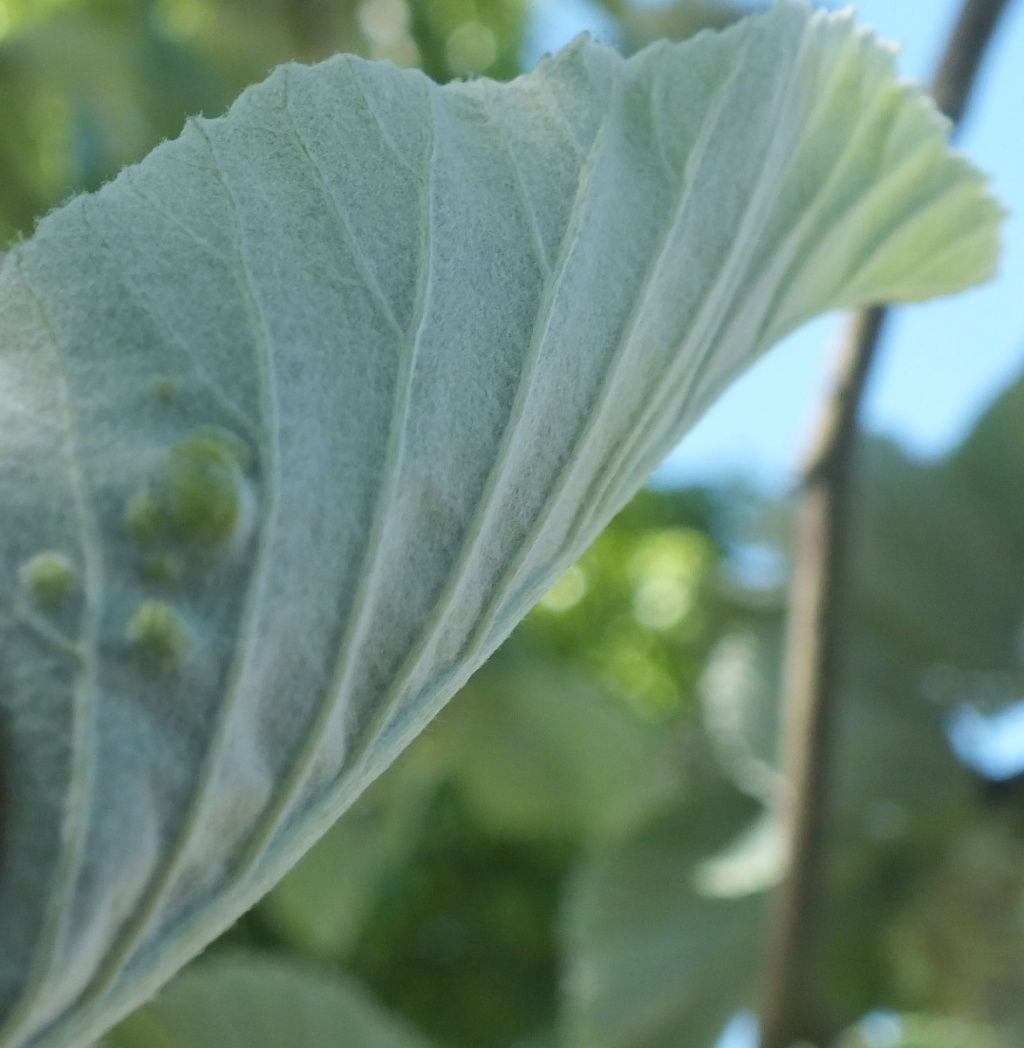
Eriophyes arianus
The midge Eriophyes arianus causes galls to form on the leaves of Sorbus aria. The galls take the form of slightly rounded pustules raised on both surfaces of the leaf, up to 2 mm across, sometimes coalescing, and with the opening on either the upper or lower leaf surface. The galls are light green or yellowish at first becoming brown later.