

Long-eared Owl - Asio otus
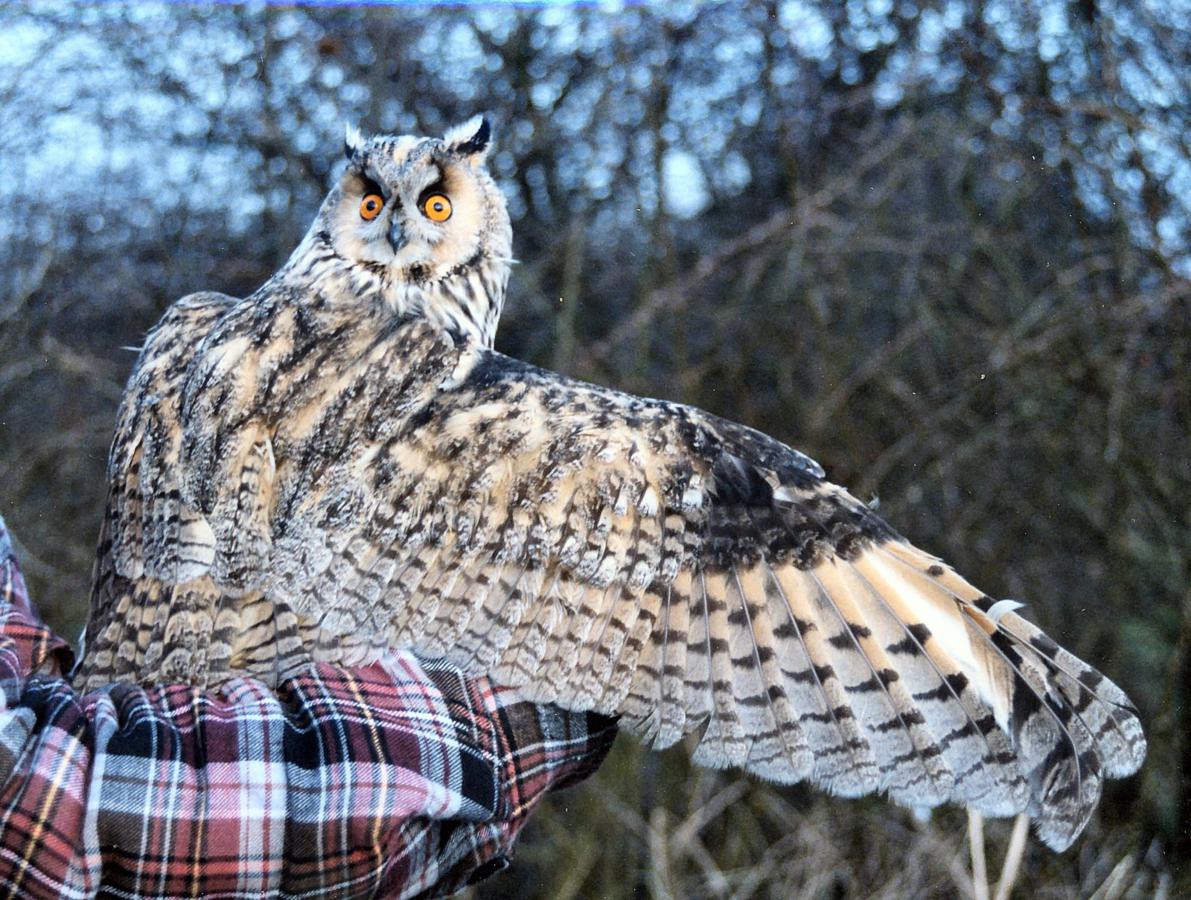
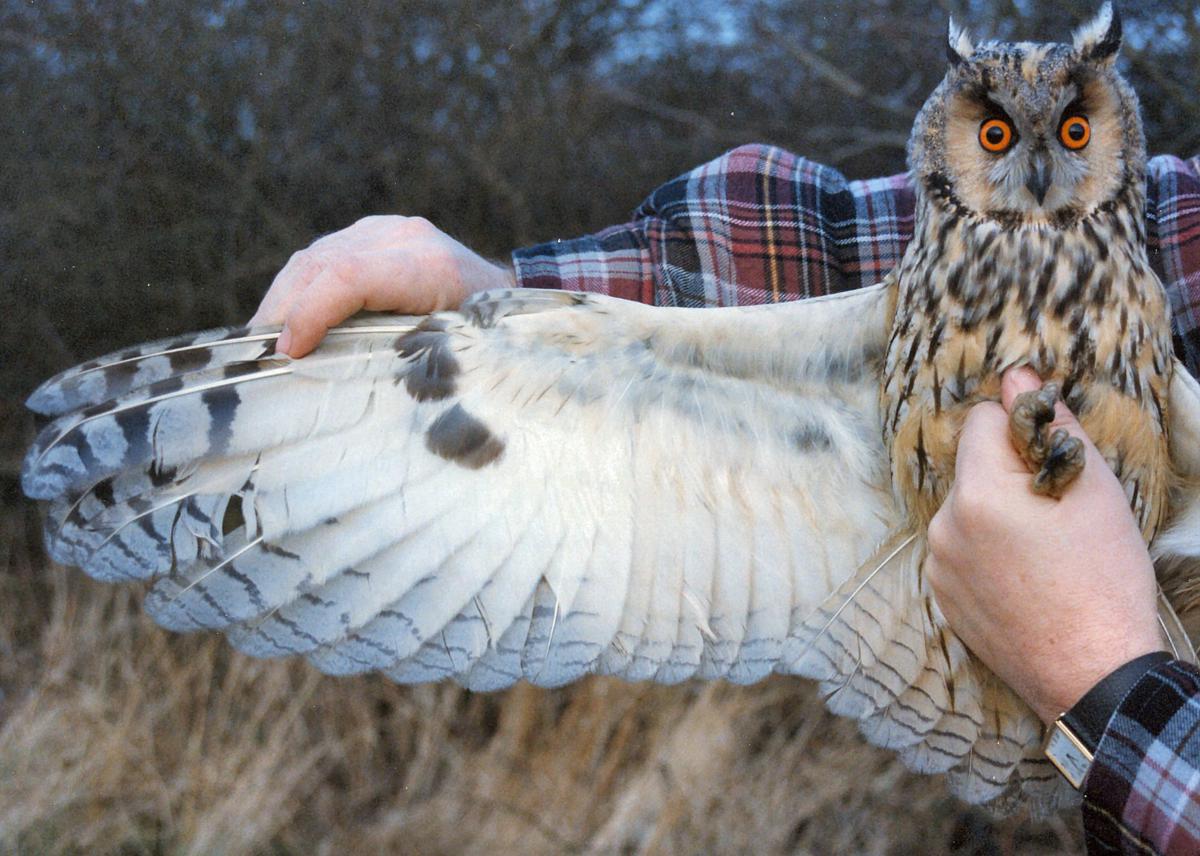
The Long-eared Owl is medium-sized owl that often looks long and thin, with head feathers (known as ear tufts even though they are not ears) which are raises when alarmed. It is buff-brown with darker brown streaks, and deep orange eyes.

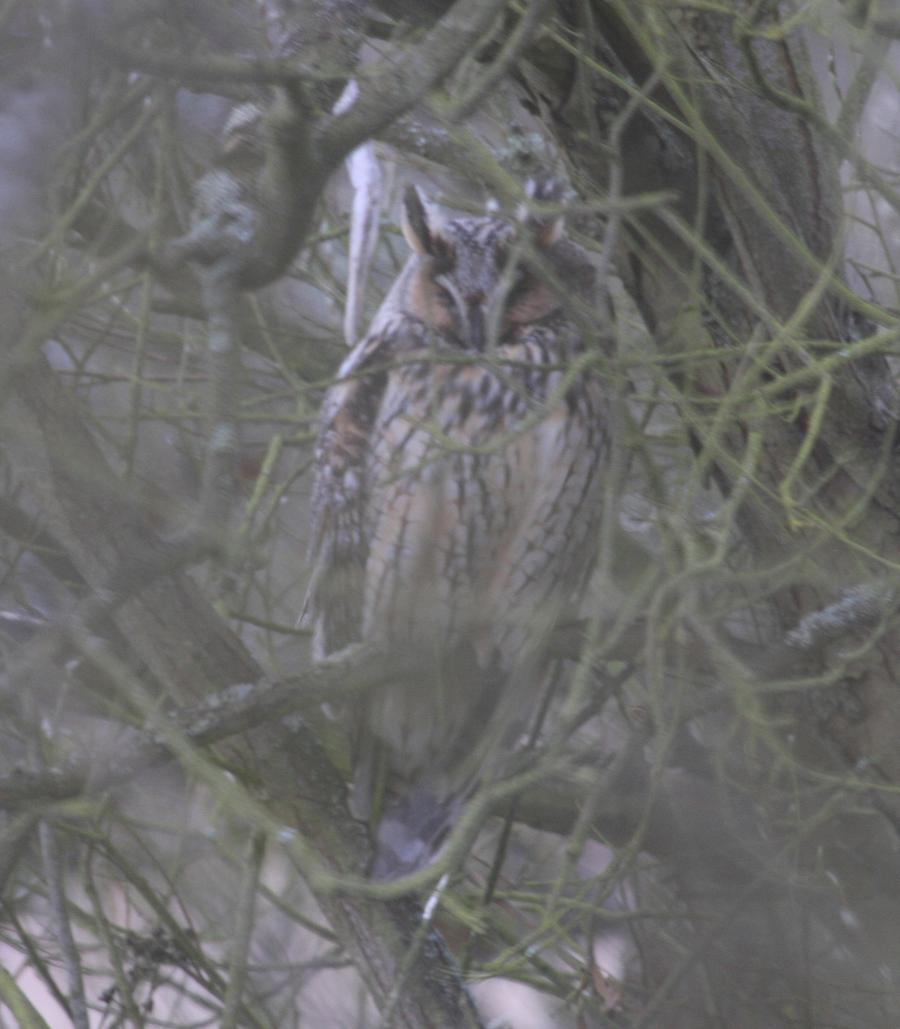
It is nocturnal and secretive, so unlikely to be seen other than on migration (when birds may turn up on coasts at any time of day) or when roosting, usually in dense thickets. Several birds may roost communally in winter.
All year round
It breeds thinly across the UK. Feeds on small rodents and birds in winter.
Widespread throughout Britain but with fewer birds in the south-west of England and Wales. Northern birds migrate southwards, including birds from Europe coming to spend the winter in the UK, while southern birds are residents and only move short distances to find food.
Rare in Leicestershire and Rutland.
 John Cranfield
Stanford Reservoir (ringing scheme)
27 February 1994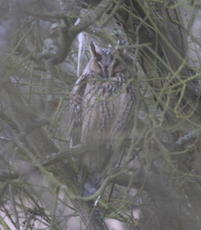 David Nicholls
Rutland Water, Egleton NR
26 March 2010 near Countesthorpe SP5695 (taken 24.2.2011).JPG) Paul Riddle
Paul Riddle
Near Countesthorpe
24 February 2011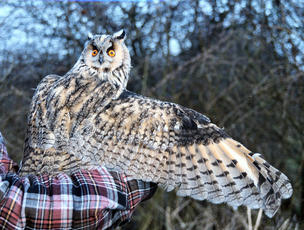 John Cranfield
Stanford Reservoir (ringing scheme)
27 February 1994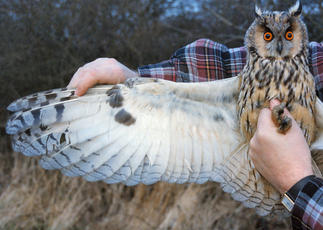 John Cranfield
Stanford Reservoir (ringing scheme)
27 February 1994

 near Countesthorpe SP5695 (taken 24.2.2011).JPG)
Leicestershire & Rutland Map
Enter a town or village to see local records
MAP KEY:
Yellow squares = NBN records (all known data)
Coloured circles = NatureSpot records: 2025+ | 2020-2024 | pre-2020
UK Map
Species profile
- Common names
- Long-eared Owl
- Species group:
- bird
- Kingdom:
- Animalia
- Order:
- Strigiformes
- Family:
- Strigidae
- Records on NatureSpot:
- 5
- First record:
- 28/02/1982 (Cranfield, John)
- Last record:
- 13/05/2016 (Baker, Rodney)
Total records by month
% of records within its species group
10km squares with records
The latest images and records displayed below include those awaiting verification checks so we cannot guarantee that every identification is correct. Once accepted, the record displays a green tick.
In the Latest Records section, click on the header to sort A-Z, and again to sort Z-A. Use the header boxes to filter the list.