

Russian Comfrey agg. - Symphytum officinale x asperum = S. x uplandicum
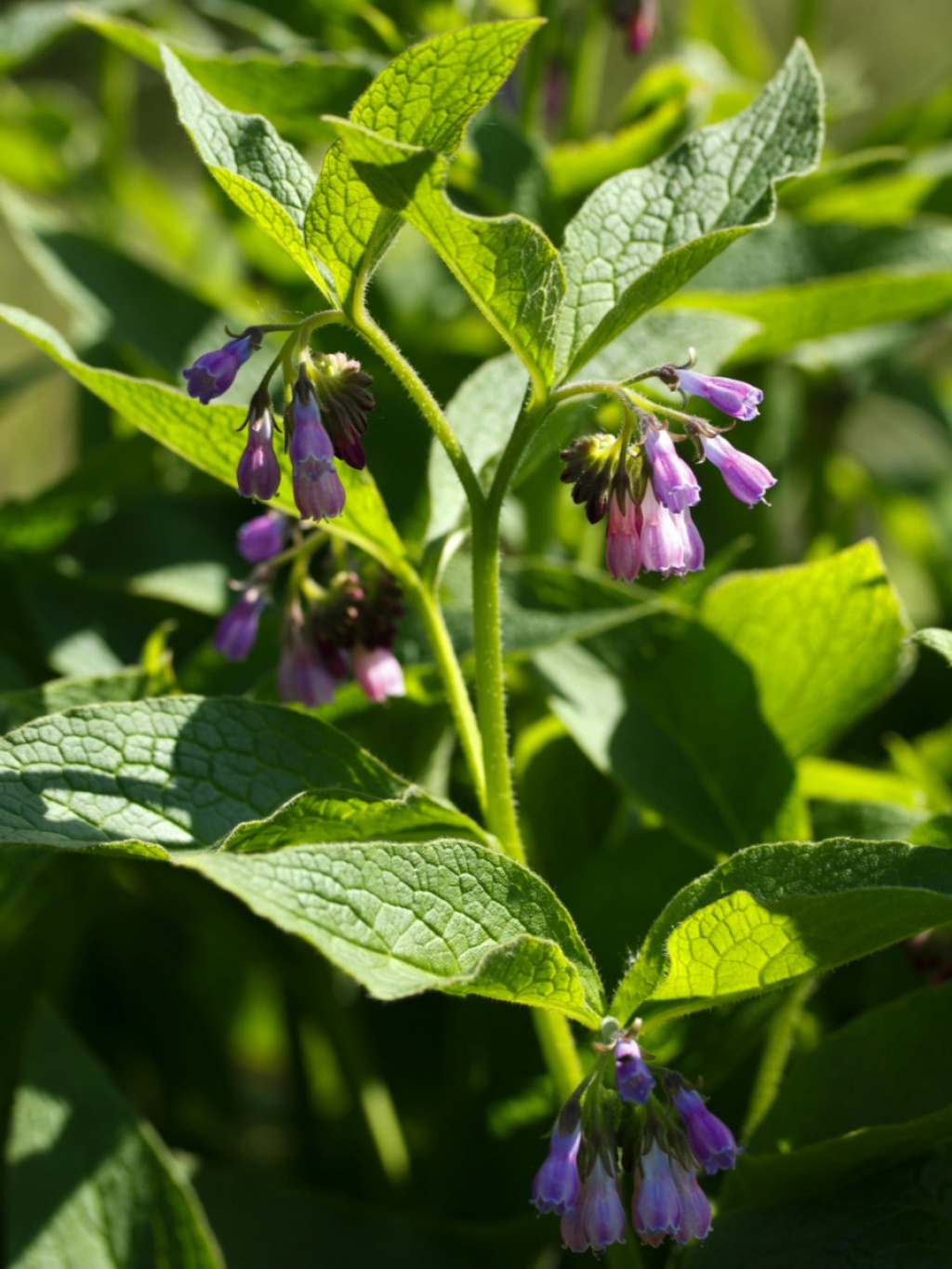
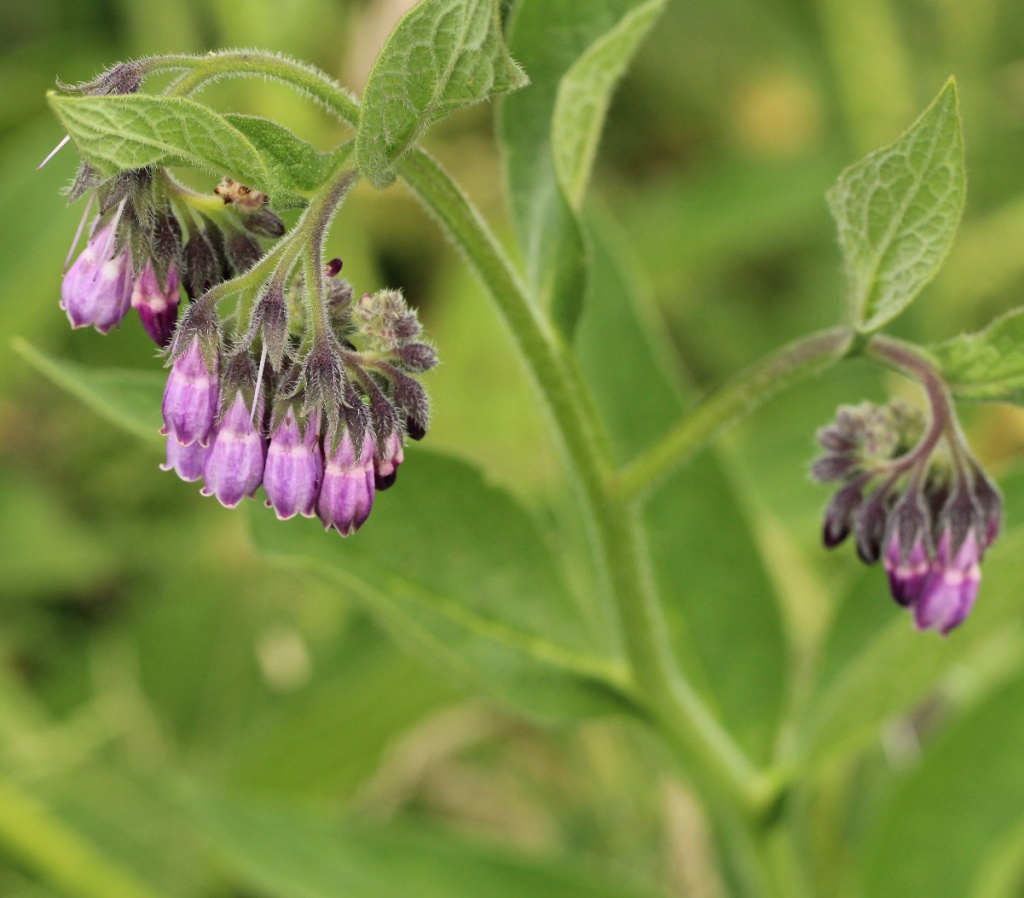
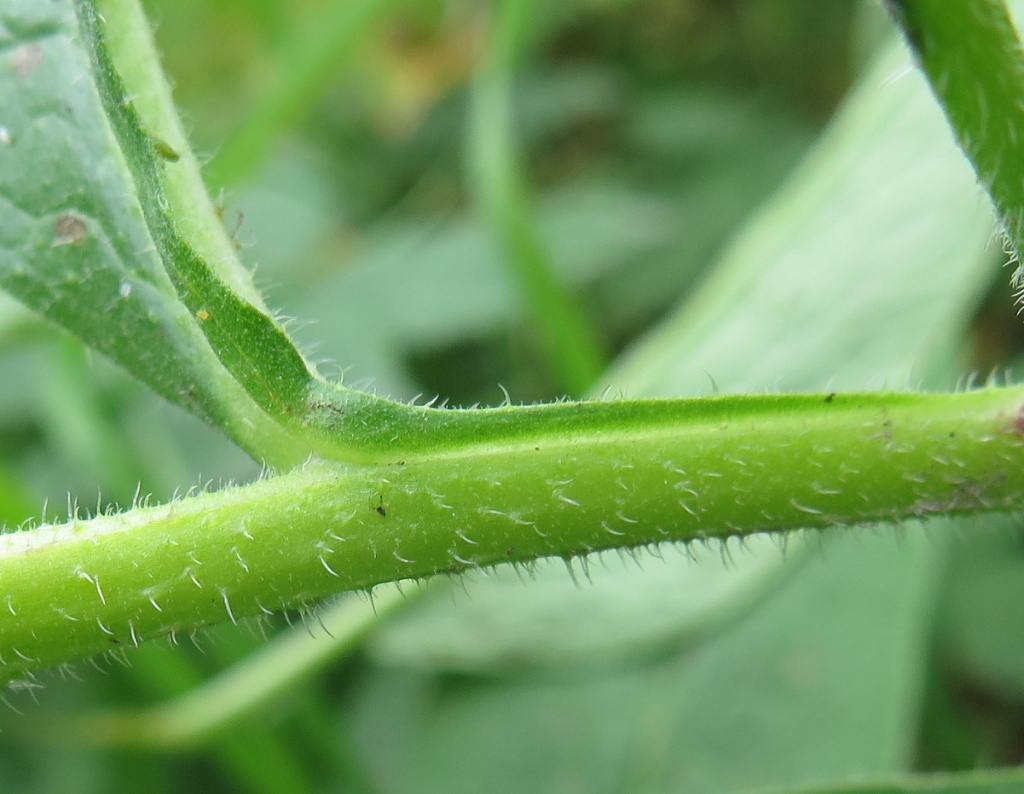
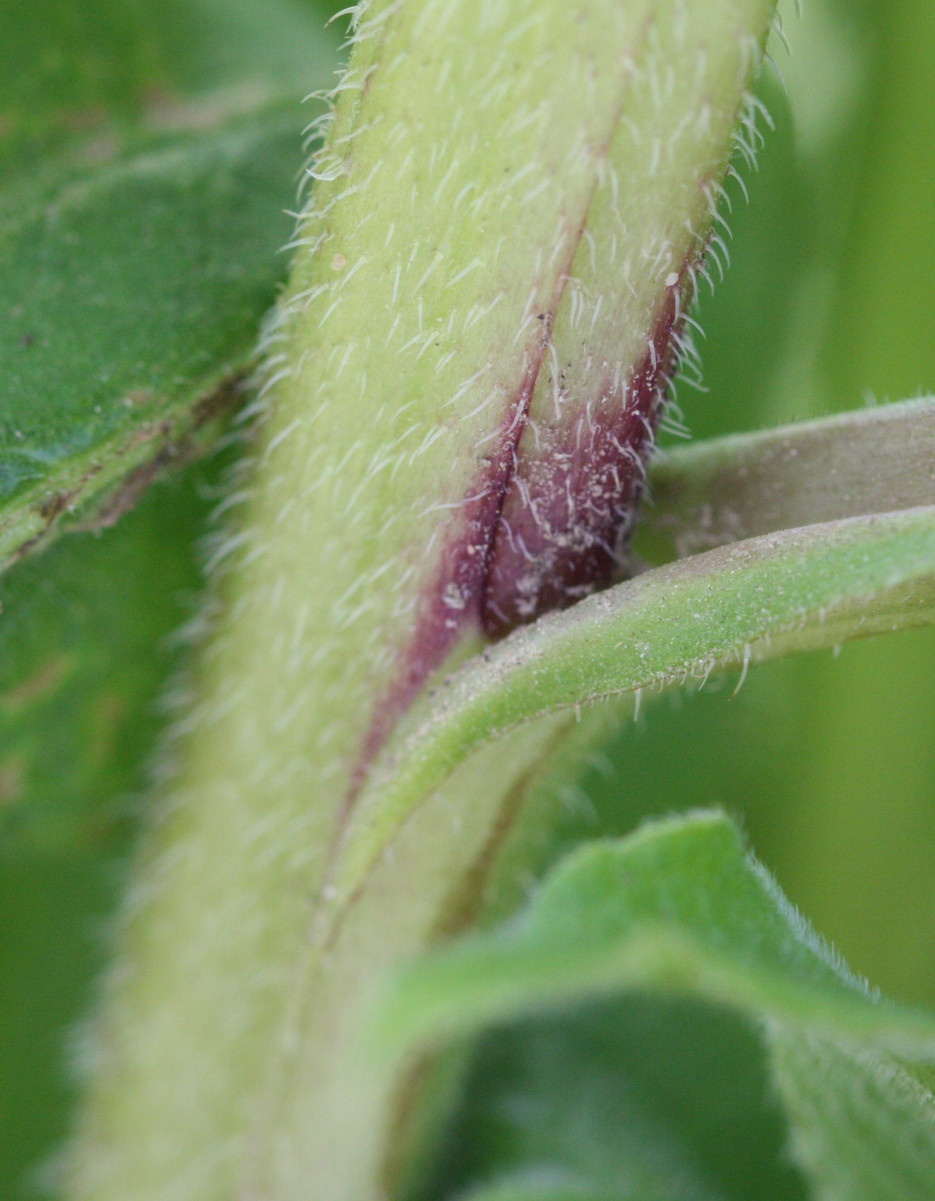
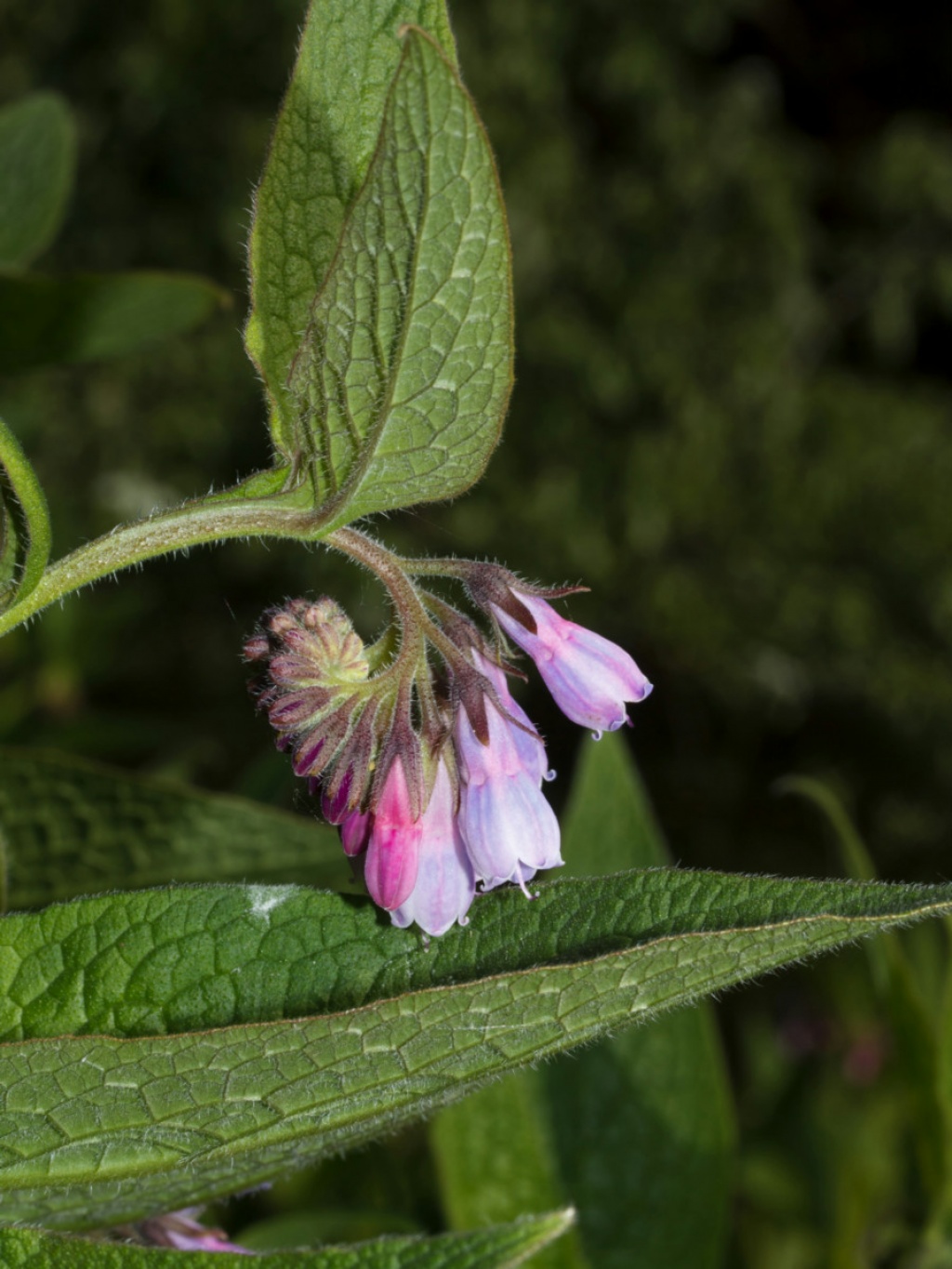
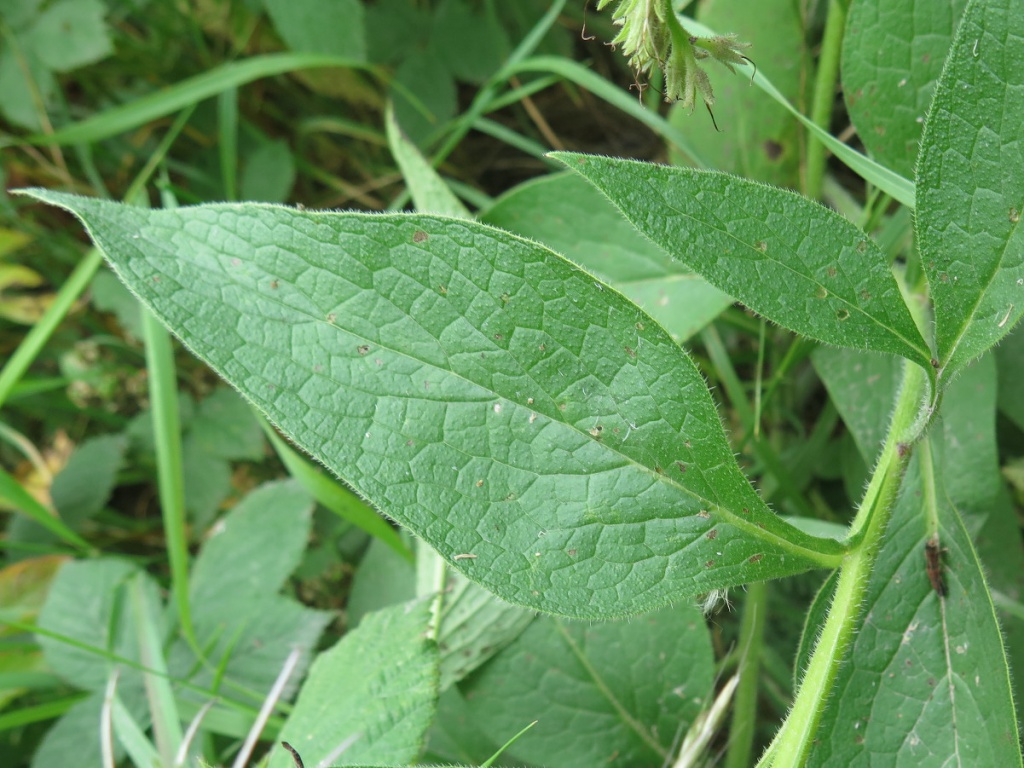
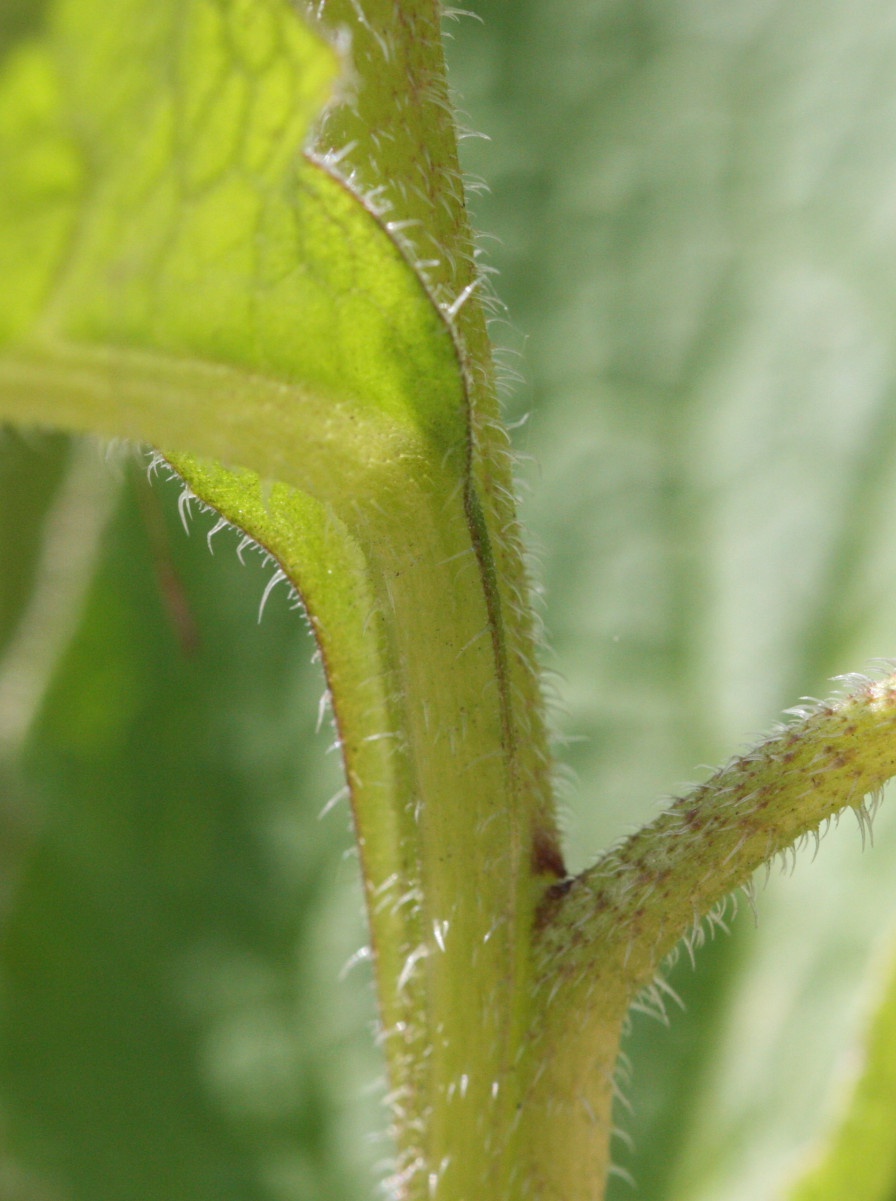
Tall plant to 2 metres, the stems narrowly winged below the leaves. Flowers starting off pink but soon becoming blue or violet.
Many other species, hybrids and varieties of comfrey with blue, pink or pale flowers

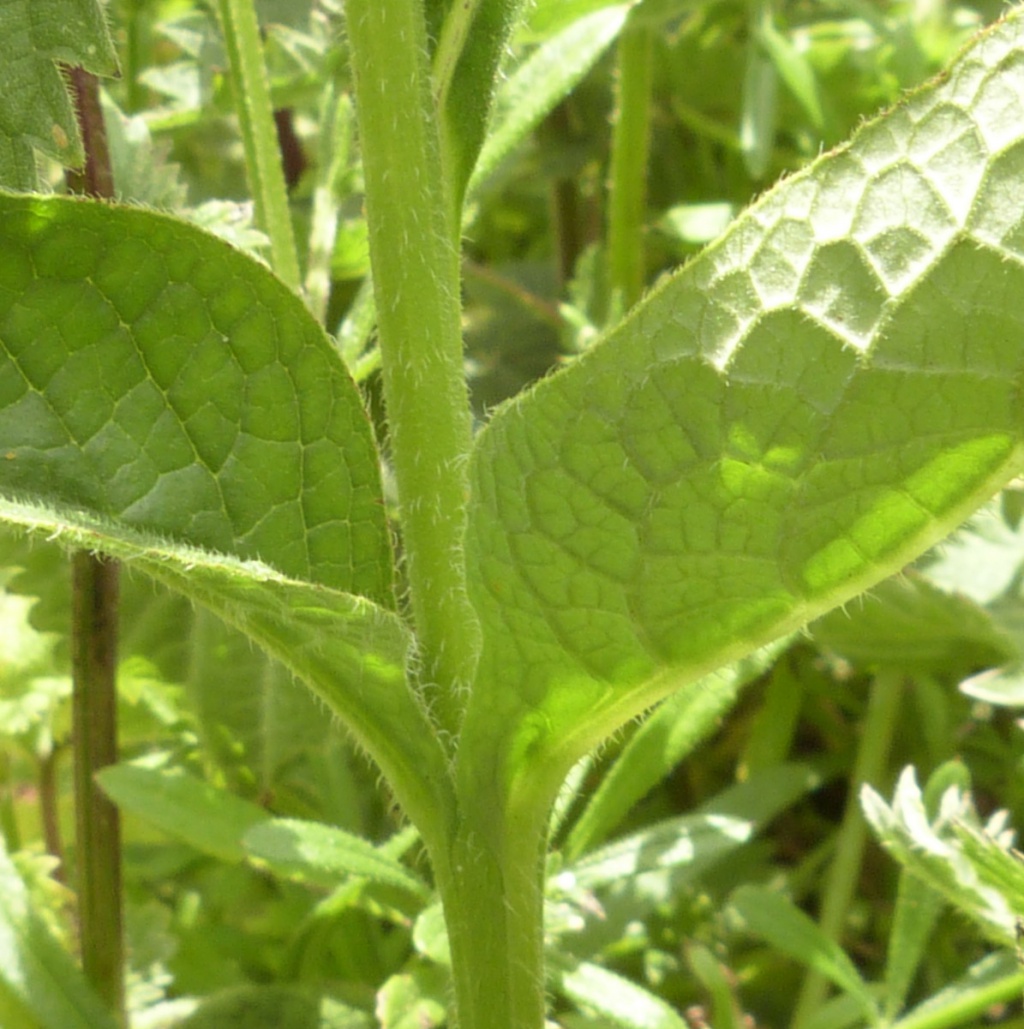
Almost always with blue, violet or purplish flowers; yellow flowers are rare. Leaves not strongly decurrent (i.e. wings extend a short way down stem below each leaf), unlike S officinale. Nutlets dull and minutely tuberculate. Not stoloniferous, unlike S x hidcotense, which also has blue flowers, often flushed pink or red.
This can't be verified from the flowers alone; a photograph of the whole plant, including leaves and stems.
Roadside verges, banks, woodland and waste places.
June to August.
Perennial.
Quite common throughout much of Britain.
Fairly frequent in Leicestershire and Rutland. In the 1979 Flora survey of Leicestershire it was found in 137 of the 617 tetrads.
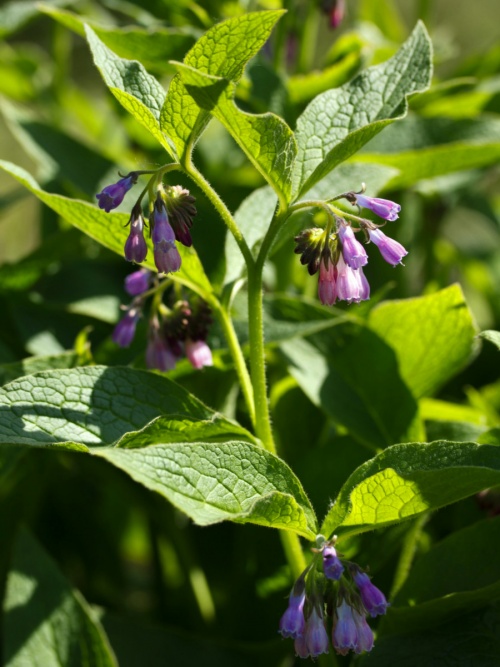 HAPeacock
River Soar - St Marys Mills
25 May 2012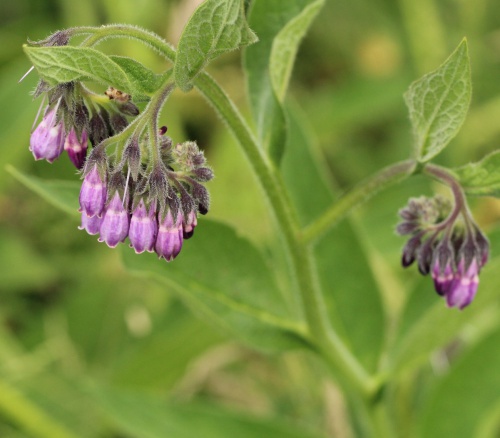 Ron.stevens
Dunton Bassett quarry
10 July 2016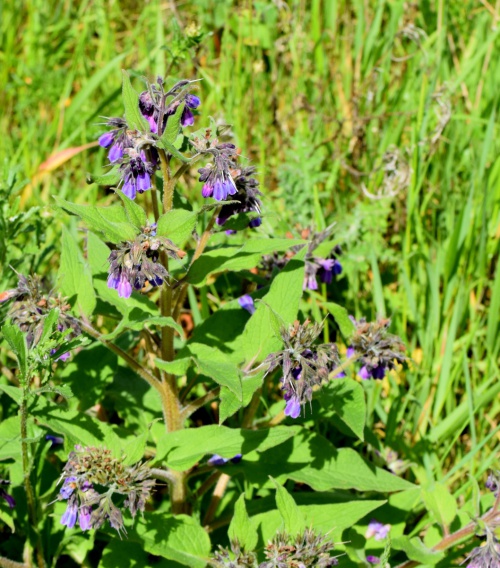 Steve Mathers
River Soar (Thurcaston Rd to Watermead Way)
18 May 2017 Old Fosse Sapcote SP 4956 9181 (taken 21.5.2008).JPG) Graham Calow
Graham Calow
Sapcote
21 May 2008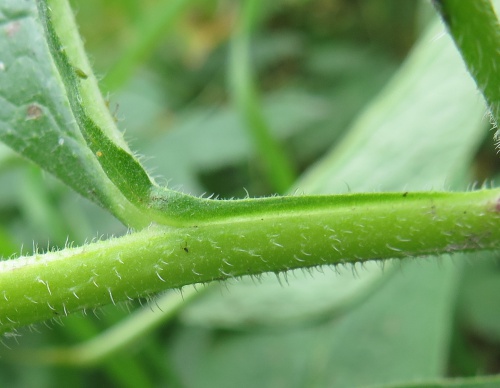 David Nicholls
Ashby Canal, Snarestone
01 July 2017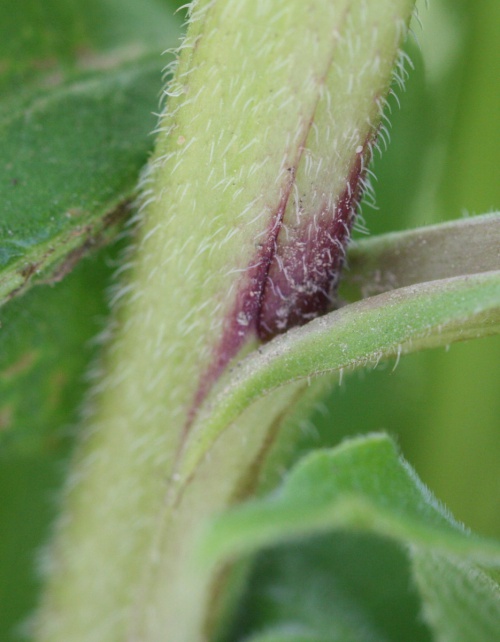 David Nicholls
Hill Hole
27 May 2016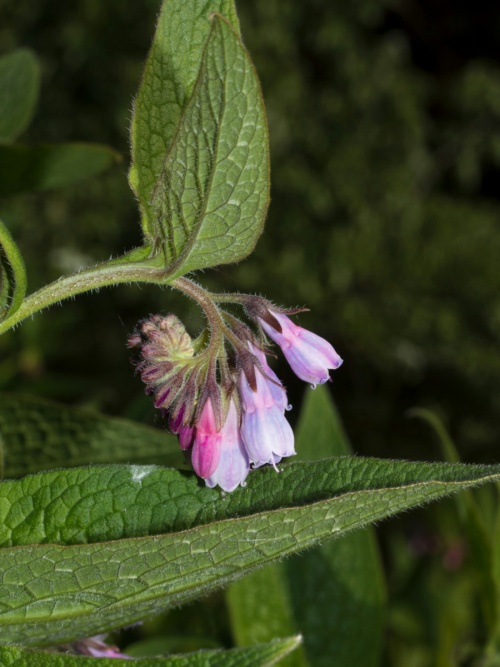 HAPeacock
River Soar - St Marys Mills
25 May 2012
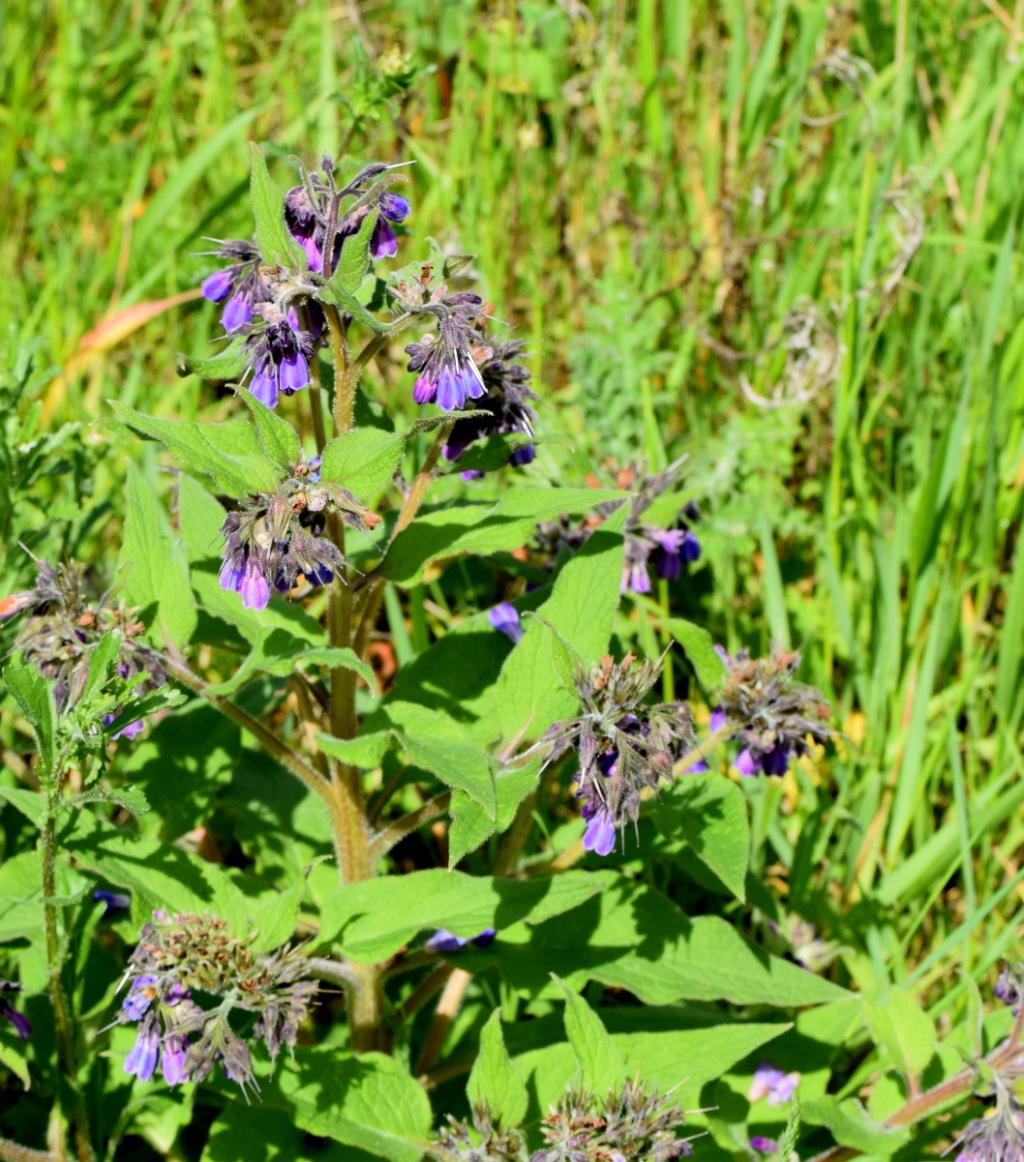
 Old Fosse Sapcote SP 4956 9181 (taken 21.5.2008).JPG)
Leicestershire & Rutland Map
Enter a town or village to see local records
MAP KEY:
Yellow squares = NBN records (all known data)
Coloured circles = NatureSpot records: 2025+ | 2020-2024 | pre-2020
UK Map
Species profile
- Common names
- Russian Comfrey
- Species group:
- flowering plant
- Kingdom:
- Plantae
- Order:
- Family:
- Boraginaceae
- Records on NatureSpot:
- 73
- First record:
- 21/05/2008 (Calow, Graham)
- Last record:
- 16/05/2025 (Andrews, Mark)
Total records by month
% of records within its species group
10km squares with records
The latest images and records displayed below include those awaiting verification checks so we cannot guarantee that every identification is correct. Once accepted, the record displays a green tick.
In the Latest Records section, click on the header to sort A-Z, and again to sort Z-A. Use the header boxes to filter the list.
Latest images
Latest records
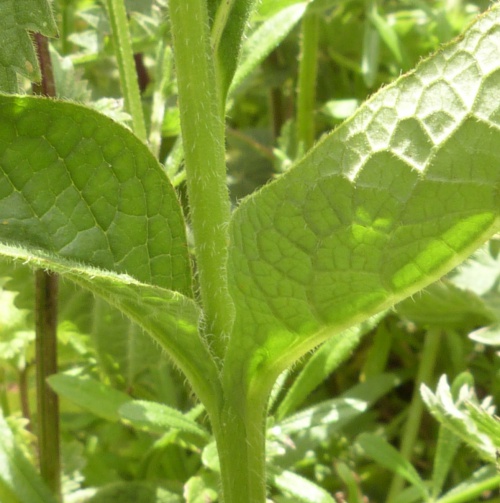 Graham Calow
Frolesworth
10 June 2015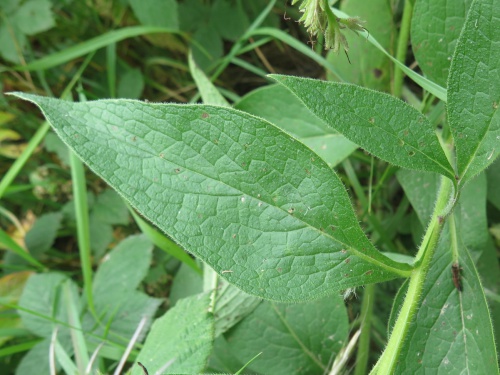 David Nicholls
Ashby Canal, Snarestone
01 July 2017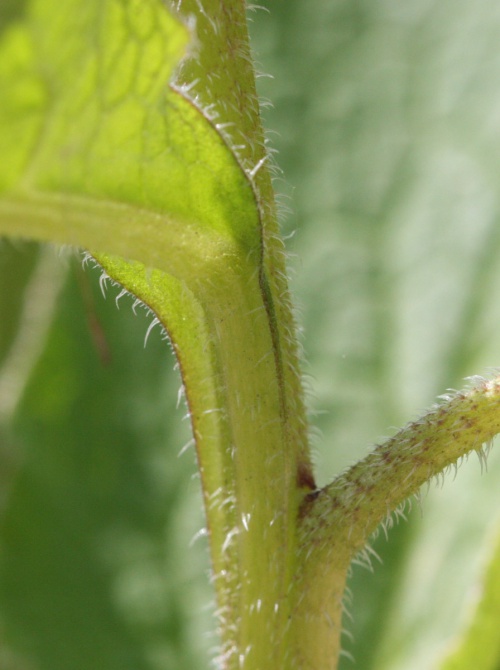 David Nicholls
Hill Hole
27 May 2016
Agromyza abiens/myosotidis/lithospermi agg.
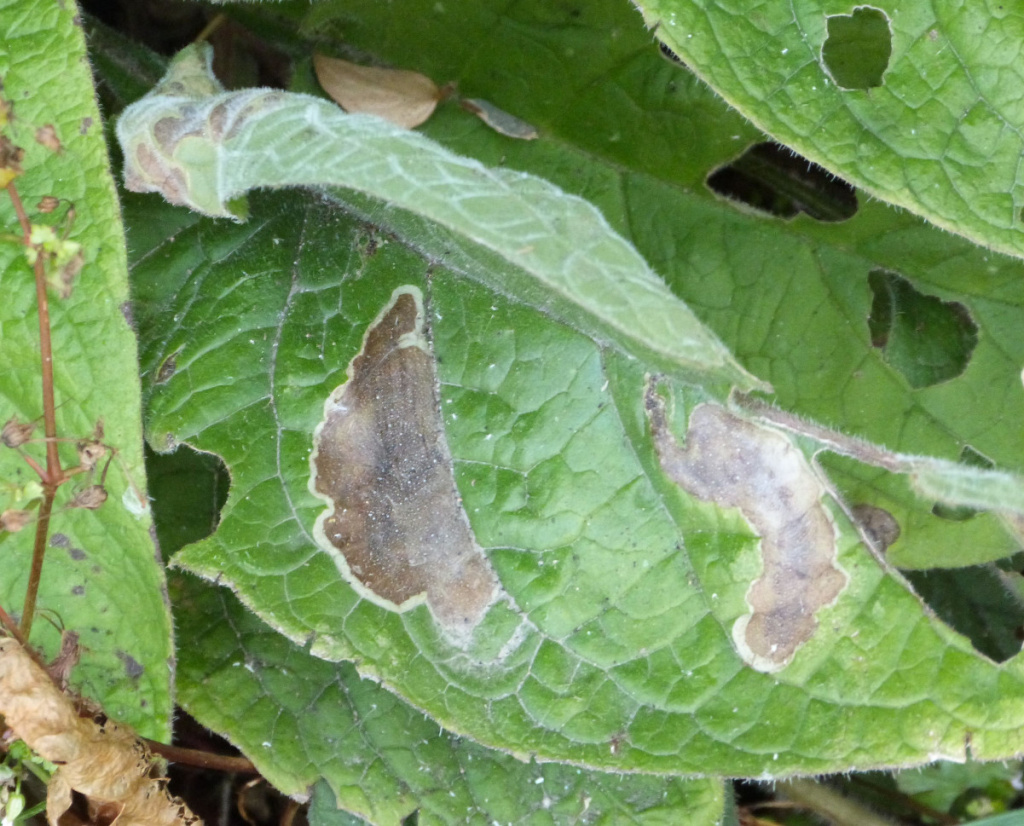
The larvae of the Agromyzid flies Agromyza abiens, Agromyza myosotidis and Agromyza lithospermi produce identical mines on the leaves of several food plants in the Boraginaeceae family, such as Borage, Comfrey and Green Alkanet plus a number of other host plants. The initial narrow gallery contains frass in a double line, which it then expands to form a blotch mine. Several larvae may occupy a leaf to form a large blotch. Because the mines on these plants cannot be reliably separated to species level we treat them as an aggregate.