

Shore Lark - Eremophila alpestris
Horned Lark
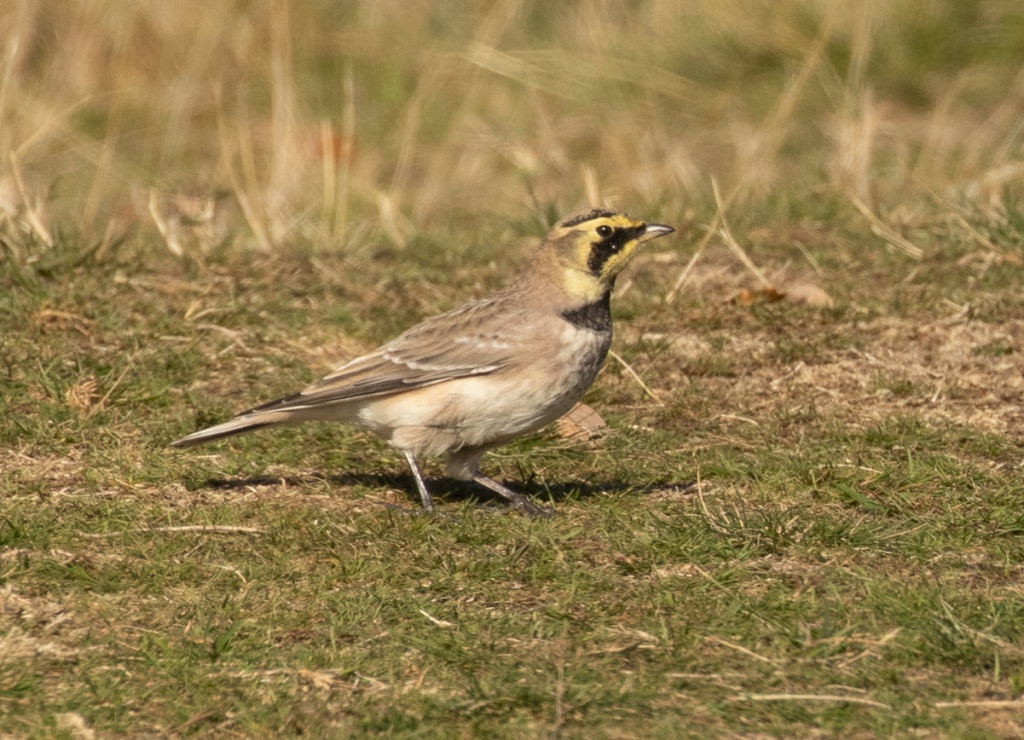
A striking bird somewhat larger than a sparrow (14 to 17cm), the Shore Lark is most easily identified by its black face patches and breast stripe, yellow throat and forehead, and black “horn-shaped” feather tufts on its head. Other field marks include a brown body, pale breast, and black underside to the tail. Male and female Shore Larks are similar to one another in all seasons, although females have slightly duller plumage.

Shore larks like to feed along the strandline or in dunes but sometimes also venture into nearby fields.
An occasional winter visitor to Britain.
This species primarily eats seeds, but may eat insects when they are available, particularly in the warmer months and during migration.
British visitors are usually seen at coastal locations, mostly in the east. UK conservation status: Amber.
Rarely seen in Leicestershire and Rutland.
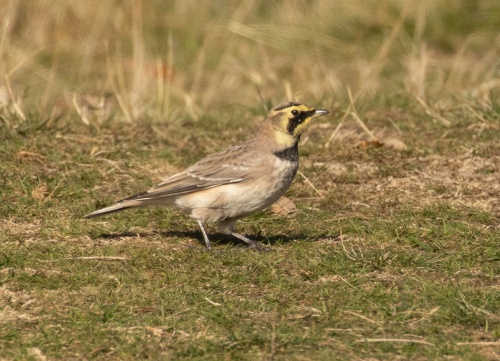 petershale
Bradgate Park
22 October 2018
Leicestershire & Rutland Map
Enter a town or village to see local records
MAP KEY:
Yellow squares = NBN records (all known data)
Coloured circles = NatureSpot records: 2025+ | 2020-2024 | pre-2020
UK Map
Species profile
- Common names
- Shore Lark, Horned Lark, Shorelark
- Species group:
- bird
- Kingdom:
- Animalia
- Order:
- Passeriformes
- Family:
- Alaudidae
- Records on NatureSpot:
- 1
- First record:
- 22/10/2018 (Shale, Peter)
- Last record:
- 22/10/2018 (Shale, Peter)
Total records by month
% of records within its species group
10km squares with records
The latest images and records displayed below include those awaiting verification checks so we cannot guarantee that every identification is correct. Once accepted, the record displays a green tick.
In the Latest Records section, click on the header to sort A-Z, and again to sort Z-A. Use the header boxes to filter the list.